Delhi’s unified municipal corporation has approved a fresh round of road renaming proposals alongside decisions affecting public health facilities, cremation services and civic finance, signalling how symbolic, environmental and administrative priorities are converging within the capital’s urban governance framework.
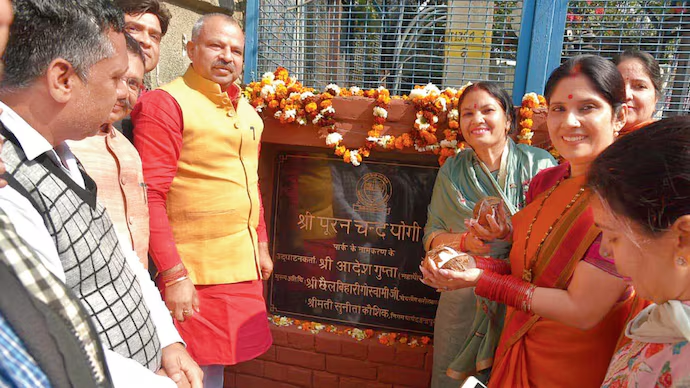
At its latest House sitting, the corporation endorsed recommendations from its Naming and Renaming Committee covering multiple stretches in north and north-west Delhi. Several roads, gates and public parks will be assigned new names, many honouring local community figures and regional leaders. Health facilities, including a polyclinic in Mehrauli and an urban public health centre in west Delhi, are also set to be renamed.The Delhi MCD road renaming exercise reflects a long-standing practice of embedding local identity within the city’s public spaces. Urban historians note that such decisions can strengthen neighbourhood memory and civic belonging, particularly in peripheral wards where rapid urbanisation has outpaced formal planning. However, planners also caution that renaming must be accompanied by clear signage, digital map updates and public communication to avoid logistical confusion for residents, emergency services and businesses.
Beyond nomenclature, the House cleared a proposal to provide free cremation services at CNG and electric crematoriums. Municipal officials indicated that the move aims to reduce reliance on traditional wood-based pyres, which contribute to particulate emissions during peak pollution months. Environmental experts say the shift towards cleaner cremation infrastructure aligns with Delhi’s broader air quality management efforts, particularly as the city intensifies measures to curb dust and combustion-related pollution. Advertising policy changes were also approved, including revised empanelment rates for media agencies and the introduction of new formats on flyovers and underpasses. Revenue from outdoor advertising forms an important component of municipal finances, especially as the corporation balances rising service demands with fiscal constraints. Industry observers suggest that transparent rate-setting and digital tracking of inventory will be essential to ensure accountability.
The meeting was not without political friction. Opposition councillors questioned a reported move to expand the Municipal Commissioner’s financial approval limit from ₹5 crore to ₹50 crore, arguing that statutory amendments would be required under existing municipal law. The debate underscores wider tensions around administrative discretion, oversight and the distribution of financial powers within the Delhi civic system. For residents, the immediate impact of the Delhi MCD road renaming decisions may appear symbolic.
Yet the broader agenda cleaner cremation systems, structured advertising revenue and clarified financial authority points to deeper shifts in how the capital’s local government manages identity, environment and expenditure.As Delhi continues to densify and decentralise service delivery, the effectiveness of such measures will depend not only on approvals in the House, but on transparent implementation that strengthens both civic trust and urban resilience.
Delhi MCD Road Renaming Plan Approved