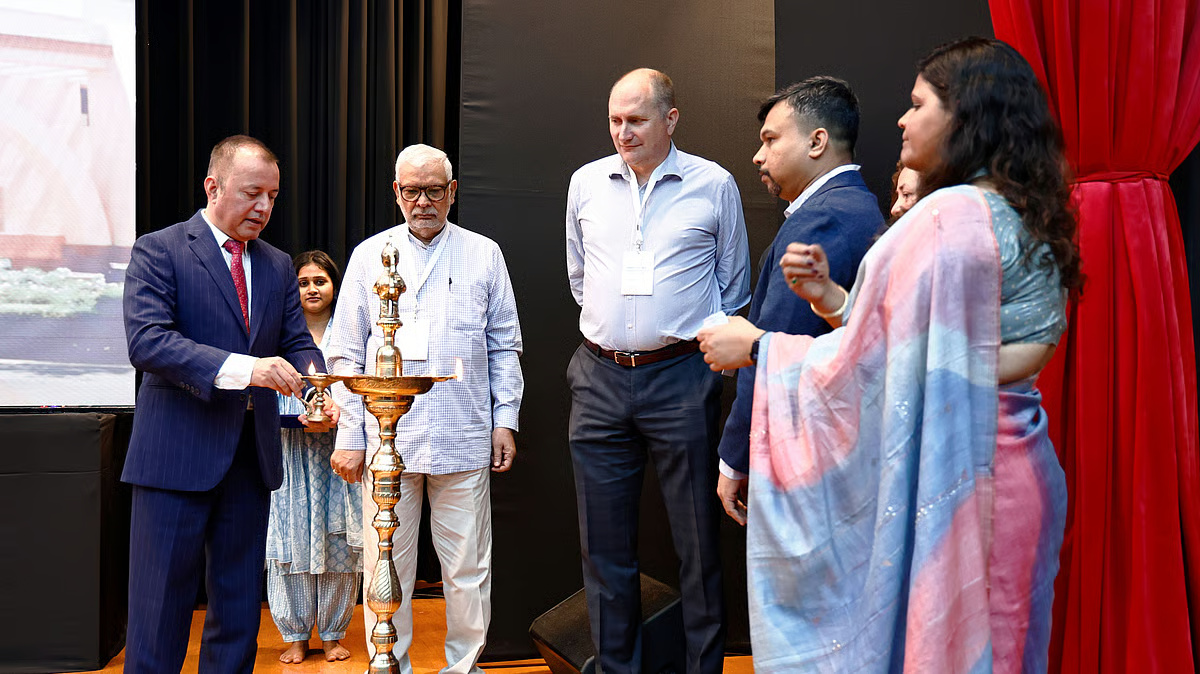
Indore Youth Leadership Summit Kicks Off With Global Participation
Indore — A leadership conference aimed at empowering young changemakers and fostering dialogue on public policy and sustainable development officially commenced at a prominent management institute in Indore this week, drawing participation from national and international delegates.
The event underscores growing interest in equipping emerging leaders with tools to address complex challenges in governance, climate action and inclusive economic growth. The three-day summit, hosted by the Indian Institute of Management Indore (IIM-I) at its city campus, opened with keynote sessions on policy innovation, global leadership dynamics and community-centred problem solving. Delegates include students, academics, civil society representatives and senior policy professionals, reflecting a breadth of perspectives on how youth engagement can shape institutional responses to contemporary development concerns. Organisers said the conference is structured around thematic tracks such as sustainability leadership, public policy design, entrepreneurship and social impact. Sessions are designed to blend academic rigour with practical exposure, featuring panel discussions, case competitions and mentored workshops. A special focus on climate-resilient cities, equitable access to opportunity, and digital governance reflects broader trends in youth-driven discourse on systemic transformation.
An emerging theme of this year’s event is cross-border exchange. Several international participants are contributing to discussions on comparative policy models, urban innovation systems and collaborative frameworks for addressing global challenges such as climate change, migration and economic inclusion. Organisers said the diversity of viewpoints enriches learning outcomes and nurtures a generation of leaders equipped to operate in an interconnected world. From a development perspective, such leadership forums play a catalytic role in bridging academic curricula with real-world policy hurdles. “Young leaders have a critical role to play in shaping future cities and governance models that are inclusive, climate-smart and socially equitable,” said a senior academic associated with the programme. “Exposure to multidisciplinary thinking and global perspectives enhances their capacity to innovate responsibly.”
Economic planners and observers also note that empowering youth with policy literacy can strengthen civic engagement and entrepreneurial activity. Leadership conferences that facilitate dialogue on regulatory frameworks, collaborative governance and social entrepreneurship can translate into heightened civic participation and new ventures that address persistent urban challenges, from affordable housing to sustainable mobility. The choice of Indore as the host city carries symbolic weight. Known for its efforts in urban cleanliness, participatory governance models and private-public collaborations, the city provides a practical backdrop for discussions on sustainable urbanisation. Some sessions include field visits and experiential learning components that expose delegates to civic innovations and infrastructure projects that have reshaped Indore’s urban landscape.
Participants said the conference provides a platform to build networks and co-create solutions. Emerging leaders from varied socioeconomic backgrounds are engaging in peer learning and ideation, enhancing their ability to tackle complex, interlinked development issues. Mentorship from policy practitioners and academicians is expected to leave a lasting imprint on participants’ professional trajectories. As global economic and environmental uncertainties grow, bolstering youth capacities in leadership and policy innovation is increasingly seen as an investment in resilient societies. Forums such as this Indore conference offer a space for dialogue, critical thinking and collaborative problem solving — essential ingredients for preparing the next cohort of decision-makers.
The concluding day of the event will feature synthesis sessions aimed at translating discussions into actionable recommendations and local pilot projects, reinforcing the conference’s focus on impact-oriented learning.