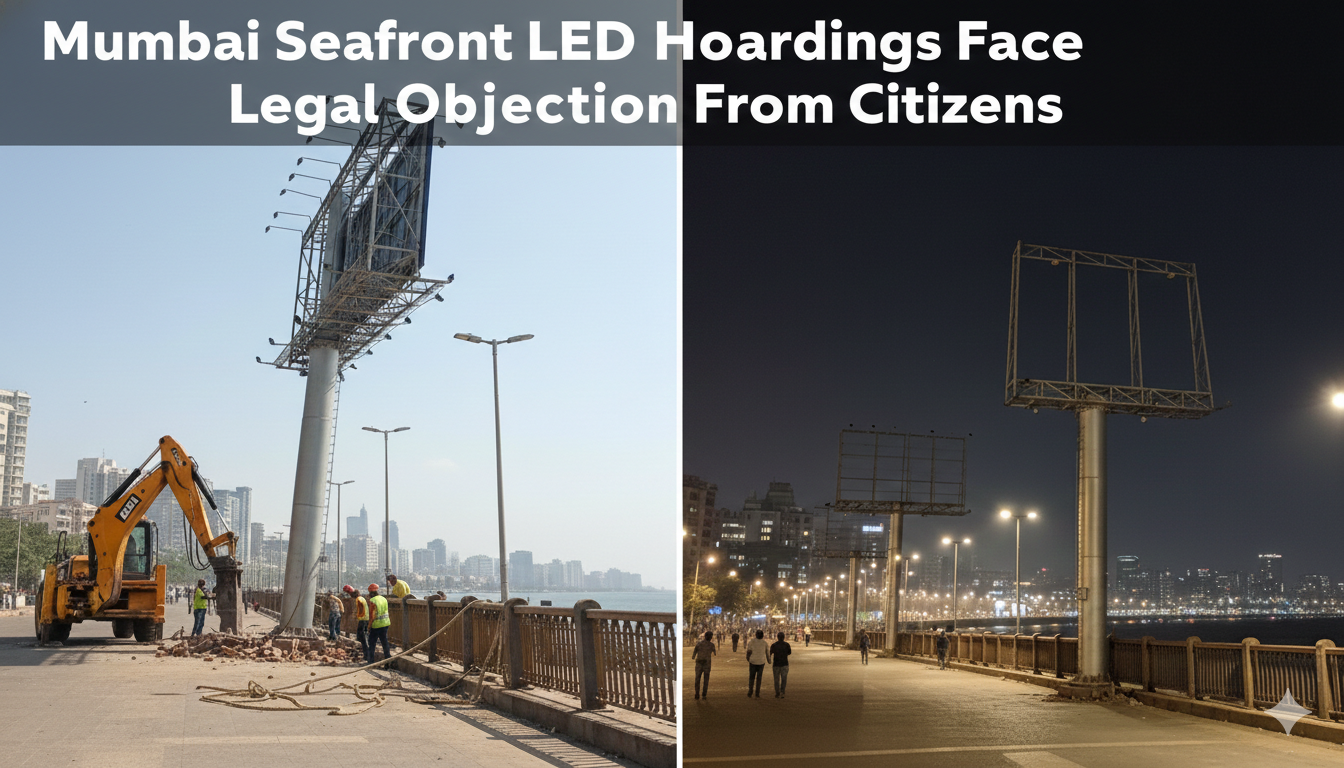
A proposal to install large-format LED advertising boards along one of Mumbai’s most prominent public waterfronts has triggered a legal challenge, intensifying debate over how commercial activity is regulated in environmentally sensitive urban spaces. A formal legal notice has been issued to civic and maritime authorities, questioning whether mandatory environmental and coastal clearances were secured before permissions were granted for the installations.
The dispute centres on the Carter Road Promenade, a 1.2-kilometre coastal walkway in Bandra West that has become a key recreational and social space for residents. Developed through sustained citizen advocacy and public funding, the promenade is widely regarded as a model for people-first waterfront development in a dense metropolitan setting. Plans to introduce 35 LED commercial hoardings along the stretch have sparked concern among local communities and urban planners. According to documents reviewed by Urban Acres, the legal notice raises questions about whether approvals issued by the civic licensing department adequately accounted for coastal regulation norms, environmental safeguards and protections applicable to mangroves and intertidal ecosystems. The notice seeks clarity on the role played by both the Brihanmumbai Municipal Corporation and the Mumbai Maritime Board in authorising the proposal.
Urban environment specialists note that coastal promenades fall within zones where development is tightly regulated due to their ecological and climate-resilience functions. Apart from biodiversity concerns, LED installations raise issues related to light pollution, energy consumption and visual intrusion in open public landscapes. “Once advertising infrastructure is allowed in such locations, it sets a precedent that is difficult to reverse,” said an urban planning expert familiar with coastal governance frameworks. Residents opposing the move argue that the promenade’s value lies in its openness and unobstructed sea views, which contribute to both mental well-being and climate adaptation by preserving natural ventilation corridors. They fear that large digital screens could alter the character of the space, shifting it from a public commons to a commercialised zone. From a real estate and urban design perspective, such transformations often have long-term implications for accessibility and inclusivity, particularly for women, senior citizens and informal users who rely on free public spaces.
Civic officials have indicated that the permissions were granted through established processes, but have not publicly detailed how environmental compliance was assessed. Policy observers say this lack of transparency underscores a broader governance challenge in Indian cities, where multiple agencies oversee coastal assets without a unified disclosure mechanism. The controversy arrives at a time when Mumbai is investing heavily in waterfront infrastructure, from promenades to coastal roads, as part of its climate adaptation and public realm strategy. Experts argue that safeguarding these investments requires clear boundaries between revenue generation and ecological stewardship.
As the matter moves towards possible legal scrutiny, urban planners suggest the outcome could influence how commercial activities are evaluated across Mumbai’s seafronts. A clearer framework balancing fiscal considerations with environmental protection may be essential to ensure that public waterfronts remain resilient, accessible and genuinely public in the decades ahead.
Mumbai Seafront LED Hoardings Face Legal Objection From Citizens