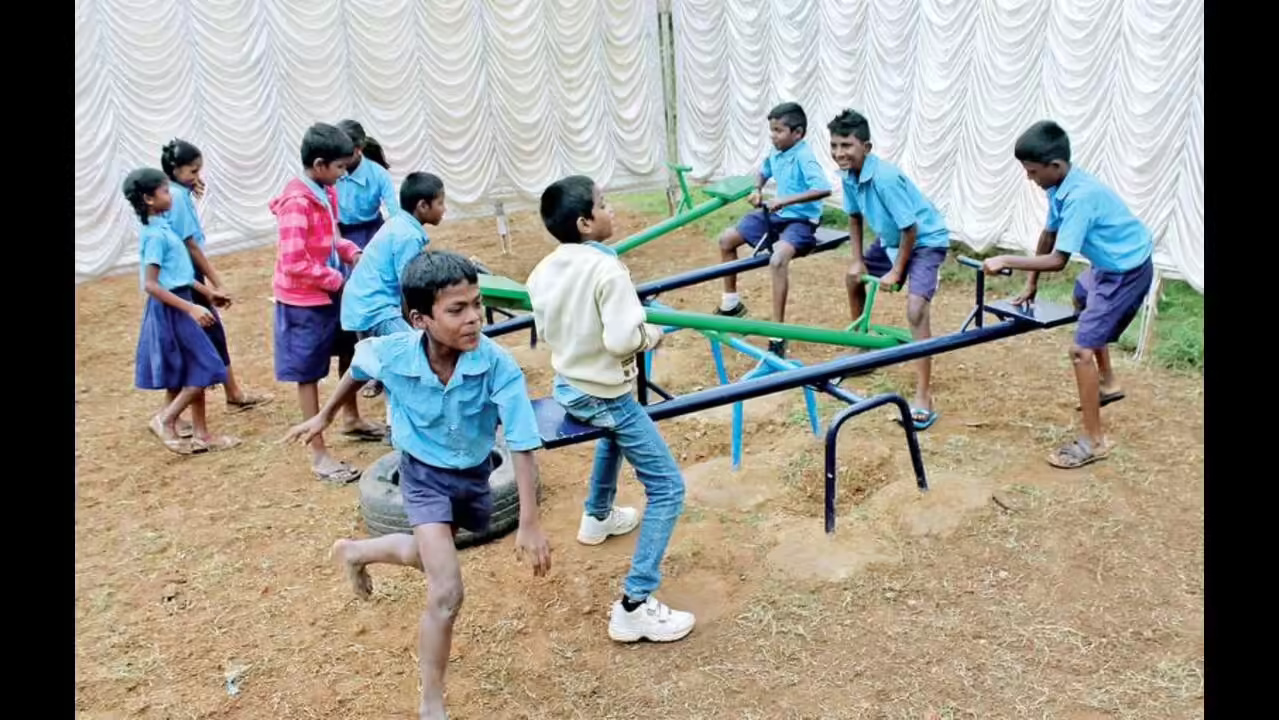
Nagpur — Residents of Hindustan Colony are mobilising around a basic urban demand: access to nearby recreational space. With no dedicated playground within the settlement, community members have called on municipal authorities to open the adjacent university sports ground for regular public use, underscoring the growing disparity in equitable urban amenities amid expanding housing and infrastructure development.
The issue centres on the National University (NU) sports ground, located near the colony’s residential blocks. Although the facility has open fields and basic infrastructure suitable for children’s play, community members say access is restricted to university affiliates, leaving hundreds of local youth and families without a safe place for physical activity. Parents and youth in Hindustan Colony argue that the absence of a public playground not only limits healthy recreation but also deepens social inequities in densely populated neighbourhoods. Urban planners and public health advocates note that access to open and green spaces is foundational to inclusive city design. “Playgrounds are not luxuries — they are essential for children’s development, community cohesion and mental wellbeing,” said a senior urban planner familiar with recreational space planning. Research shows that equitable distribution of public space correlates with lower stress levels, higher physical activity and stronger social networks in urban neighbourhoods.
The spatial gap in Hindustan Colony highlights broader distribution challenges in fast-growing cities like Nagpur. As residential areas densify, available public land often gets channelled towards housing, roads or commercial use, squeezing out informal play areas. This is especially pronounced in inner-city settlements where historic layouts did not allocate space for community fields. The result is a landscape where residents must compete with rising traffic, lack of shade and limited greenery for outdoor time. Existing municipal norms and master plans for open spaces set benchmarks for playgrounds and parks per capita. However, implementation frequently lags behind policy due to funding constraints, competing priorities and land acquisition hurdles. City officials indicate that while several playground development projects are in the pipeline, concrete timelines are yet to be announced for Hindustan Colony. In the meantime, residents are advocating for interim access to the NU ground under a structured schedule that mitigates liability and security concerns.
The request has prompted dialogue between local representatives, the university administration and civic authorities. Proposed solutions include shared-use agreements that define hours for public access, supervised activities and maintenance responsibilities. This model has precedent in other Indian cities where academic institutions and municipalities have forged partnerships to activate under-utilised fields for broader neighbourhood benefit. Beyond recreation, access to safe play spaces is linked to broader civic goals such as child health, reduced sedentary behaviour and community resilience. In the context of Nagpur’s expanding urban footprint, equitable provisioning of such amenities can help balance infrastructure growth with human-centred design. Inclusive planning not only mitigates health risks associated with inactivity but also strengthens community bonds essential for cohesive urban living.
For Hindustan Colony residents, the push for playground access is about reclaiming a right to open space and ensuring that the benefits of urbanisation extend beyond roads and buildings to everyday quality of life. As negotiations continue, the outcome could set a template for shared recreational space solutions in other underserved parts of the city.