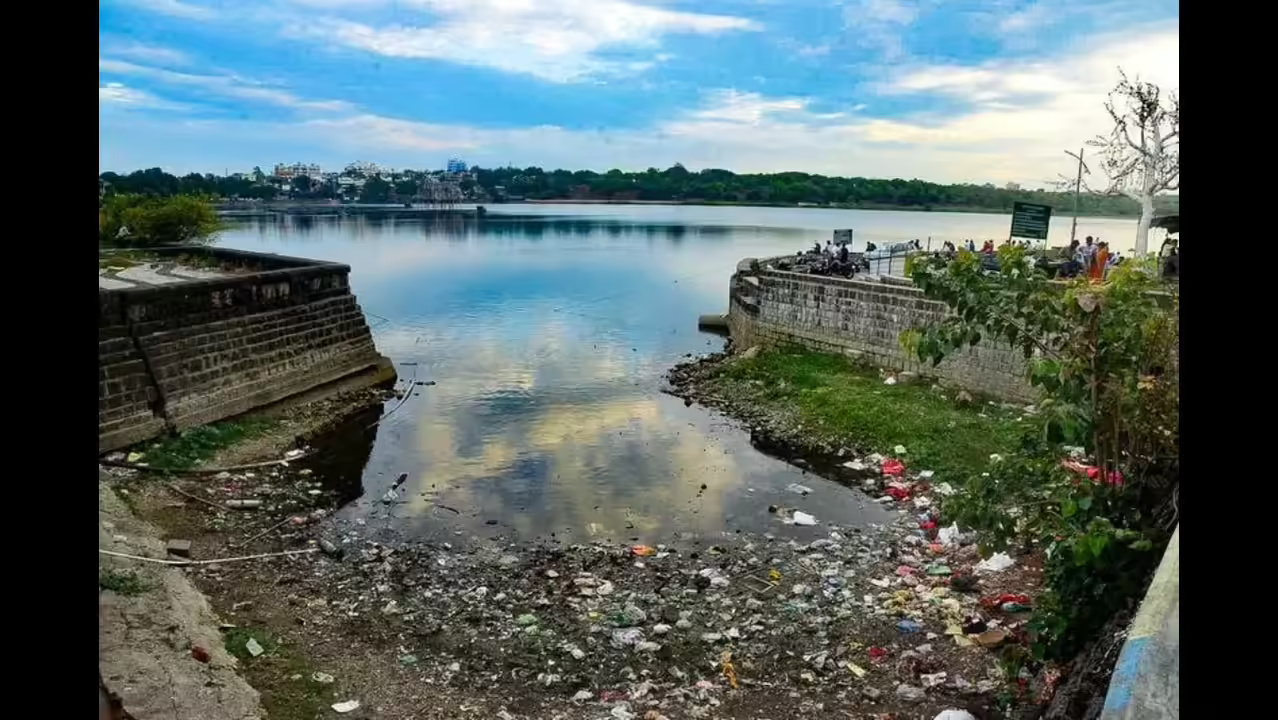
Nagpur — Untreated sewage and solid waste discharge into Futala Lake has triggered renewed environmental concern, exposing gaps in wastewater management in one of the city’s most visible public spaces.
The deterioration of water quality at the historic urban lake raises urgent questions about stormwater planning, sewer connectivity and long-term ecological resilience in rapidly expanding neighbourhoods surrounding the site. Civic inspections in recent days have identified multiple points where wastewater is entering the lake, particularly from adjoining residential pockets lacking adequate underground sewer linkages. Environmental observers note that such inflows increase nutrient loading in the water body, accelerating algal growth, reducing dissolved oxygen levels and threatening aquatic biodiversity. During peak summer, when water levels dip, the ecological stress becomes even more pronounced.
Futala Lake is not merely a recreational landmark. It functions as an urban heat sink, a groundwater recharge zone and a public commons used daily by walkers, vendors and families. When sewage contamination rises, the impact extends beyond ecology to public health, odour nuisance, mosquito breeding and declining property values in adjacent areas. Urban planners caution that repeated exposure to untreated wastewater can fundamentally alter the lake’s biological balance. Officials within the municipal system indicate that desilting, diversion channels and interceptor drains are under review. However, experts argue that reactive clean-ups will not resolve structural issues unless sewer networks are comprehensively mapped and upgraded. “Urban lakes cannot survive as ornamental features,” said a senior water management specialist. “They must be treated as living infrastructure, integrated into city-level wastewater planning.”
The Futala Lake sewage crisis also reflects broader urbanisation pressures. As peri-urban layouts densify, informal drainage lines often connect directly to natural water bodies. Without decentralised treatment systems or effective monitoring, nutrient-rich discharge accumulates. Over time, this erodes ecological resilience and reduces a city’s capacity to adapt to extreme rainfall events linked to climate change. Sustainable urban policy increasingly recognises lakes as critical blue-green assets. Restoring Futala Lake would require a combination of sewage interception, decentralised wastewater treatment plants, strict enforcement against illegal discharge and community stewardship programmes. Transparent water quality data, publicly accessible dashboards and periodic ecological audits could rebuild civic trust.
For Nagpur, safeguarding Futala Lake is not just an environmental imperative but an urban governance test. As the city invests heavily in transport corridors and real estate expansion, equal priority must be placed on preserving ecological buffers that make growth liveable. The coming months will determine whether the Futala Lake sewage crisis becomes another recurring seasonal headline — or a turning point towards integrated, climate-resilient lake management.