


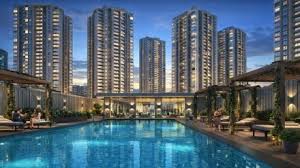
India’s high-end residential segment has emerged as the fastest-growing slice of the property market in 2025, fuelled by new-age wealth creation, infrastructure upgrades and a marked shift in buyer priorities. The India luxury housing market is no longer confined to legacy industrial families or metro elites; it is increasingly shaped by startup founders, global professionals and investment-driven end users seeking long-term asset security.
Industry data from multiple brokerage and research platforms show that homes priced above Rs 4 crore have outperformed other segments this year. Luxury supply has expanded significantly as developers pivot towards larger layouts, lower-density formats and amenity-rich projects. Demand has also strengthened, particularly in well-connected micro-markets supported by metro corridors, expressways and airport modernisation. While established hubs such as Gurugram, Mumbai and Bengaluru continue to dominate in absolute transaction value, emerging corridors have posted sharp gains. Along the Noida Expressway, in north Bengaluru’s Devanahalli belt and select neighbourhoods in Kolkata and Goa, the premium share of new supply has multiplied over four years. Improved road networks, commercial expansion and master-planned townships have repositioned these areas as credible luxury destinations. The India luxury housing market is also witnessing a qualitative shift. Buyers are prioritising wellness amenities, integrated services and environmental performance over mere square footage. Green-certified buildings, advanced air filtration systems, biophilic design and low-density planning are increasingly standard expectations. Developers report stronger traction for gated communities and boutique towers offering privacy, security and hospitality-style management. Consultants say the behavioural profile of buyers has evolved. Purchasers are making faster decisions but with greater scrutiny of developer governance, financial strength and delivery track record. Preference for ready or near-completion inventory reflects a desire to minimise execution risk. Institutional capital participation in premium projects has further strengthened confidence.
Tier-2 cities have entered the luxury conversation more decisively in 2025. Infrastructure investments including new airports, highways and metro systems have expanded access and reduced the perception gap between metros and regional centres. As a result, affluent households in cities such as Lucknow and select southern markets are opting for high-specification homes within their native regions rather than relocating. Wealth managers note that buoyant equity markets, liquidity from entrepreneurial exits and favourable capital gains reinvestment provisions have channelled funds into property. Amid global volatility, the India luxury housing market has been viewed as a relatively stable store of value that also delivers lifestyle benefits. Urban economists caution that rapid premiumisation must be balanced with inclusive planning. As high-end developments reshape skylines, cities will need to ensure that infrastructure capacity, environmental safeguards and public amenities evolve in parallel.
With demand dispersing geographically and expectations rising qualitatively, 2025 may mark a structural turning point. Luxury housing in India is transitioning from conspicuous consumption to long-horizon asset stewardship redefining how the country’s expanding affluent class engages with urban real estate.
Also Read: Mumbai Altamount Road Sees 85 Crore Deal
India Luxury Housing Market Redefines Premium Living
