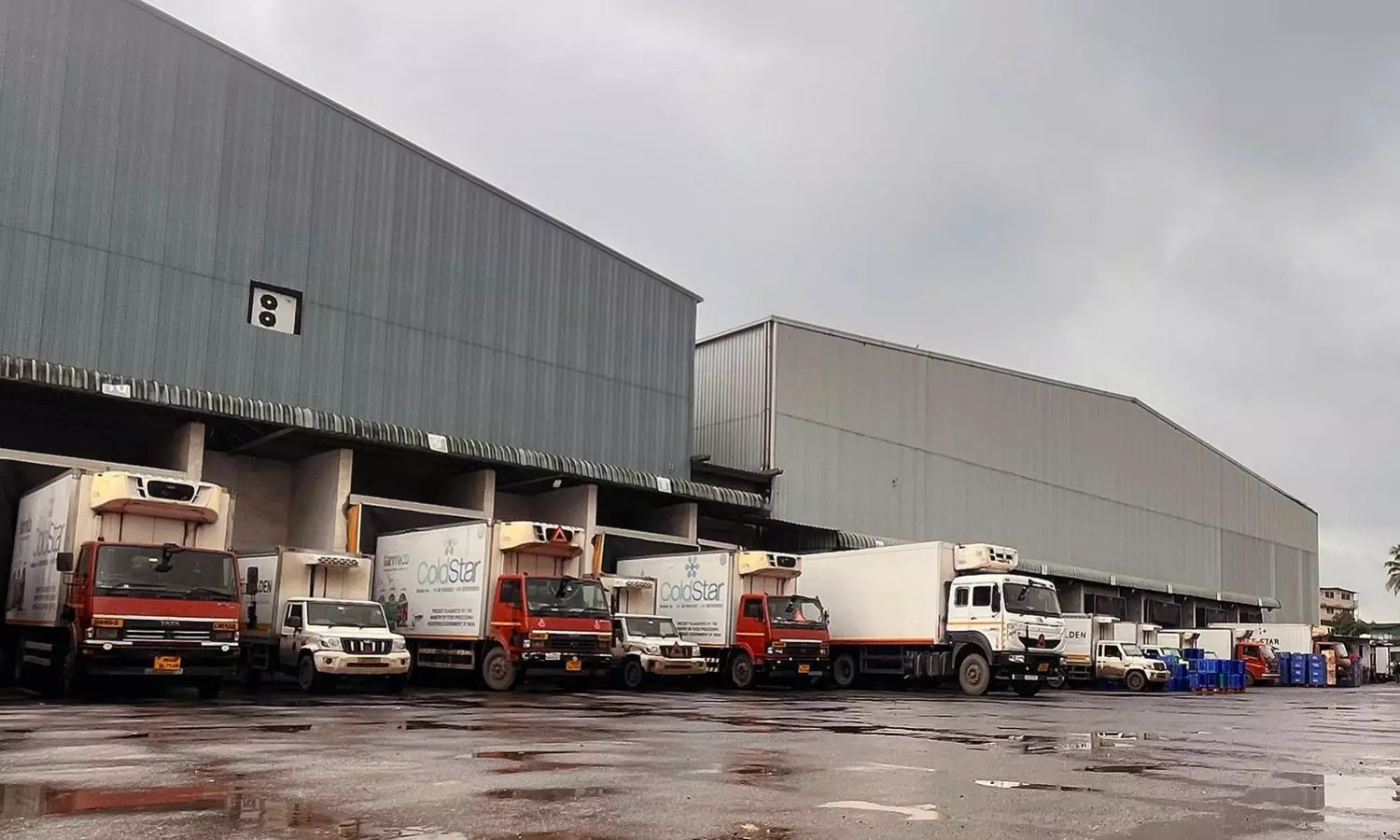
Pune’s logistics ecosystem has strengthened with the commissioning of a new temperature-controlled warehouse in Chakan Phase II, covering 220,000 square feet and designed to handle over 300,000 units daily. The facility, tailored to perishable goods such as fruits, vegetables, and fast-moving consumer products, aims to streamline supply chains across Pune and the broader Maharashtra hinterland, potentially reducing spoilage and improving delivery efficiency.
Urban planners and industry experts note that Pune’s growing consumption market, coupled with fragmented local supply chains, has created demand for centralised cold-storage nodes. The Chakan facility addresses this by consolidating smaller supplier shipments, enabling faster distribution to urban and peri-urban retail networks. Dedicated zones for cold storage, preprocessing, and staging help reduce internal handling, while multiple temperature bands from 0–8°C for fresh produce to sub-zero zones for frozen items support diverse cargo profiles.
From an economic perspective, the warehouse offers tangible benefits for a range of stakeholders. Farmers and small suppliers can access larger markets with reduced wastage, while retailers and e-commerce platforms gain fresher inventory and improved shelf-life. Logistics providers can optimise truck loads using variable-temperature bays, consolidating multi-temperature pallets in a single outbound trip, reducing empty miles and boosting vehicle utilisation. Industry sources highlight that such facilities are increasingly important in regions where high-value perishables move rapidly between production clusters and consumption centres. The Chakan hub also incorporates operational resilience measures critical for large cold-chain facilities. Redundant refrigeration circuits, backup generators, and streamlined handling layouts minimise the risk of temperature excursions and service disruptions. For urban logistics planners, these design elements enhance continuity in distribution, particularly for high-demand, time-sensitive goods.
Beyond regional distribution, the facility supports pre-processing for industrial and export-grade produce, simplifying freight documentation and supply chain coordination for industrial corridors in Maharashtra. Analysts suggest that as cities like Pune expand consumption and modern retail penetration, centralised cold-chain hubs will be pivotal in reducing environmental impact through fewer deliveries and lower food wastage. For shippers and transport teams, integrating the Chakan warehouse into route planning requires alignment on pallet dimensions, temperature requirements, and lead-time schedules. Proper coordination is expected to improve last-mile reliability, reduce haulage costs, and enable more predictable inventory flows. As Pune’s urban logistics infrastructure evolves, facilities such as this could become key nodes in sustainable, climate-resilient supply chains.