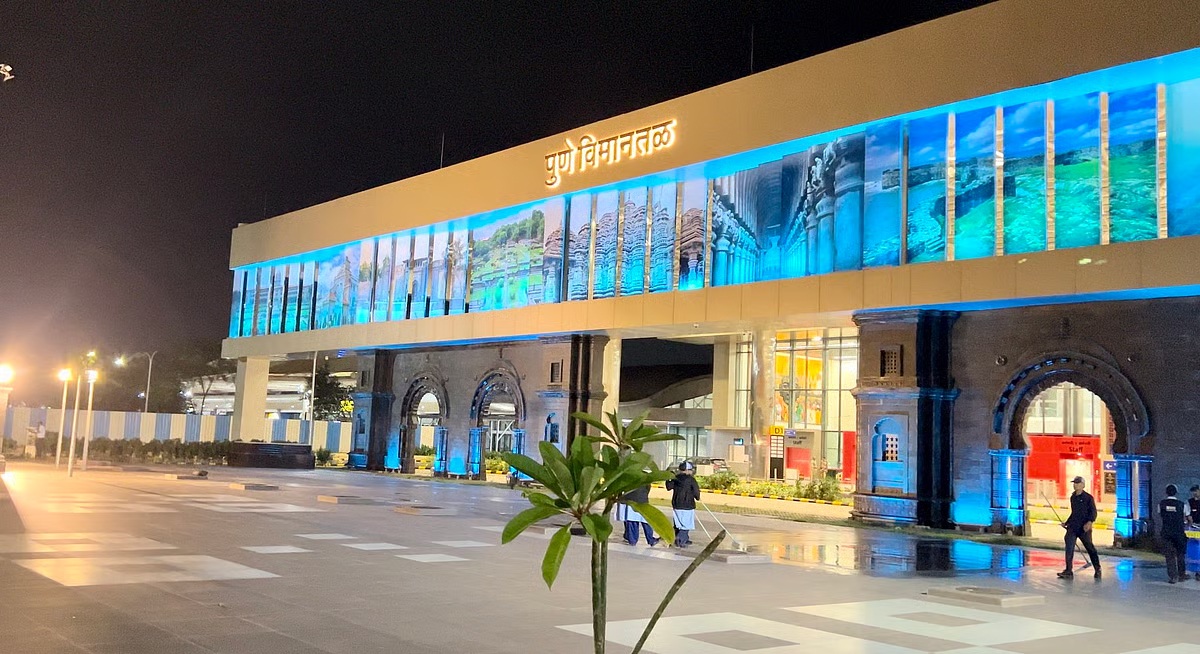
Pune Airport is preparing to commission a significantly expanded departure zone, with a new security hold area expected to become operational by the end of May, subject to regulatory clearance. The additional space is intended to ease congestion at one of India’s fastest-growing regional aviation hubs, where passenger volumes have climbed sharply over the past two years. Airport officials indicate that civil works on the new security hold area are nearing completion, after which mandatory inspections and certification will be undertaken by aviation security authorities. Only once those approvals are secured can flight operations be routed through the expanded zone.
The new security hold area has been developed within the footprint of the airport’s former arrival section and integrated into the recently operational terminal building. The expansion is designed to add roughly 4,000 square metres of departure space. It will include additional check-in counters, security screening systems and boarding gates, enabling more efficient passenger processing during peak hours. In 2025, Pune Airport handled over 10.8 million passengers, marking steady growth from the previous year. With airlines continuing to add capacity on metro and tier-II routes, officials anticipate further traffic increases this year. Aviation analysts note that such passenger growth, if not matched by processing infrastructure, can result in longer queues, higher turnaround times and operational stress for carriers.
Industry observers also point out that regulatory approvals often determine the true commissioning timeline of airport infrastructure. Security audits frequently recommend design or procedural changes before operational sign-off. Similar processes had earlier delayed the full utilisation of the airport’s new terminal building, underscoring how compliance requirements shape project timelines in India’s aviation sector. Urban planners view the expanded security hold area as an interim but necessary step in strengthening Pune’s position as a business and technology centre. Improved passenger handling capacity supports economic mobility, regional investment flows and workforce connectivity. However, experts caution that landside access, apron capacity and runway optimisation must evolve in parallel to prevent bottlenecks shifting from terminal interiors to airside or road networks.
With growing climate scrutiny around aviation infrastructure, efficient terminal design also matters. Larger holding areas can improve passenger comfort and reduce overcrowding, but energy management, ventilation efficiency and sustainable material use will determine the environmental footprint of such expansions. For travellers, the immediate benefit will likely be reduced crowding during peak departures once the security hold area is functional. For the city, the project represents another incremental upgrade in a broader aviation modernisation cycle. As passenger traffic continues to rise, the speed and coordination of regulatory clearances will remain critical in ensuring that infrastructure keeps pace with demand rather than reacting to it.