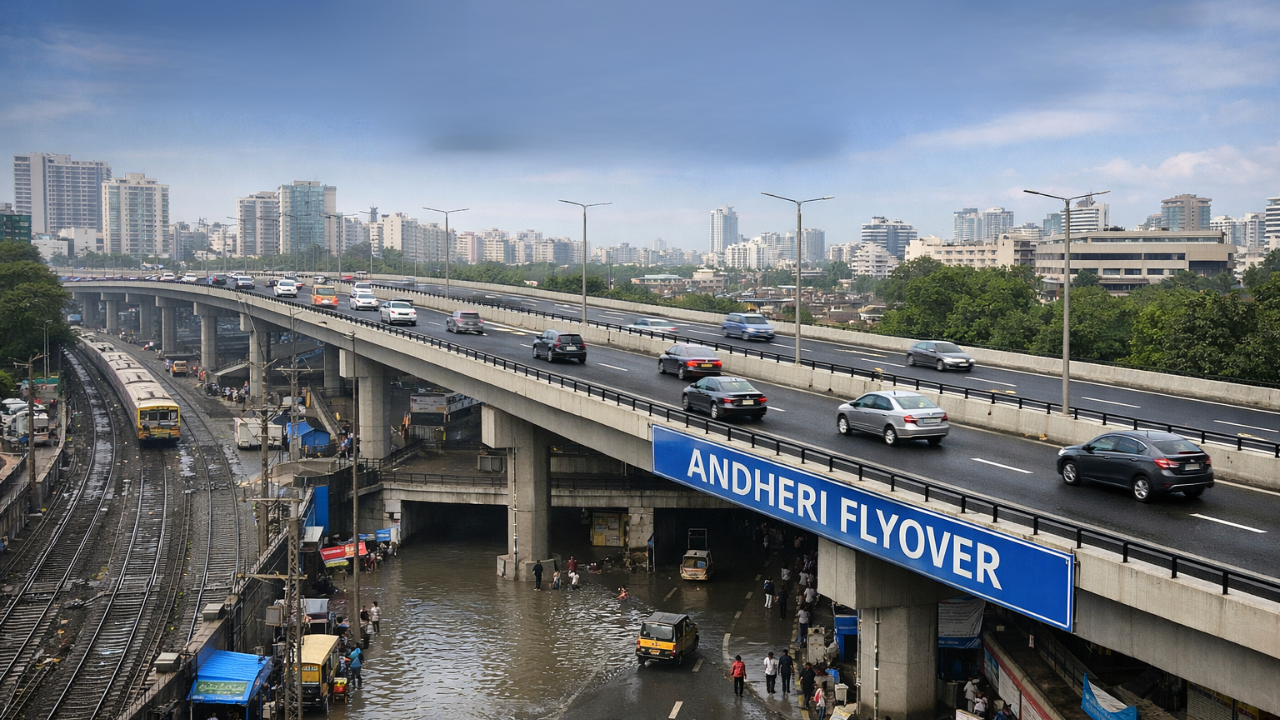
Mumbai authorities are exploring a long-term engineering solution to address chronic flooding at the Andheri subway, a key east–west artery in the city’s western suburbs. Every monsoon, heavy rains overwhelm the subway, halting traffic, stranding commuters, and disrupting emergency services. The Brihanmumbai Municipal Corporation (BMC) has now commissioned a consultant to assess the feasibility of constructing a flyover above the subway, signalling a shift from traditional drainage-based interventions.
The flooding issue originates from the Mogra nullah, a 2.5-kilometre drainage channel with a steep descent of around 13 metres. During intense rainfall, water rushes down the channel rapidly, and high tide conditions exacerbate the problem by preventing outflow to the sea. As a result, the subway and nearby areas such as Azad Nagar experience waterlogging severe enough to necessitate closures, creating cascading traffic congestion across Andheri and adjacent localities. The BMC’s consultant has been tasked with a three-month study to evaluate the technical viability of a flyover, including its design length, construction challenges, cost estimates, and potential benefits. The review will also examine necessary permissions, particularly from railway authorities, as the subway passes beneath active tracks near Gokhale Bridge and Andheri railway station. Urban planners suggest that an elevated corridor could separate traffic from flood-prone zones, potentially reducing annual disruption for thousands of commuters.
Earlier proposals focused on building a stormwater drain at a cost of ₹209 crore to divert water from the Mogra nullah. However, engineers raised concerns that even with such a drain, flooding could persist due to high tidal interference, leading the civic body to reconsider its strategy. The potential flyover plan reflects a broader shift towards infrastructure solutions that prioritise resilience over reactive drainage fixes. Traffic experts note that the Andheri subway is not just a local connector but a critical artery affecting the western suburbs’ mobility network. Flooding here can impede public transport, emergency vehicles, and private commutes, highlighting the need for robust urban flood mitigation measures. Incorporating flyover infrastructure could also support future traffic growth, complementing ongoing road expansion projects in the region.
The proposed approach aligns with emerging city-level planning priorities that focus on resilient, adaptive infrastructure in flood-prone urban corridors. By separating vehicular flow from monsoon-affected zones, the solution aims to reduce economic losses from travel delays, protect emergency response efficiency, and enhance commuter safety. Should the feasibility study confirm viability, the BMC is expected to prioritise flyover construction over traditional drainage projects, potentially setting a precedent for other Mumbai flood-prone subways. As Mumbai continues to experience intense rainfall events exacerbated by climate change, elevated road infrastructure in vulnerable areas could become a key element of the city’s urban resilience framework. Residents and businesses along the Andheri corridor may soon see a shift from temporary, seasonal fixes to more permanent, sustainable solutions.
Mumbai Plans Flyover To End Andheri Subway Floods