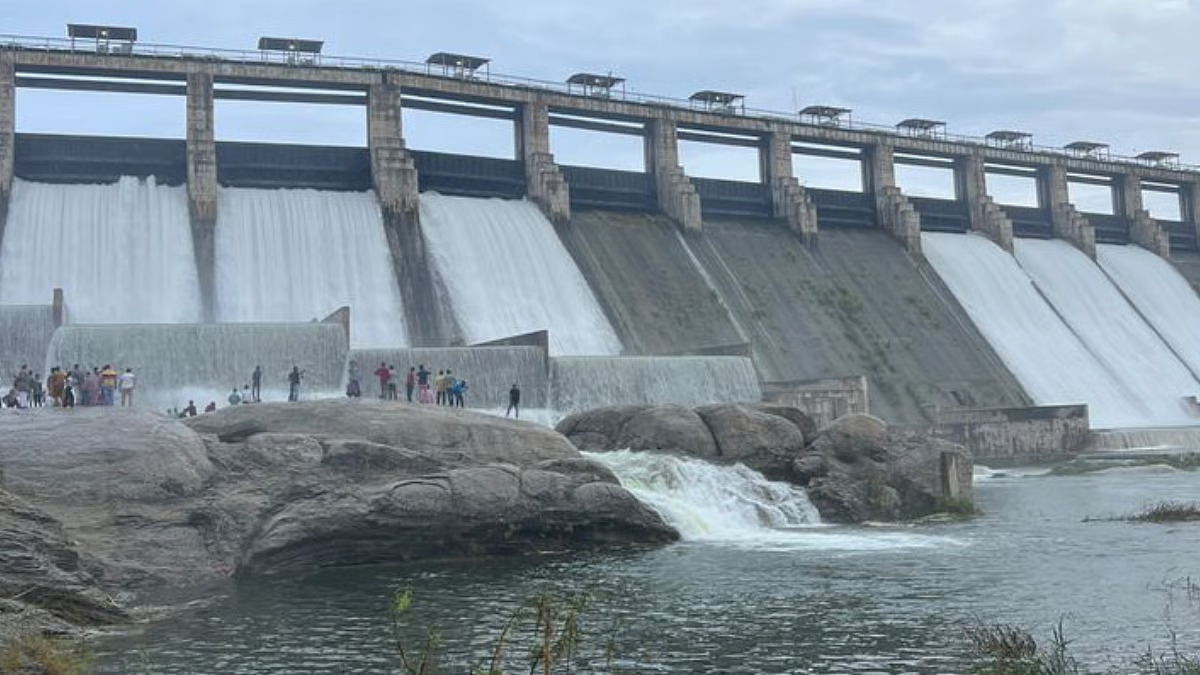
The Maharashtra government has issued work orders for two major dams in Karjat, signalling a significant expansion of water infrastructure for the Mumbai Metropolitan Region (MMR). The projects, designed to collectively store nearly 19 thousand million cubic feet (TMC) of water, mark the first substantial dam construction initiative in the area in almost two decades. Officials indicate that the developments aim to address growing urban and industrial water demand while enhancing long-term climate resilience.
The two dams, Poshir and Shilar, were approved as part of a broader ₹18,842 crore four-dam programme sanctioned by the state cabinet in May 2025. The Poshir dam, to be constructed on the Poshir River, will have a storage capacity of 12.344 TMC, of which approximately 7.933 TMC is earmarked for drinking water and 1.859 TMC for industrial supply. The Shilar dam, on the Shilar River, will hold 6.61 TMC, primarily to serve municipal water needs in Panvel and Navi Mumbai. Both projects are scheduled for completion within five years, with land acquisition responsibilities placed on the contractors. Senior officials in the Water Resources Department caution that land acquisition, particularly of forest and private lands, could pose challenges given the historical delays experienced by the long-stalled Kalu dam project. Bidders are required to negotiate with landowners and secure necessary clearances, highlighting the complex intersection of infrastructure development, environmental regulation, and local community engagement.
The projects have been awarded to M/s Prasad HES Bekem for Poshir and M/s Mahalaxmi SEL for Shilar, with tender costs estimated at ₹2,135.97 crore and ₹1,667.65 crore respectively. Analysts note that these investments are expected to significantly bolster water security for both residential and industrial users in rapidly urbanising districts around Navi Mumbai, Ulhasnagar, Ambernath, Badlapur, and Panvel. Urban planners emphasise that increasing water storage capacity is critical for mitigating the pressure on existing pipelines and reservoirs, particularly in the context of rising population density, industrial expansion, and erratic monsoon patterns. By providing an additional 18.954 TMC of storage, the Poshir and Shilar dams are expected to reduce reliance on overburdened local sources and improve overall distribution efficiency across the MMR.
The projects also carry broader economic and social implications. The construction phase is anticipated to generate substantial employment opportunities, while enhanced water availability is expected to support industrial growth and residential development in adjoining municipalities. Moreover, by integrating modern engineering approaches, the dams contribute to sustainable water management practices in a region facing increasing climate stress. Overall, Maharashtra’s work order for the Poshir and Shilar dams represents a long-awaited step toward resolving regional water shortages, strengthening infrastructure resilience, and ensuring more equitable water access for urban and industrial stakeholders in the Mumbai Metropolitan Region.
Karjat Dams Set To Ease Regional Water Shortages