


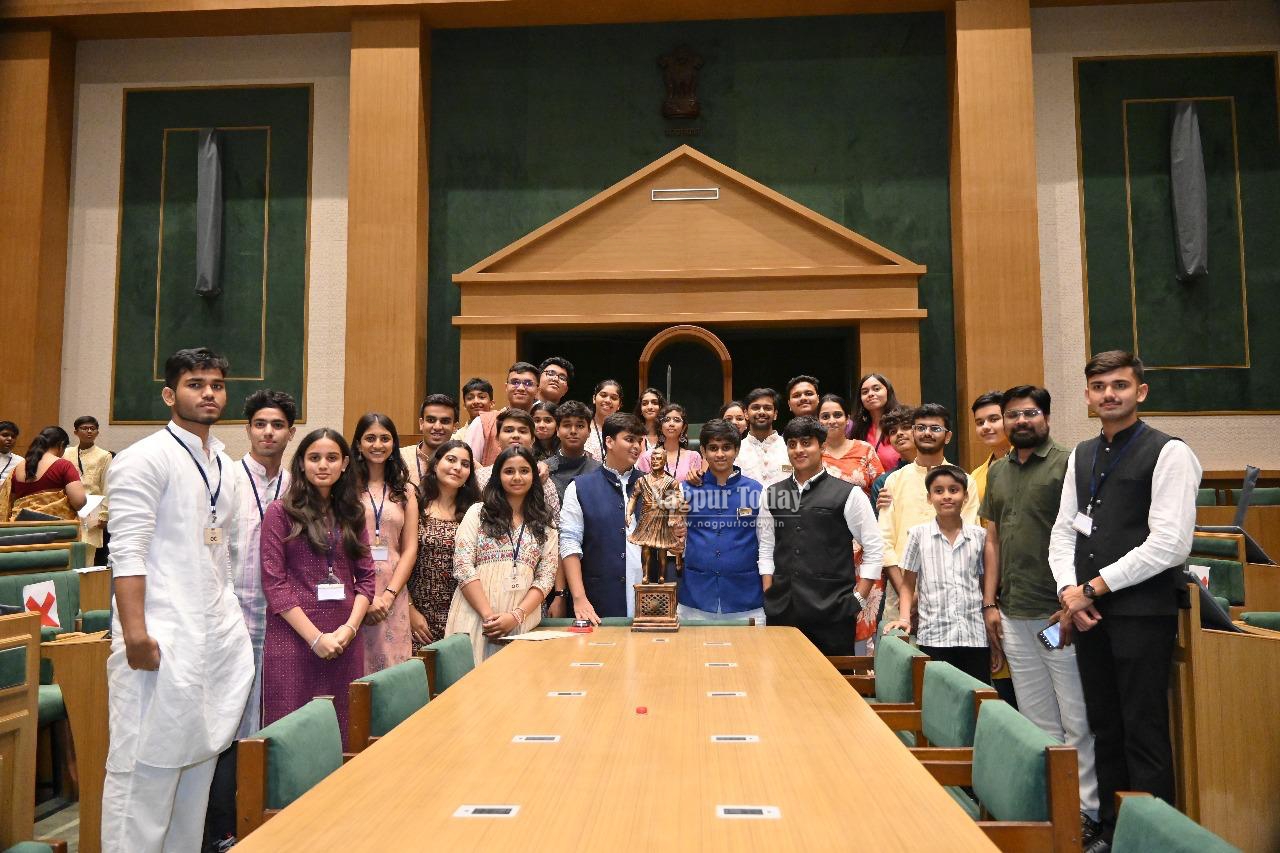
Nagpur, Maharashtra — Over 200 young delegates from across India converged in Nagpur this week for the National Environment Youth Parliament, a forum designed to deepen youth engagement in climate governance, policy dialogues and actionable sustainability frameworks.
Organised by a coalition of civil society groups and environmental institutions, the event sought to elevate youth perspectives on climate resilience, equitable development and urban environmental stewardship at a time when India’s cities are navigating the twin pressures of rapid urbanisation and ecological risk. The multi-day gathering brought together students, young professionals and climate advocates representing diverse regions, backgrounds and sectors. Participants took part in structured debates, policy labs and plenary sessions focused on key domains such as green energy transitions, sustainable urban planning, waste management, water security and community resilience. Through moderated discussions, delegates articulated proposals that reflect emerging youth priorities for climate action that is both inclusive and evidence-based. A central theme of the parliament was the shifting role of governance frameworks in shaping the environmental trajectory of Indian cities. As frontline actors in future policy landscapes, many young participants emphasised the need to infuse climate science and social equity into existing governance architectures.
According to organisers, youth contributions during the sessions will be compiled into a policy brief to be shared with government bodies, urban planners and civil society networks, with the aim of informing climate action plans and national environmental strategies. Urban sustainability experts at the event noted that youth engagement — far from symbolic — can provide fresh insights into persistent challenges such as air pollution mitigation, urban heat adaptation, circular economy models and inclusive green spaces. “Cities need not only technical solutions but also participatory governance that reflects the aspirations of all stakeholders, including young people who will inherit these systems,” said a senior sustainability scholar facilitating one of the plenary panels. The Youth Parliament’s emphasis on actionable outcomes extends beyond dialogue. Breakout groups developed thematic policy recommendations — ranging from decentralised renewable energy deployment and equitable access to clean transport, to nature-based solutions for flood control and waste-to-resource pathways for urban municipalities.
Delegates also explored frameworks for integrating climate priorities into school and higher education curricula, as well as community-based resilience initiatives that support vulnerable neighbourhoods. India’s urban population is expected to swell in the coming decades, placing increasing demand on infrastructure, services and natural systems. Events such as the National Environment Youth Parliament serve to bridge generational dialogues between emerging leaders and institutional decision-makers. By advocating for evidence-driven policy, youth delegates highlighted the importance of climate governance that is both inclusive and future-ready, recognising that equitable access to clean air, water and green spaces is central to resilient and thriving cities. Political scientists and municipal officials attending the forum pointed to the potential for scaling youth-led proposals within city planning processes and state climate action plans. They underscored that mobilising youth voices can strengthen democratic processes and enhance accountability in environmental policymaking at municipal and state levels.
Participants expressed optimism that their deliberations would shape local climate advocacy networks and inspire peer-led initiatives back home. As one youth delegate summarised, “Realising climate goals in our cities requires both institutional commitment and grassroots leadership — and today’s conversations are just the beginning of that journey.”
Also Read: Nagpur HC Intervenes In Dental Equipment Procurement
