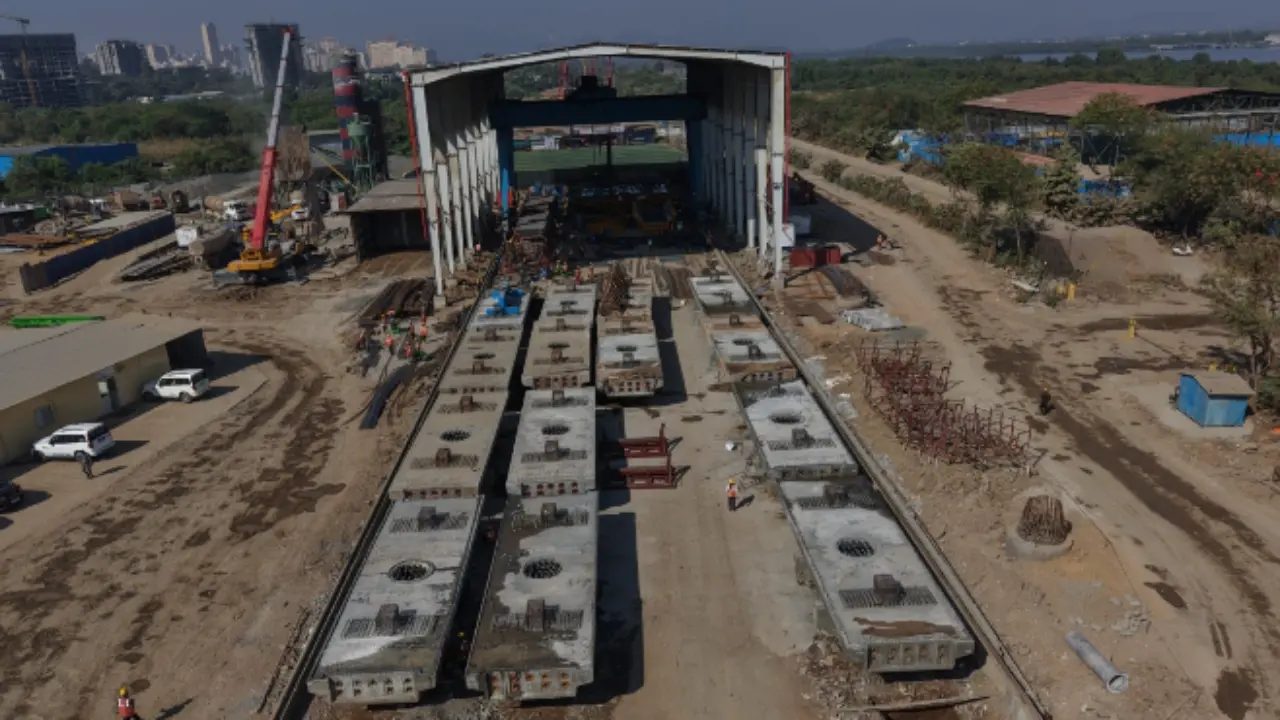
The elevated Thane Coastal Road is moving into its most visible construction phase, with more than 50 per cent of viaduct foundation work now completed along the corridor, according to project officials. The milestone signals a transition from preparatory groundwork to vertical construction, underscoring the steady pace of one of the Mumbai Metropolitan Region’s most consequential road infrastructure projects.
Being implemented by the Mumbai Metropolitan Region Development Authority, the 13.45-kilometre, six-lane coastal corridor is designed to connect Kharegaon in Kalwa with Gaimukh in Thane. Once operational, it is expected to function as a parallel north–south mobility spine, easing pressure on the heavily burdened Ghodbunder Road, which currently carries a mix of local, regional, and freight traffic. Officials overseeing the project said construction teams have progressed to pier cap casting and girder installation at multiple locations, a stage that allows faster linear expansion of the elevated structure. Industry experts note that this phase is often critical in large coastal projects, as it determines construction speed, cost control, and long-term structural resilience, particularly in saline and high-moisture environments.
For daily commuters in Thane, the implications are significant. Travel between Kalwa, Gaimukh, and surrounding growth corridors has long been characterised by congestion, inconsistent travel times, and deteriorating surface conditions caused by heavy vehicle movement. Urban transport planners argue that the new coastal road could cut peak-hour travel times substantially, while also improving predictability for logistics, public transport scheduling, and emergency services. Beyond mobility, the project carries wider economic and urban development relevance. Improved connectivity is expected to strengthen Thane’s integration with the broader Mumbai Metropolitan Region, supporting decentralised employment hubs and reducing the need for long, cross-city commutes. Real estate analysts suggest that areas along the alignment may see more balanced development, provided land use planning prioritises mixed-income housing, walkability, and access to public transport.
Environmental considerations remain central to the project’s execution. Officials have indicated that construction sequencing, material selection, and drainage design are being aligned with coastal regulation requirements and long-term climate resilience goals. Urban policy specialists caution that while elevated roads can relieve congestion, their success ultimately depends on how well they integrate with public transport networks and non-motorised mobility infrastructure. With a completion target set for 2028, the focus over the next two years will be on maintaining construction momentum while minimising disruption to surrounding neighbourhoods and coastal ecosystems. As foundation work gives way to rapid superstructure assembly, the Thane Coastal Road is increasingly seen as a test case for how large urban infrastructure can balance speed, resilience, and people-first planning in one of India’s fastest-growing metropolitan regions.
Thane Coastal Road Builds New Mobility Spine