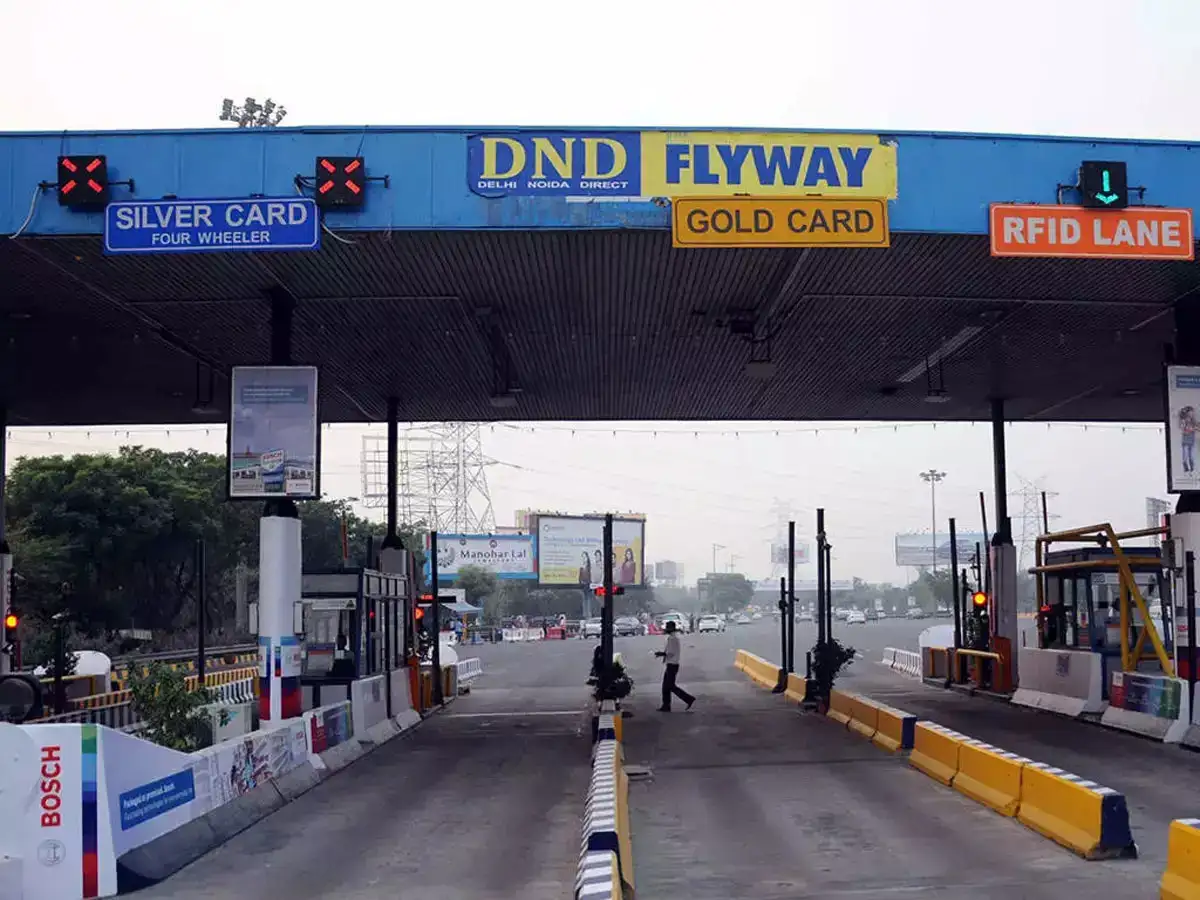
Noida–Delhi National Capital Region — After a months-long pause due to seasonal pollution control measures and cold weather constraints, repair and upgradation work on the DND Flyway is scheduled to resume in mid-February, city transport infrastructure stakeholders confirmed.
The restart of maintenance activities by the Noida Toll Bridge Company Limited (NTBCL) comes as authorities seek to balance vital commuter infrastructure upkeep with compliance to environmental quality norms. The DND Flyway, an elevated arterial corridor linking Noida with Delhi, handles more than 2.5 lakh vehicles daily, making it one of the region’s most critical transport assets. Planned upgradation and carriageway enhancement work — originally launched in October 2025 — aims to improve road surface quality, enhance safety, and reduce routine traffic wear and tear. However, the project faced delays as hazardous air quality conditions in the National Capital Region triggered GRAP-IV restrictions. These statutory curbs, designed to limit polluting activities during severe smog episodes, legally prevented bituminous and related construction work from proceeding during parts of late 2025.
Infrastructural experts note that GRAP-IV and similar graded response plans are crucial for protecting public health during periods of poor ambient air quality, especially in winter months when emissions and weather conditions combine to elevate fine particulate concentrations. Yet the restrictions also create execution dilemmas for planners, particularly for road surfaces requiring specific temperature conditions — such as bituminous laying — that cannot be compromised without risking long-term durability. NTBCL’s resumption plan ties the restart to a window of more favourable meteorological conditions and the easing of air quality action plan restrictions. Engineers and contractors are poised to complete remaining repairs by March 2026, assuming uninterrupted working periods and ready access to key construction materials. Planners emphasise that careful sequencing of works is being used to minimise traffic disruption while upholding safety and quality standards.
The delayed upgradation underscores broader challenges for urban infrastructure management in India’s rapidly growing metropolitan regions. As cities expand and vehicle volumes rise, maintaining high-capacity arterials like the DND becomes both a priority and a test of resilience. Urban professionals stress that balancing environmental regulation with necessary infrastructure work will be an increasingly common planning consideration, especially as climate variability and air pollution episodes grow in frequency and intensity. For regular commuters, the Tolled Flyway restart signals hope for smoother journeys with fewer bumps and potholes, which have occasionally contributed to slower travel speeds and traffic congestion during peak hours. Analysts point out that maintaining transport corridors — rather than simply expanding capacity — is essential for ensuring equitable and reliable mobility, which underpins economic activity and regional integration across the NCR.
Looking ahead, authorities may explore scheduling major road works outside peak pollution seasons and further integrating air-quality forecasts into construction planning. Such adaptive management practices could help balance infrastructure delivery with environmental compliance, supporting urban areas’ twin goals of sustainable mobility and climate resilience.