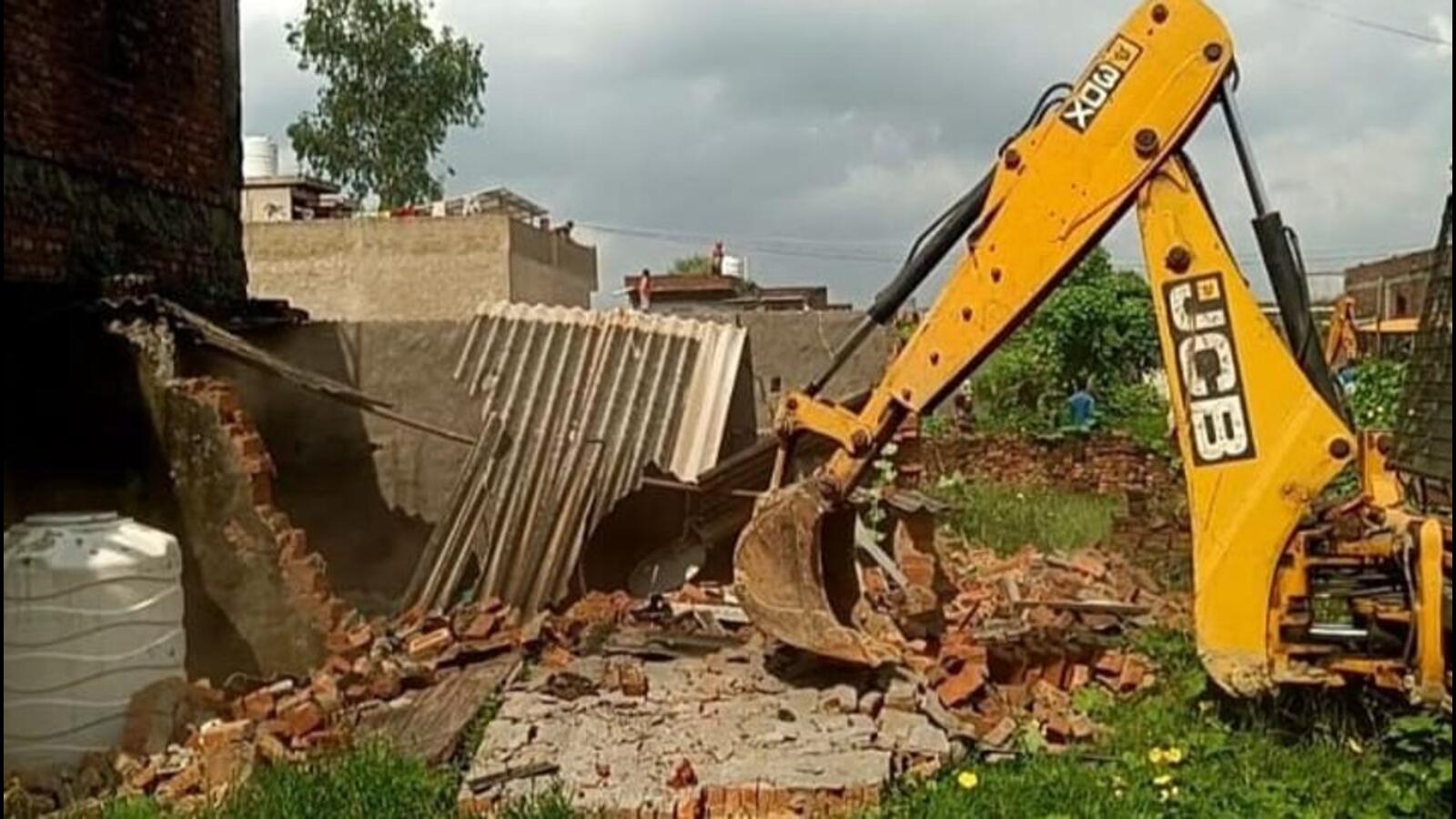
Greater Noida Reclaims Floodplain Land From Encroachers
Greater Noida, Uttar Pradesh — In a decisive enforcement action this week, the Greater Noida Authority cleared about 30,000 square metres of encroached land in the Bisrakh floodplain, dismantling illegal boundary walls and unauthorised plotting in a zone designated as environmentally sensitive.
The move highlights the growing tension between rapid real estate interest and compliance with land-use and ecological safeguards in the Gautam Buddh Nagar district. Officials say the land parcel, identified as Khasra number 135 near Bisrakh village, had been targeted by developers and informal colonisers attempting to mark plots and erect structures without requisite permissions. These activities contravene the authority’s notified land-use regulations, which restrict construction in floodplain zones precisely to maintain natural drainage, reduce flood risk and protect local ecosystems. Under the supervision of operational managers and with logistical support including excavators and police personnel, the Authority removed boundary demarcations and other unauthorised construction elements. Leadership from the project implementation team issued public warnings that any attempt to reoccupy the cleared land will result in stringent legal action.
The enforcement drive is part of a broader anti-encroachment campaign pursued by the Greater Noida Authority in recent months, as it attempts to curtail the proliferation of unplanned development both within and beyond floodplain areas. In parallel operations across the region, similar drives have reclaimed thousands of square metres of land previously seized for unapproved shops, structures and informal plots, particularly where such activity threatens river buffer zones or green belts. Urban planners and environmental advocates say that unchecked construction in floodplain areas compromises natural water retention and drainage capacity, increasing the risk of urban flooding — a concern becoming more acute as climate variability intensifies storm events and alters rainfall patterns. While land-use violations are often driven by speculative investor interest and rising demand for affordable housing near major cities, the environmental cost can be significant if watercourses, wetlands and recharge zones are degraded. Analysts stress that enforcement is essential but must be coupled with transparent land-use planning and accessible legal housing options to reduce incentives for informal developments.
Local development authorities have increasingly urged prospective property buyers to consult official land records and verify approval status before making investments, given the financial risks associated with illegal plots and the potential for demolition without compensation. This advisory has gained traction as enforcement intensifies in flood-prone areas along the Hindon and Yamuna river basins, where past demolition drives have reclaimed floodplain land from unauthorised markets and structures. The Bisrakh action also reflects a broader policy push to balance urban growth with ecological resilience, particularly in peri-urban zones where infrastructure expansion and natural landscapes intersect. Environmental zoning and anti-encroachment efforts play a critical role in sustainable urbanisation strategies, protecting not just physical landforms but also groundwater recharge zones and biodiversity corridors that bolster the climate resilience of rapidly growing metropolitan regions.
Going forward, municipal authorities have indicated that the anti-encroachment campaign will continue, with additional monitoring and enforcement planned across other areas designated as flood risk or environmentally sensitive. This marks a continuing effort to align real estate expansion with statutory land-use frameworks and long-term urban resilience goals.