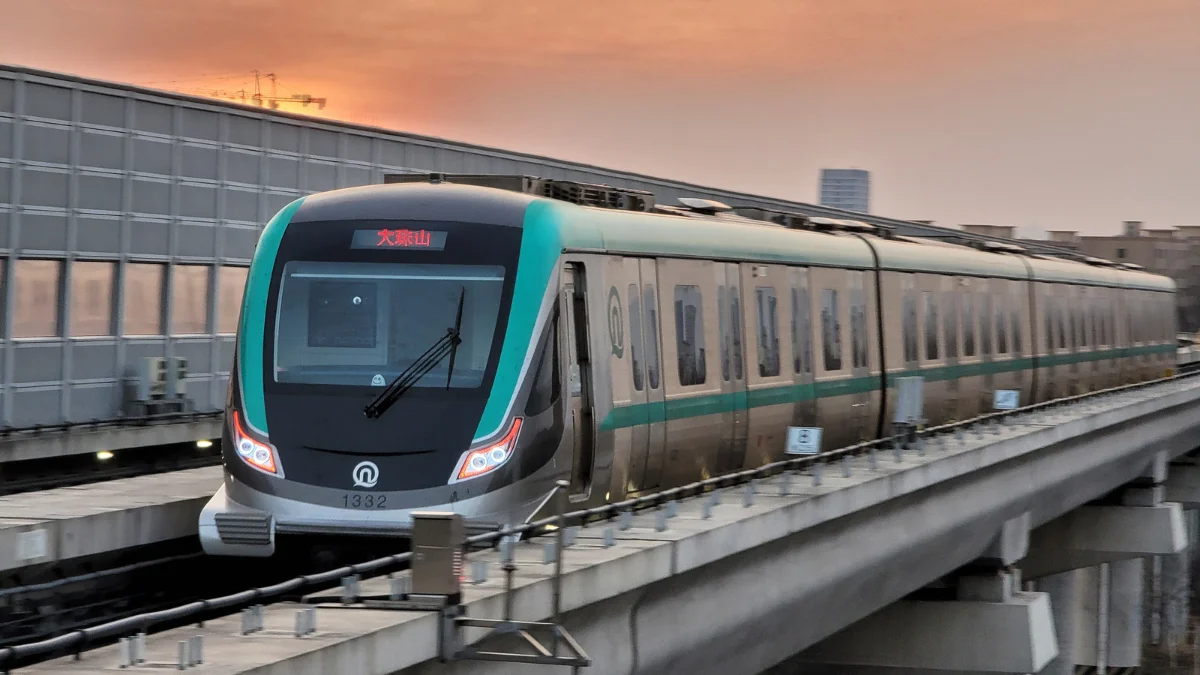
Noida Metro Aqua Line Expands To Boost Regional Connectivity
Noida, Uttar Pradesh — The Union Cabinet on Saturday cleared a major boost to regional mobility by approving an extension of the Noida Metro Aqua Line, bridging a long-standing transit gap between Noida and areas toward Greater Noida and Delhi.
The project, earmarked at roughly ₹2,254 crore and spanning about 11.56 km from Botanical Garden to Sector 142, is set to reshape commuter patterns and advance integrated urban transport in the National Capital Region (NCR). The expansion aims to erect eight elevated stations along a corridor that will connect the Aqua Line directly to Delhi Metro’s Blue and Magenta Lines at Botanical Garden. This strategic linkage transforms what was previously a disconnected network into a cohesive multimodal system — significantly reducing travel times and offering a sustainable alternative to private vehicle use along one of the busiest traffic belts in the NCR.
Officials from the Noida Metro Rail Corporation say the extension will not only enhance accessibility for daily commuters but also relieve congestion on the Noida Expressway — a lifeline for offices, residential complexes, educational institutions and commercial zones. The integrated station at Botanical Garden is poised to become a triple interchange hub, facilitating seamless transfers and strengthening urban connectivity on a corridor where demand for efficient public transit has long outpaced supply. Urban planners and mobility experts describe the project as a necessary evolution of the city’s transport infrastructure. With the Noida Metro extension integrated into the broader NCR transit ecosystem, authorities are effectively promoting modal shift — encouraging commuters to choose mass public transport over personal vehicles, thereby cutting tailpipe emissions and improving air quality. This aligns with regional climate resilience goals and the transition to low-carbon urban mobility.
The route is also expected to catalyse economic activity around its stations. Real estate markets along the corridor — particularly near Sectors 96, 97, 105 and 108 — are likely to see heightened interest as accessibility improves and travel friction decreases. Better connectivity to Delhi’s domestic airport via the Magenta Line and proximity to major commercial nodes could further bolster property demand and employment opportunities in the region. Despite the potential, execution risks remain. Elevated metro construction in dense urban and peri-urban landscapes invariably involves land acquisition challenges, coordination with multiple agencies and ensuring minimal disruption to existing traffic and communities during the construction period. Funding commitments among central, state and local authorities will also require vigilant oversight to maintain timelines.
The project is slated for completion within four years — a timeframe urban mobility stakeholders argue is ambitious but critical, given exponential growth in ridership and the pressing demand for sustainable transport solutions in the NCR. Once operational, the extension will push the Noida–Greater Noida metro network past 61 km, marking a substantial stride toward a more integrated, resilient and inclusive transit future for one of India’s fastest-expanding urban corridors.