


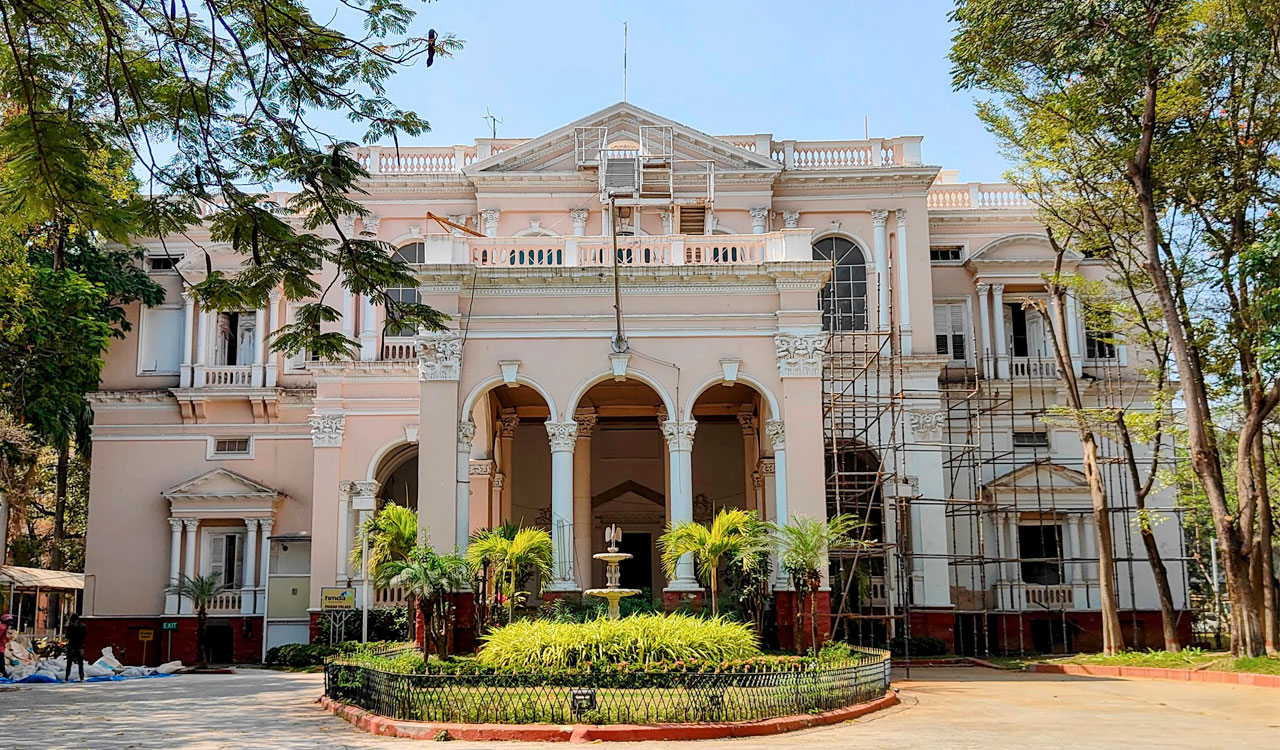
Restoration and expansion works at the historic Paigah Palace in Begumpet are accelerating as the Hyderabad Metropolitan Development Authority prepares to relocate its headquarters and key divisions to the heritage complex in Hyderabad.The redevelopment involves conservation of the main palace structure alongside vertical additions to rear annex buildings to accommodate administrative wings and meeting facilities. Officials indicated that the transition is targeted for completion by April or May, subject to final inspections and finishing works.
Two conference halls with seating capacity of around 100 each are being created within the annex blocks, addressing long-standing space constraints faced by the metropolitan authority across its dispersed offices. Additional floors, including a prefabricated level, are under construction on the annex structures to consolidate departments currently operating from multiple locations in the city.Engineering officials overseeing the project said restoration inside the heritage building is being undertaken with strict conservation protocols. The main palace, recognised for its architectural value, will not undergo structural alterations. Instead, services are being upgraded through non-invasive methods designed to preserve original masonry, high ceilings and ornamental features.
Constructed in the late nineteenth century by a prominent noble family of the former Hyderabad State, Paigah Palace is known for its grand halls, intricate pediments and passive ventilation design. With ceiling heights exceeding 20 feet and large central vents that draw in natural light and air, the building reflects climate-responsive architecture long before sustainability became a planning imperative.Urban conservation experts say adaptive reuse of heritage buildings for public institutions can extend the life of historic assets while reducing the embodied carbon associated with new construction. However, they caution that modern additions must be structurally and visually sensitive to avoid overshadowing original design elements.
The relocation is part of a broader administrative restructuring aimed at improving coordination among planning, urban forestry and infrastructure divisions under one campus. Planners believe consolidating functions could streamline project approvals, metropolitan transport planning and land use decisions across the fast-growing Hyderabad region.Begumpet’s central location and connectivity to major arterial roads and the metro network also make it a strategic administrative hub. Real estate observers note that institutional consolidation in established neighbourhoods can catalyse surrounding commercial activity while preserving core heritage zones.
Yet, integrating contemporary office requirements into a protected structure remains a delicate exercise. Fire safety, accessibility standards and digital infrastructure must be upgraded without compromising historical integrity.As Hyderabad expands outward along its growth corridors, the restoration of Paigah Palace presents a symbolic counterpoint—demonstrating that urban development can coexist with heritage stewardship. The success of the project will hinge on whether conservation standards are maintained and whether the adaptive reuse model becomes a template for safeguarding other historic properties across the metropolitan region.
Also Read:Bengaluru professionals rethink luxury homeownership
Hyderabad Paigah Palace Restoration Gains Pace
