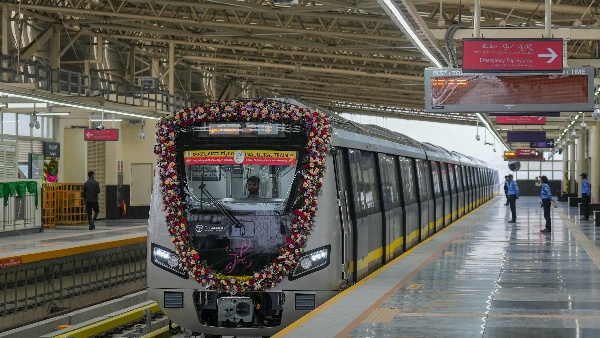
Bengaluru, the city’s ambitious Phase 3A Metro corridor, linking Hebbal to Sarjapur, is facing a regulatory bottleneck as central authorities question the proposed double-decker design. The 36.59-kilometre Red Line, approved by the state government late last year, remains under technical review, delaying approvals that directly affect commuting patterns, congestion relief, and urban mobility planning.
The planned corridor comprises 28 stations, with 22.14 km elevated and 14.45 km underground. The double-decker concept, intended to integrate road and rail infrastructure along much of the route, has raised concerns among urban mobility experts and regulators. Critics argue that pairing additional road lanes with elevated Metro structures risks drawing potential riders back to private vehicles, undermining the mass transit objectives that the project aims to achieve.
Urban planners note that while isolated multi-level junctions can reduce traffic conflicts, extending the design along the full corridor could counteract ridership growth. A senior city planning official highlighted that redundant road capacity in close proximity to Metro lines often encourages car use rather than public transport adoption, increasing operational inefficiencies and long-term maintenance costs. Economic implications are also at stake. Tolled structures integrated with the double-decker design could elevate commuting expenses, disproportionately affecting daily passengers and potentially reducing ridership. The delay in Cabinet approval further shifts project timelines, impacting commercial and residential development projections along the Red Line corridor. Experts warn that recurring design revisions not only postpone essential transport infrastructure but also impose indirect costs on citizens, who must continue relying on congested roads.
The Bangalore Metro Rail Corporation Limited (BMRCL) has emphasised that central scrutiny is a standard procedural requirement. Officials indicate that third-party consultations, cost clarifications, and technical evaluations are being addressed before final approvals are issued. Nonetheless, the debate highlights broader tensions in urban infrastructure planning: balancing ambitious multi-modal projects with the practical realities of ridership behaviour, urban density, and climate-resilient transport. City mobility strategists argue that future approvals should prioritise single-mode Metro corridors where feasible, paired with last-mile connectivity and dedicated non-motorised transport lanes. Limiting structural complexity could accelerate project delivery, reduce operational costs, and enhance accessibility for a broader population. As Bengaluru continues to expand its urban footprint, the handling of Phase 3A will serve as a reference point for integrating high-capacity transit solutions with sustainable, citizen-centric planning.