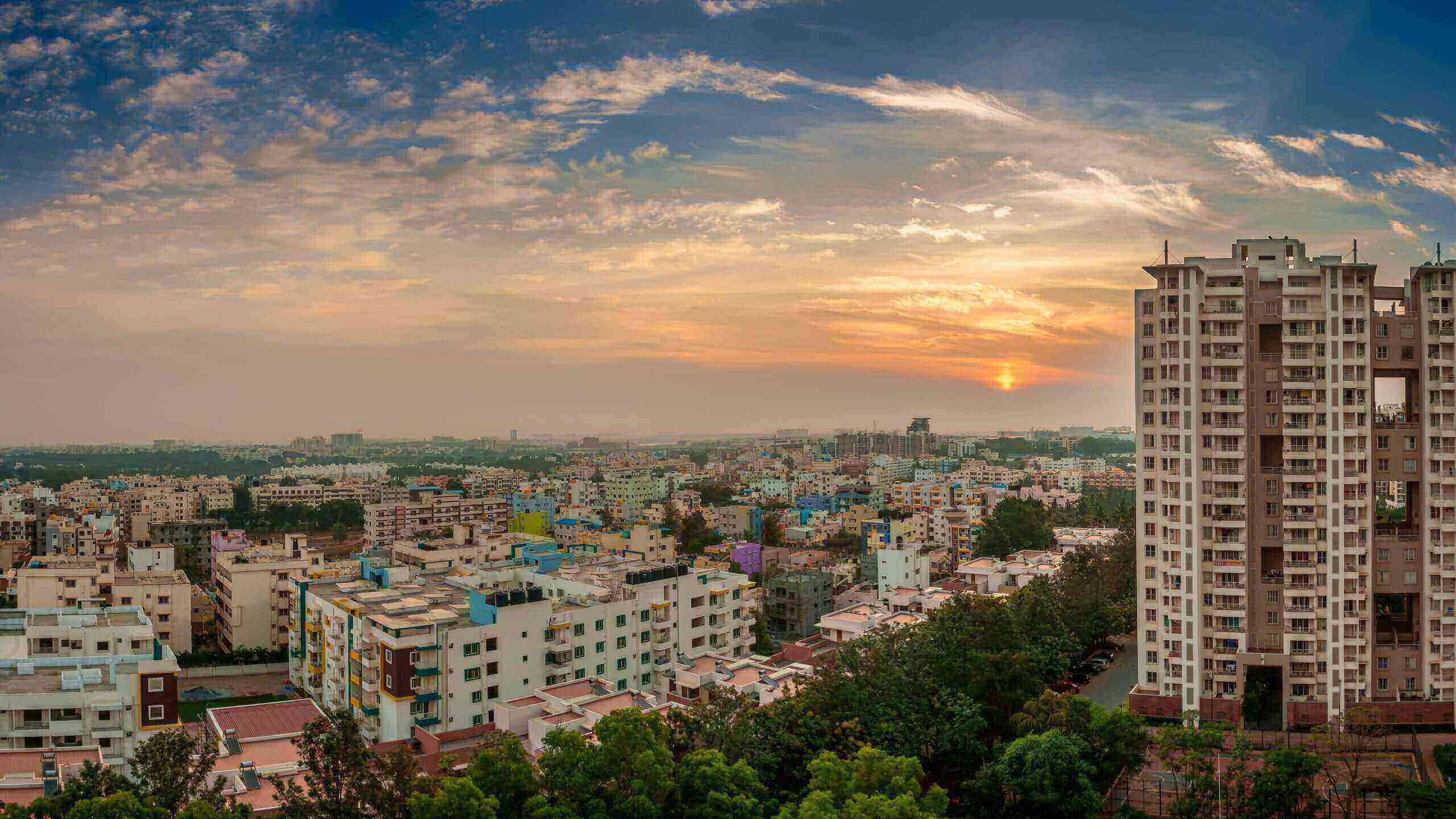
Bengaluru’s residential real estate market is poised for substantial expansion over the next decade, driven by infrastructure projects and strategic urban growth corridors. Analysts project citywide property values could climb 40–70% by 2030, reshaping affordability, investment patterns, and urban density across the capital of Karnataka. The north and east sectors, already hubs for technology and logistics, are expected to lead this transformation, impacting both homeowners and rental markets.
The past five years have seen Bengaluru evolve from a post-pandemic recovery phase to a premium-oriented market. Average property prices, which hovered around ₹5,500 per sq. ft in 2021, have surged in prime areas such as Hebbal, Whitefield, and Sarjapur Road, reflecting growing demand from domestic buyers and NRIs seeking stable returns. While sales volumes have moderated slightly, rental yields have strengthened, supporting sustained investor interest. High-net-worth individuals now account for an increasing share of new residential launches, particularly in luxury segments exceeding 14% of overall projects.
Infrastructure investment is a critical driver. The ongoing Metro Phase 3 expansion is anticipated to enhance connectivity and push property appreciation along its corridors by up to 30%. Similarly, the Peripheral Ring Road and development of Devanahalli as an aviation and smart city hub are creating new nodes for residential and mixed-use growth. Urban planners note that these projects not only improve access but can also help decongest central areas, aligning with sustainable city objectives if paired with low-carbon transit and energy-efficient design standards. Economically, rising property values are shaping household budgets and investment decisions. Rental returns in established corridors are expected to remain stable at 4–6%, making them attractive to millennials and institutional investors. North Bengaluru, particularly around Hebbal and Yelahanka, is forecasted to reach ₹22,000 per sq. ft, while eastern growth areas like Whitefield and Sarjapur may approach ₹20,000–22,000. Analysts caution, however, that moderate oversupply of 5–7% could temper returns, highlighting the importance of portfolio diversification and strategic land use planning.
From a socio-environmental perspective, the market’s trajectory underscores the need for equitable urban development. Ensuring affordable housing options, integrating green infrastructure, and preventing congestion in rapidly developing sectors are critical for long-term livability. Policy support, including targeted homeownership schemes and tax incentives, could help balance growth with inclusion and climate resilience. As Bengaluru heads toward 2030, the city’s real estate landscape is being defined not merely by rising prices, but by the interplay of infrastructure, sustainability, and social equity. How effectively planners and investors align development with these principles will determine whether the city’s growth remains robust, inclusive, and resilient.