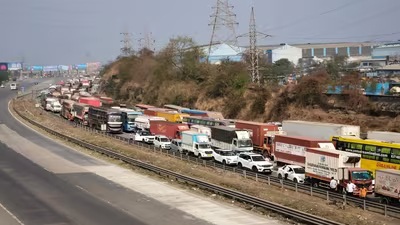
Pune Mumbai Expressway Faces Prolonged Gridlock Challenges
Motorists on the Mumbai–Pune Expressway faced one of the longest traffic disruptions in recent years after a propylene gas tanker overturned near Adoshi, blocking the Pune-to-Mumbai carriageway for over 30 hours. Thousands of vehicles were immobilised, raising urgent questions about toll collection policies and emergency preparedness on one of India’s busiest highway corridors.
Despite the protracted gridlock, tolls continued to be levied at the Khalapur plaza, prompting widespread public frustration. A senior urban transport official noted that automatic toll collection systems lack the capacity to account for emergency closures, highlighting structural limitations in current expressway operations. Following pressure from civic groups, the toll operator confirmed that motorists affected by the incident will receive refunds, though the procedural details remain under review. Urban planners point out that the incident exposes gaps in expressway infrastructure that extend beyond traffic flow.
“Highways are increasingly being treated solely as revenue-generating assets rather than integrated public infrastructure,” said a transport analyst. “Incidents like this show the need for resilient design that considers both emergency access and commuter welfare.” Observers highlighted the absence of basic traveller amenities, including accessible sanitation and mother-and-child facilities, which exacerbate hardship during prolonged delays. Economically, such disruptions can ripple across regional logistics networks. The Mumbai–Pune Expressway serves as a critical artery for freight movement between India’s industrial hubs in Maharashtra, with thousands of commercial vehicles relying on predictable transit times. Analysts estimate that even short-term shutdowns can trigger delayed deliveries, inventory bottlenecks, and higher operational costs, underscoring the necessity of robust contingency planning.The incident has also prompted renewed scrutiny of policy frameworks governing public-private partnerships in expressway management. Toll operators are contractually obligated to maintain service standards, yet mechanisms to enforce commuter-centric obligations remain inconsistent.
Urban affairs specialists argue that the integration of real-time traffic management, transparent refund protocols, and enhanced safety infrastructure could significantly reduce economic and social losses during such emergencies. Looking forward, authorities are expected to assess both immediate corrective measures and long-term resilience strategies. Potential interventions include the installation of emergency bypass routes, improved real-time communication with motorists, and the mandatory inclusion of traveller amenities in expressway design. Experts suggest that these steps could help align Maharashtra’s expressways with broader goals of inclusive, climate-resilient, and people-first infrastructure development. The Adoshi incident serves as a stark reminder that as India’s urban corridors grow in complexity, expressway governance, commuter welfare, and operational resilience must evolve in tandem to prevent economic disruption and safeguard public trust.