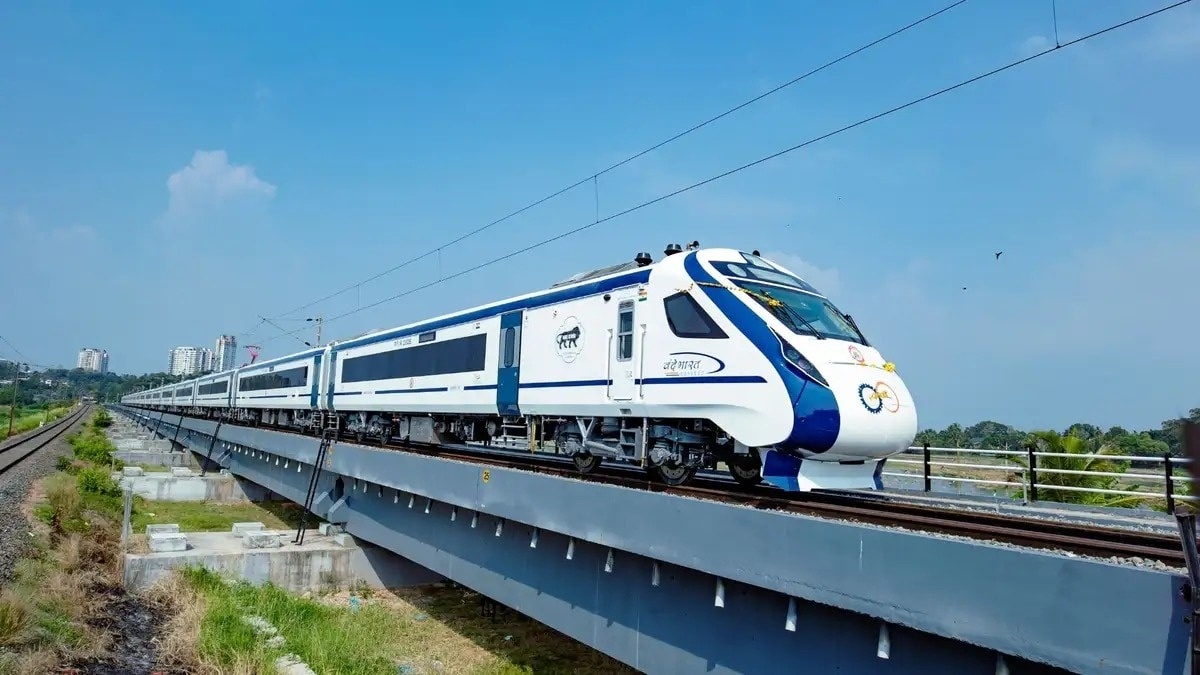
Premium rail connectivity from southern Rajasthan is undergoing a significant reset this week, with two Vande Bharat services linking Udaipur to Jaipur and Agra being withdrawn and capacity redeployed towards Gujarat. The decision marks a strategic shift in the Udaipur Vande Bharat network, reflecting Indian Railways’ focus on route viability and inter-state economic corridors rather than symbolic tourism links.
Services connecting Udaipur City with Jaipur and Agra Cantt will cease operations in mid-February following months of subdued occupancy. Railway officials indicate that average seat utilisation hovered well below optimal levels outside peak travel periods. Despite adjustments to frequency, ridership did not stabilise sufficiently to justify continued deployment of premium rolling stock. For Udaipur, a city heavily reliant on heritage tourism and seasonal visitor flows, the development raises questions about the long-term sustainability of high-speed chair car services in markets driven by weekend and festival demand. Urban mobility planners note that premium rail models perform best on corridors with consistent business traffic and dense intermediate catchments conditions more typical of industrial belts than tourism circuits.
The recalibration comes as the Railway Board intensifies performance reviews across the expanding Vande Bharat portfolio. According to senior officials familiar with operational planning, underperforming routes are being reassessed to optimise rake allocation and improve financial efficiency. In a network where energy consumption, track capacity and asset turnover must align, maintaining lightly occupied services carries both fiscal and environmental costs. The withdrawn rakes will be redeployed on a newly approved Udaipur–Asarwa corridor in Ahmedabad, strengthening rail connectivity between southern Rajasthan and Gujarat’s commercial ecosystem. The Udaipur Vande Bharat on this route is expected to operate six days a week, structured around a same-day return schedule designed to attract business travellers and institutional commuters. Urban economists see the shift as part of a broader transport logic: prioritising corridors that integrate manufacturing clusters, airports and regional markets. Ahmedabad’s industrial base, logistics infrastructure and aviation connectivity offer year-round passenger potential, improving asset productivity while supporting cross-border labour mobility and trade flows.
Importantly, the new alignment also introduces halts at smaller towns en route, expanding access to semi-urban and tribal regions. Transport researchers argue that inclusive connectivity rather than prestige endpoints alone determines whether high-speed rail investments contribute to balanced regional development. For Agra, the change reduces the number of Vande Bharat services touching the city, narrowing options for premium same-day travel from Rajasthan. For Udaipur, however, the pivot represents a pragmatic consolidation rather than retreat. As Indian Railways scales its semi-high-speed fleet nationally, the evolving Udaipur Vande Bharat story illustrates a central lesson in urban infrastructure planning: speed must be matched with sustained demand, corridor economics and equitable regional integration. The coming months will test whether the Gujarat pivot delivers the occupancy stability that eluded its predecessor routes.