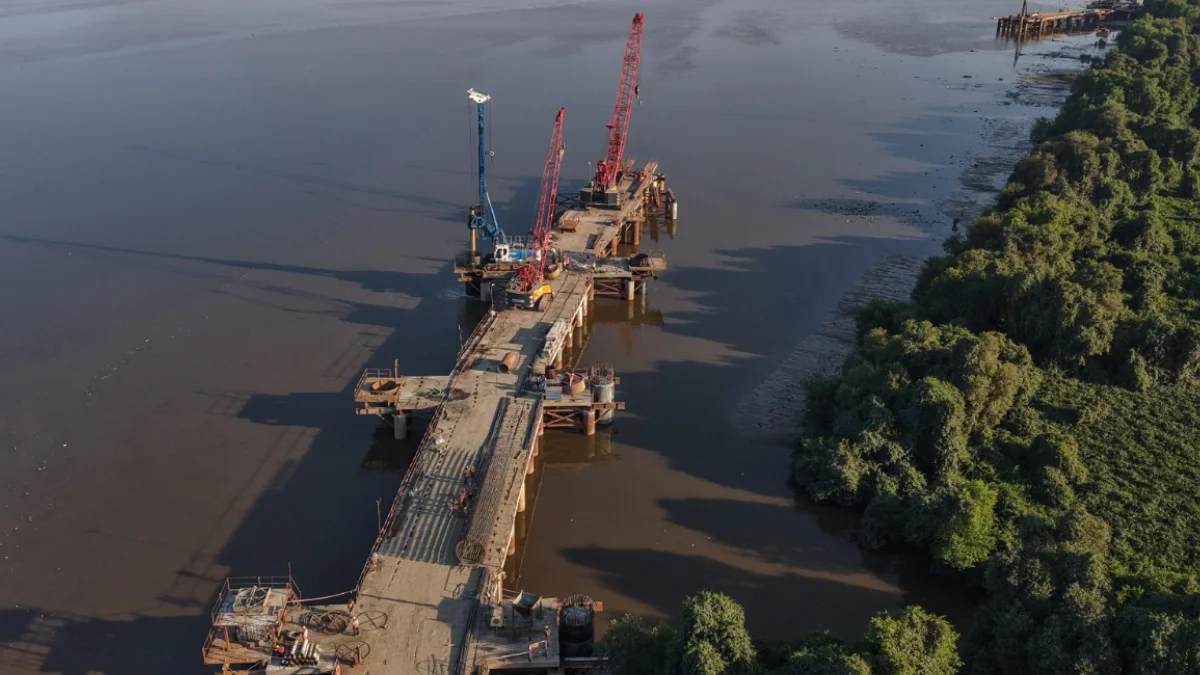
A transformative transport infrastructure project along the Thane coastline has passed a key construction milestone, with more than half of the foundational work completed on the Thane Coastal Road-1 mega-corridor, officials said. The ₹2,727-crore initiative — designed as a six-lane, access-controlled greenfield corridor stretching roughly 13.45 km — now targets operationalization by 2028, reflecting a broader shift in regional planning toward integrated mobility solutions that can support economic growth, reduce congestion and enhance logistic efficiency.
Construction of the elevated viaduct’s foundation work has advanced rapidly since breaking ground eight months ago, with pier cap and I-girder erections now underway across multiple segments. The project is conceived to provide a strategic alternative route to the heavily used Ghodbunder Road, which has long been plagued by traffic congestion, slow-moving freight and commuting inefficiencies. By rerouting movements along a dedicated coastal path, planners aim to cut urban travel times significantly and improve reliability for both passenger and commercial vehicles.Beyond improving traffic flow, Thane Coastal Road-1 is being positioned as a backbone for future regional connectivity. At its northern end in Gaimukh, it will link with the proposed Gaimukh–Fountain Hotel Tunnel, facilitating smoother access toward the western suburbs. To the south, integration with the Mumbai‑Nashik Highway (NH-160) at Kharegaon is expected to streamline long-distance freight movements, reducing pressure on internal corridors and supporting logistics flows toward major hubs such as Jawaharlal Nehru Port Trust and inland markets.
Engineers have adopted advanced construction techniques for this corridor, notably a single-pile, single-pier monopile foundation system — the first of its kind used on a greenfield road project in India. This method not only speeds up construction but also minimises ground disturbance in sensitive coastal and mangrove‐adjacent areas. Such considerations reflect evolving cost, environmental and resilience priorities in Maharashtra’s infrastructure planning, especially where urban expansion intersects with ecologically sensitive landscapes.The project’s design also anticipates integration with several future infrastructure layers, including the proposed Thane Ring Metro and Thane Coastal Road-2, as well as elevated corridors linking the wider Mumbai Metropolitan Region. This multi-modal matrix aims to decongest existing transport networks while bolstering public transport capacity and freight access, elevating Thane’s role as a nodal gateway between metropolitan zones and hinterland markets.
However, infrastructure experts stress that the success of large corridors like this hinges on timely delivery and operational readiness. Effective coordination with traffic management systems, pedestrian safety protocols and complementary public transit investments will determine whether projected benefits — such as reduced vehicular emissions, lower travel costs and enhanced urban mobility — can be fully realised. With careful execution and stakeholder engagement, the coastal road milestone points toward a future where layered, resilient transport networks support both economic activity and liveability in one of India’s fastest-growing urban regions.