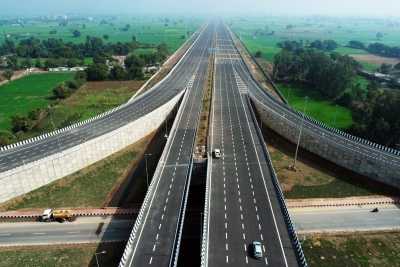
The Union government has cleared highway works worth approximately ₹3,320 crore in Maharashtra, signalling a renewed focus on strengthening freight corridors and improving inter-district mobility in one of India’s most industrialised states. The approved stretch along National Highway 160A is set for widening and upgradation, a move expected to ease congestion around emerging logistics clusters and improve connectivity between key production centres and western ports.
The approved Maharashtra road projects centre on a 150-kilometre alignment connecting Ghoti, Trimbak and the Manor–Palghar belt. These corridors link agricultural zones, pilgrimage routes and industrial estates, creating a complex mobility mix of freight vehicles, daily commuters and long-distance passenger traffic. Officials indicate that the upgrade will improve lane capacity and road geometry, enabling safer and faster movement across the corridor.For districts near Nashik, which have witnessed steady industrial expansion in automotive components, food processing and warehousing, better highway infrastructure could significantly reduce logistics delays. Transport economists note that time savings on arterial routes often translate into lower operating costs for manufacturers and improved supply chain reliability. This is particularly relevant as Maharashtra continues to position itself as a manufacturing and export hub within western India.
Further west, improved access towards Palghar is expected to enhance connectivity between inland production zones and coastal trade gateways. Urban planners suggest that infrastructure upgrades in peri-urban districts can stimulate balanced regional growth, provided they are supported by land-use planning, public transport integration and environmental safeguards.The Maharashtra road projects also intersect with the state’s broader urbanisation challenge. As smaller towns expand and freight volumes rise, highway corridors increasingly function as urban spines rather than purely inter-city links. Without careful planning, this can intensify roadside development, informal access points and safety risks. Road design standards, pedestrian crossings and service roads will therefore play a critical role in determining whether the upgrade enhances long-term liveability.
From a climate perspective, smoother traffic flow can reduce idling and fuel wastage, marginally lowering emissions per vehicle kilometre. However, infrastructure specialists caution that true sustainability gains depend on integrating highways with rail freight, electric vehicle infrastructure and green buffer zones along corridors. Tree cover restoration and water-drainage management will also be important in flood-prone belts.Construction is expected to proceed under a structured implementation model aimed at balancing public funding with private participation. While timelines and detailed environmental assessments will shape the project’s final impact, the approval reflects Maharashtra’s continued reliance on strategic highway expansion to anchor economic growth.
As freight demand accelerates and regional mobility patterns evolve, the effectiveness of these Maharashtra road projects will ultimately be measured not only by kilometres built, but by how well they support safer travel, resilient infrastructure and equitable access across growing urban regions.