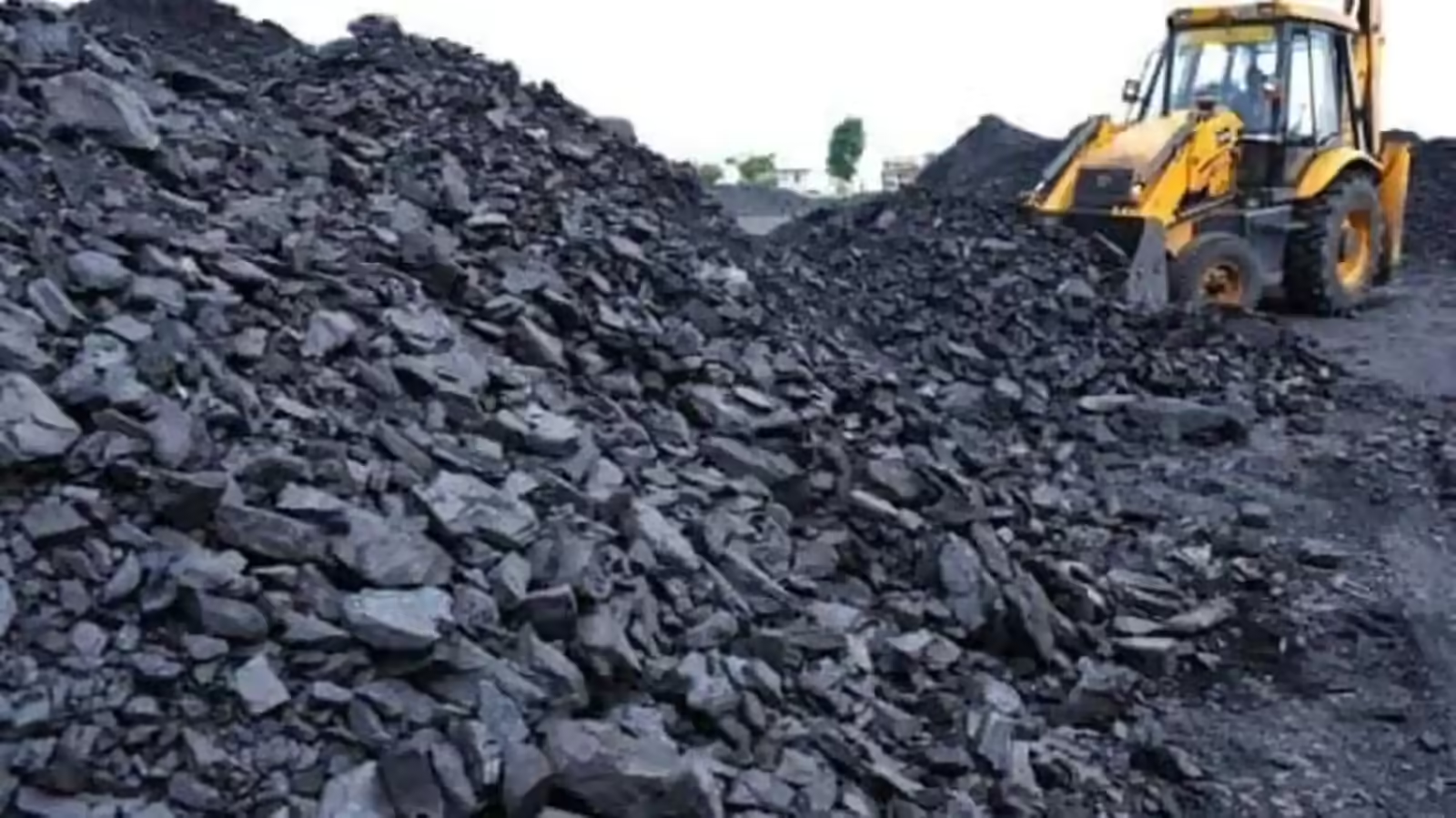
Bharat Coking Coal Limited (BCCL) has taken a notable step toward modernising mining operations in the Dhanbad coalfields with the induction of new heavy-duty production vehicles at Aina Colliery in Kusunda Area, an initiative aimed at improving productivity, safety and regional industrial efficiency. The deployment of advanced machinery mirrors wider industry efforts to align mining output with the infrastructure and manufacturing needs of India’s urbanising economy.
In February 2026, BCCL’s Chairman-cum-Managing Director formally flagged off a fleet of specialised haulage tippers and a high-capacity excavator for use at the deep excavation (DE) patch operated by a contractor in the Kusunda region. The five 35-tonne tippers and a 3.2-cubic-metre shovel are expected to enhance material movement and coal extraction efficiency, reducing turnaround times and improving operational safety standards in one of the country’s busiest coal-producing zones.For urban and infrastructure planners, such upgrades are significant. Coking coal is a vital input for steel production — which in turn fuels construction, transportation networks and industrial fabrication across cities. Enhancing mechanisation at core coal assets like Aina Colliery reinforces domestic supply chains that underpin urban growth, reducing reliance on imports and smoothing input volatility for steelmakers and allied sectors.
The move also aligns with broader policy priorities under initiatives like Mission Coking Coal, which government bodies have championed to boost domestic production capacity and modernise older collieries through technology infusion. As these efforts scale, output from BCCL and its peers in Jharkhand and West Bengal has expanded significantly over recent years, with record volumes contributing to energy and industrial demand across several sectors.Beyond raw production metrics, mechanisation carries implications for worker safety and environmental performance. Heavy-duty equipment with automated controls and better ergonomic design can reduce the physical strain on labour forces while enabling tighter adherence to safety protocols. This is particularly relevant in underground and deep excavation contexts where traditional manual methods pose higher risk profiles.
At the same time, the Kusunda initiative highlights the complexities of balancing industrial efficiency with local socio-economic impacts. Coalfield regions like Dhanbad have long grappled with infrastructure constraints, including road quality, dust management and the integration of mining activity with surrounding communities. Modern machines, when paired with robust environmental management plans, can lessen surface disruption and improve ambient conditions — a priority for sustainable regional planning.BCCL’s broader strategic outlook includes not only production enhancements but also quality assurance and institutional strengthening, demonstrated by recent upgrades to analytical laboratories and washery capacity expansions. These efforts support longer production runs and cleaner coal outputs, which have downstream benefits for energy and steel sectors that are critical to urban infrastructure projects.
Analysts note that mechanisation alone is insufficient without concurrent investments in workforce training and digital tracking systems that can monitor equipment performance and safety metrics in real time. Integrated approaches that combine modern gear with data analytics will play a key role in elevating operational resilience as demand patterns in infrastructure, construction and manufacturing evolve.As India continues its urban transformation, initiatives like the Kusunda fleet upgrade at Aina Colliery illustrate how traditional industry segments adapt to meet the material needs of tomorrow’s cities while striving to improve efficiency and safety along the supply chain.