


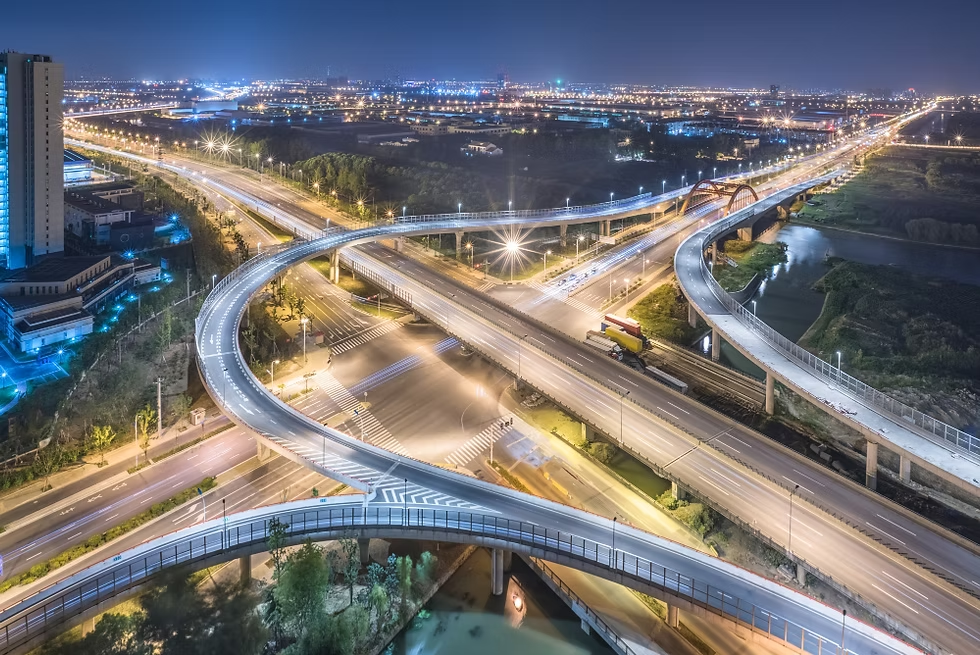
Infrastructure expansion on Bengaluru’s northern edge is reshaping land markets, with Nelamangala about 28 km from the city centre witnessing a steady rise in plotted development and investor enquiries. Improved highway links, industrial expansion and satellite town planning have positioned the corridor as a lower-cost alternative to saturated urban pockets.
The Nelamangala property market has traditionally catered to logistics and small-scale industry due to its access to the Tumakuru Highway and arterial roads connecting Magadi Road and Dabaspet. In recent months, however, residential layouts and gated communities have gained traction, particularly around Arasinakunte and adjoining villages. Real estate consultants attribute this shift to two factors: affordability and infrastructure certainty. Land values remain significantly lower than in North Bengaluru’s established micro-markets, offering first-time investors entry at comparatively modest price points. At the same time, road widening, proposed metro extensions and improved rail access are reducing perceived distance from employment hubs. The region’s inclusion in long-term satellite town proposals has further strengthened investor sentiment. Urban planners say such peripheral nodes are essential to decongest the metropolitan core, provided infrastructure keeps pace with growth. Without parallel investments in water, sewage and public transport, satellite expansion risks replicating the same pressures seen within city limits.
Industrial momentum is also shaping housing demand. As land and rental costs rise in mature industrial clusters like Peenya, small and medium enterprises are evaluating relocation to peripheral zones. This migration supports workforce housing demand in the Nelamangala property market, particularly for plotted layouts and mid-segment apartments. Connectivity remains a central driver. The corridor offers access to national highways and improved freight movement networks, while airport-bound routes have become more seamless with upgraded road infrastructure. Industry analysts note that such multi-modal links are critical for sustaining long-term appreciation rather than speculative spikes. Yet the sustainability lens is equally important. Rapid conversion of agricultural land into layouts without adequate drainage and green buffers can strain fragile peri-urban ecosystems. Experts emphasise that plotted developments must incorporate stormwater management, tree cover and energy-efficient design to ensure long-term resilience. Retail, healthcare and education infrastructure are gradually following residential growth, signalling a maturing micro-market rather than a purely speculative land play. However, civic capacity including water supply and waste management will determine whether growth translates into durable urbanisation.
For Bengaluru, peripheral nodes such as Nelamangala represent both opportunity and caution. If infrastructure-led expansion is matched by inclusive planning and climate-responsive design, emerging corridors could ease housing pressure across the metropolis. The trajectory of the Nelamangala property market may therefore serve as an early indicator of how effectively the city manages its next phase of outward growth.
Also Read: Bengaluru Rental Market Faces Affordability Questions
Bengaluru Nelamangala Sees Infrastructure Led Boom
