


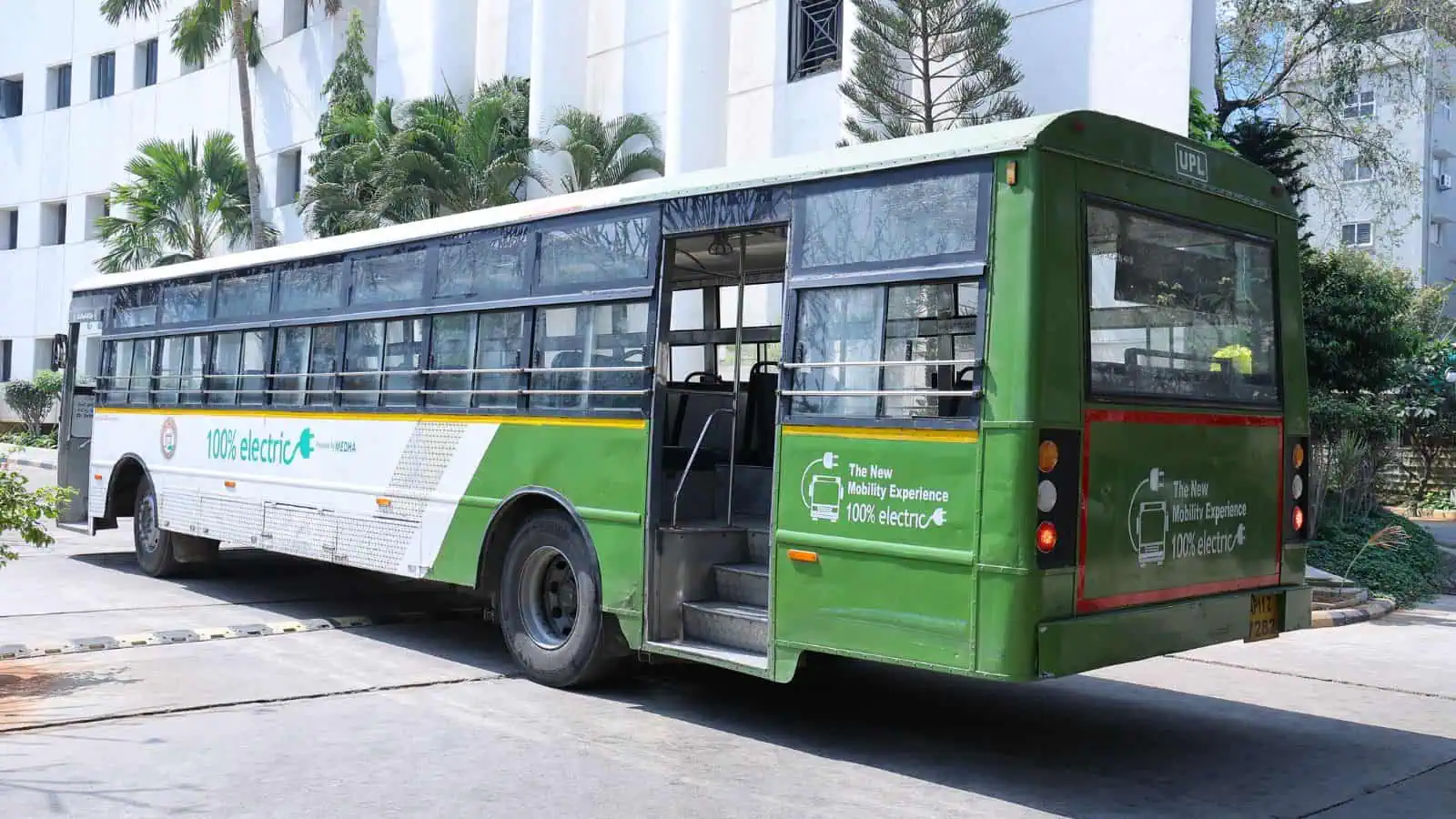
Telangana State Road Transport Corporation (TGSRTC) has begun large-scale conversion of conventional diesel buses into battery-powered vehicles, marking a structural shift in Hyderabad’s public transport strategy. The electric bus retrofit programme is being positioned as a cost-effective pathway to accelerate fleet decarbonisation without waiting for entirely new vehicle procurement cycles.
Transport officials confirmed that existing diesel buses are being stripped of internal combustion engines and refitted with electric drivetrains, battery packs and control systems. The initiative allows the corporation to extend vehicle life while reducing tailpipe emissions across high-density urban routes.Unlike outright fleet replacement, electric bus retrofit projects rely on re-engineering the chassis and integrating certified battery management systems. Engineers say the process significantly lowers capital expenditure compared to purchasing brand-new electric buses, while shortening deployment timelines. However, safety validation, structural stability testing and thermal management remain critical to long-term reliability.
The electric bus retrofit strategy comes as Hyderabad grapples with rising vehicular emissions and peak-hour congestion. Public buses form the backbone of daily commuting for thousands of lower- and middle-income residents. Electrifying this fleet could improve air quality in dense corridors, particularly along commercial and institutional clusters where diesel exhaust contributes to particulate pollution.Urban mobility experts argue that retrofitting can bridge the transition period between fossil-fuel dependence and full electrification. “Fleet transformation need not wait for perfect market conditions,” said a senior transport planner familiar with the programme. “Retrofitting creates immediate carbon gains while preserving public transport affordability.”
From a climate perspective, the impact of the electric bus retrofit programme will depend on charging infrastructure and grid energy sources. If depot charging relies on renewable power procurement, lifecycle emissions could drop substantially. Energy economists note that coupling electrified buses with solar installations at depots can strengthen the business case and enhance resilience during peak load demand.Financial analysts also see fiscal prudence in extending the lifespan of existing assets. With state transport undertakings often operating under budgetary constraints, retrofitting offers a pathway to modernisation without steep borrowing. That said, maintenance frameworks must adapt to high-voltage systems and battery replacement cycles to prevent long-term cost overruns.
The programme aligns with broader efforts to expand clean mobility in Telangana, where electric two-wheelers, metro rail corridors and non-motorised transport infrastructure are gradually gaining traction. Yet experts caution that bus electrification alone cannot resolve congestion unless service frequency, route rationalisation and passenger comfort improve in parallel.For daily commuters, quieter engines and reduced roadside pollution may become the most visible signs of change. In policy terms, the electric bus retrofit model could influence other state transport corporations seeking scalable decarbonisation options within tight fiscal envelopes.As pilot conversions move into operational testing, the next challenge will be performance monitoring — ensuring that emission gains translate into dependable, inclusive and climate-resilient urban mobility.
Also Read:Delhi Plans Major Traffic Decongestion Push
