


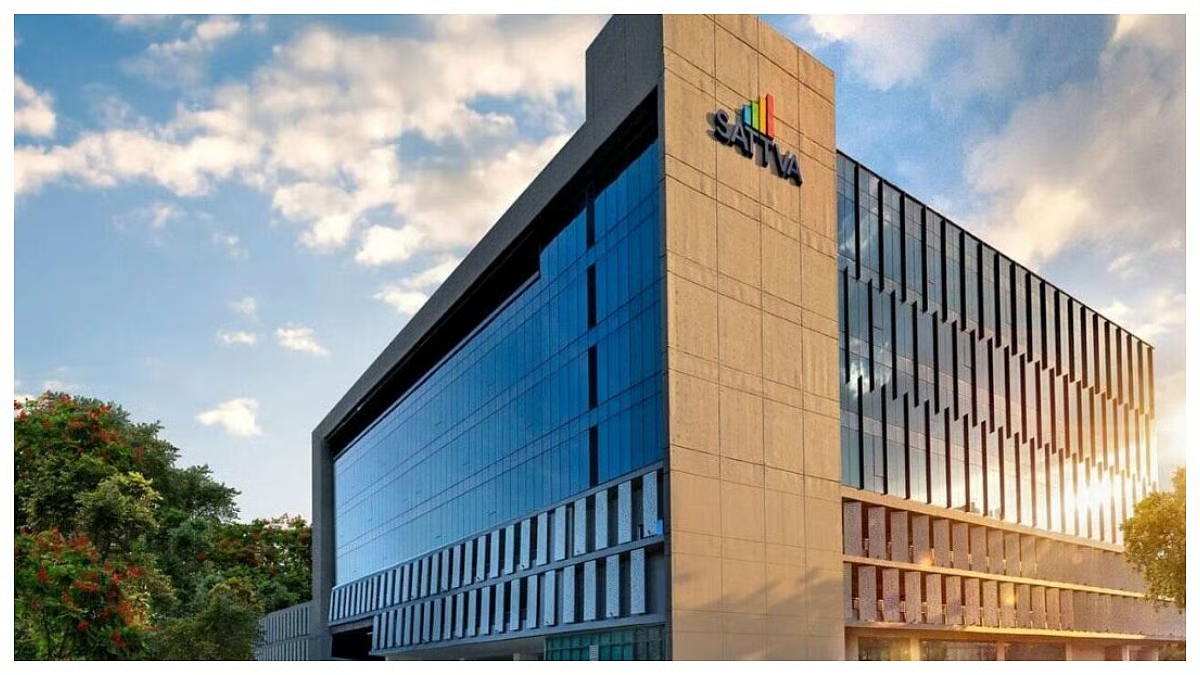
Bengaluru-based Sattva Group is sharpening its focus on Mumbai’s redevelopment market, targeting projects that could collectively generate around Rs 110 billion in revenue over the coming years. The strategy places the developer among a growing cohort of national players entering the city’s complex but high-value urban renewal ecosystem.
Mumbai’s land scarcity and ageing building stock have made redevelopment the dominant mode of new supply. Rather than acquiring large greenfield parcels, developers are partnering with housing societies to rebuild existing structures under enhanced Floor Space Index (FSI) norms. Industry executives say this shift reflects both regulatory encouragement and economic logic: redevelopment unlocks value in prime locations without expanding the city’s footprint. According to market sources, Sattva Group is evaluating multiple residential redevelopment projects across established neighbourhoods, with a focus on mid- to premium-segment housing. The company’s planned pipeline, if executed as indicated, would represent one of its most significant forays into Mumbai since expanding beyond its southern India base. Urban planners note that redevelopment is not merely a commercial opportunity but a civic necessity. Thousands of buildings in Mumbai are over 40 years old, with many facing structural vulnerabilities. Rebuilding them improves safety standards, enables better fire compliance and integrates updated utilities such as rainwater harvesting and energy-efficient systems.
However, execution risks remain considerable. Redevelopment projects require majority consent from residents, careful transit accommodation planning and sustained financing across extended approval cycles. In a city where regulatory oversight is layered and timelines can stretch, developers must manage both community expectations and capital discipline. Industry analysts suggest that a Rs 110 billion revenue aspiration indicates a multi-project pipeline rather than a single mega development. The economics of redevelopment often depend on balancing rehabilitation obligations with sale components that fund construction costs. Price resilience in Mumbai’s residential market particularly in micro-markets with established social infrastructure supports such models, but demand sensitivity persists. For Mumbai, the entry and expansion of out-of-state developers such as Sattva Group reflects confidence in the city’s long-term housing fundamentals. It also intensifies competition in a segment increasingly shaped by design differentiation, sustainability benchmarks and transparent customer engagement.
As policymakers push for safer, denser and more climate-resilient urban growth, redevelopment will remain central to the city’s transformation. Whether Sattva Group’s projected revenue ambitions materialise will depend on regulatory clearances, financing structures and timely execution factors that ultimately determine whether redevelopment translates from boardroom projections into rebuilt neighbourhoods.
Also Read: Mumbai Matunga Boutique Housing Project Launch
Mumbai Sattva Group Targets Redevelopment Revenue
