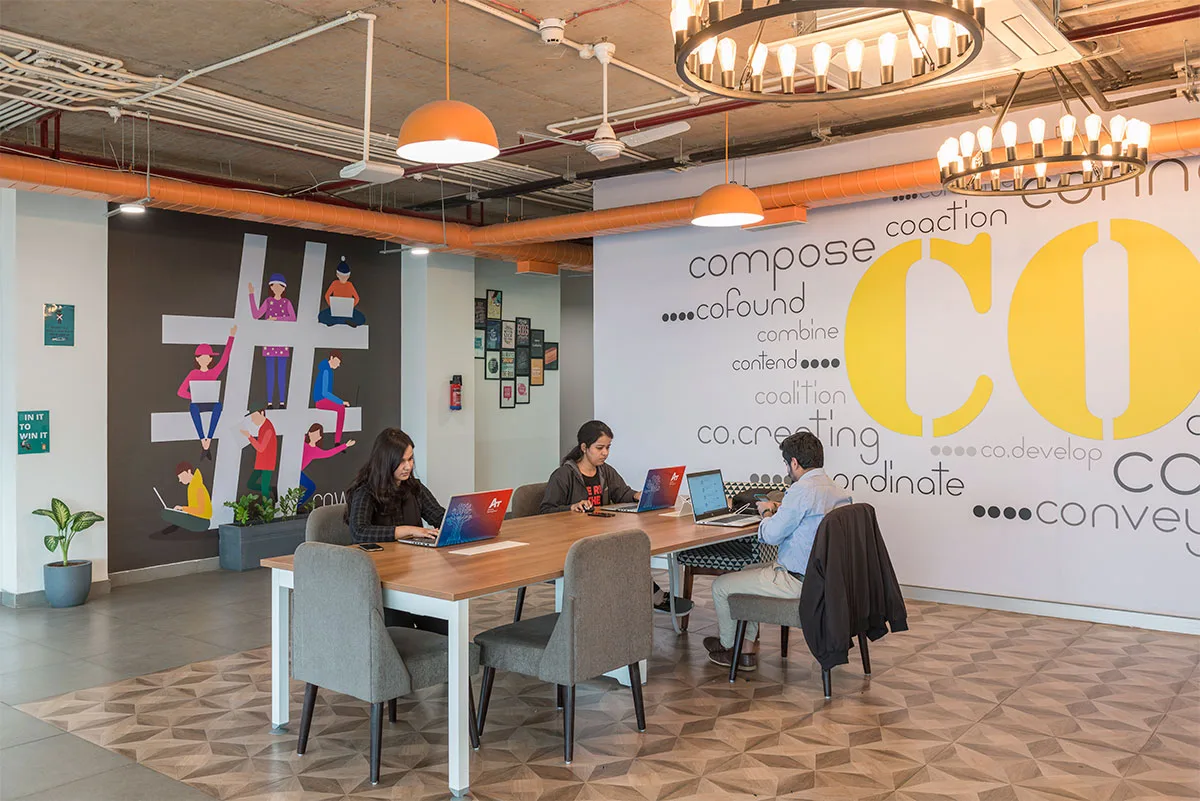
A new large-format flexible workspace facility has opened in Sector 62, adding 1,200 seats to Noida’s commercial office inventory and signalling continued momentum in the region’s managed office market. The expansion underscores how flexible workspace providers are responding to sustained demand from corporates seeking scalable, asset-light real estate solutions in well-connected urban clusters.
The Delhi-NCR based operator has expanded its regional footprint with the 60,000 sq ft centre, taking its total network in the metropolitan region to 25 locations. The move comes as companies increasingly reassess long-term leasing commitments in favour of adaptable formats that allow quicker expansion, consolidation, or hybrid work configurations. Industry analysts note that Noida has emerged as a strategic node in the NCR office ecosystem, particularly for technology, consulting and back-office operations. Sector 62, located along established transit corridors and supported by metro connectivity, has developed into a preferred destination for enterprises seeking grade-A infrastructure without the cost premiums associated with central business districts.
The growth of the flexible workspace Noida segment also aligns with the steady rise of Global Capability Centres (GCCs) in India. International firms setting up offshore operations are increasingly opting for managed offices during initial phases, enabling faster operational rollouts while minimising capital expenditure. Market observers say this trend is reshaping leasing patterns across major Indian cities. Beyond business strategy, flexible workspace formats carry broader urban implications. Higher seat densities within shared environments can reduce per capita energy use and improve space efficiency when buildings are designed and operated responsibly. Urban planners argue that co-working centres integrated with public transport networks can help curb commuter traffic, contributing incrementally to lower emissions in rapidly urbanising corridors such as Noida-Ghaziabad.
The operator’s total managed portfolio now spans roughly one million square feet across Delhi-NCR, reflecting steady institutional and enterprise demand despite periodic volatility in the broader office market. Real estate consultants indicate that occupiers are prioritising plug-and-play infrastructure, digital security, and compliance-ready facilities, particularly as hybrid working models stabilise rather than recede. The expansion of flexible workspace Noida also mirrors a structural shift in commercial real estate economics.
Land constraints in core urban zones are encouraging higher-value utilisation of built space, while developers and operators explore mixed-use formats that combine offices with retail, food, and community amenities. As NCR’s urban footprint continues to densify, the evolution of managed office infrastructure will likely play a role in shaping more compact, transit-oriented commercial districts. The next phase of growth may depend not only on occupancy levels but also on how such developments align with energy efficiency standards, inclusive design practices, and long-term urban resilience goals.
Noida Gains Major Flexible Workspace Hub