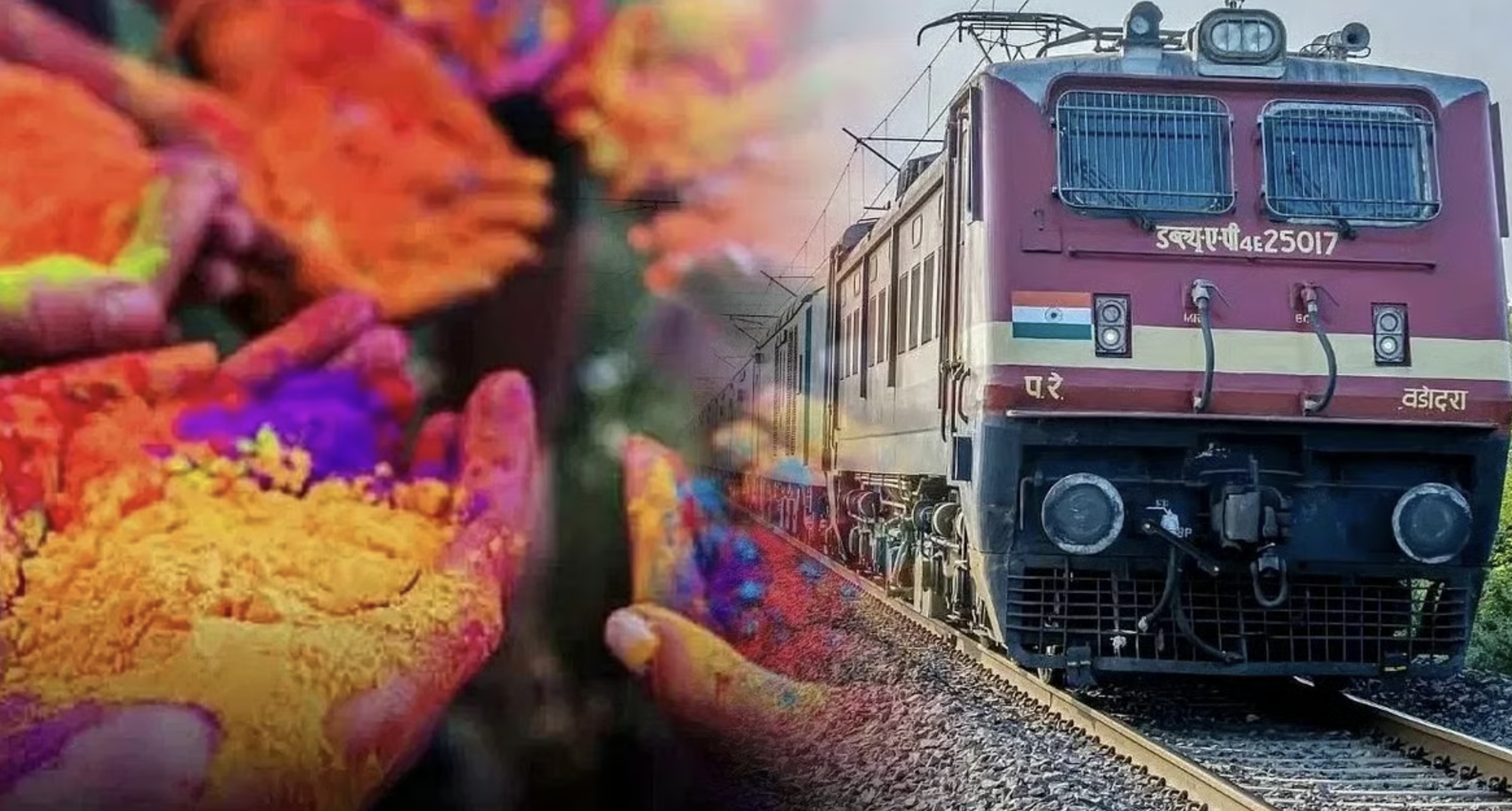
India’s peak festive travel season is set to place renewed pressure on northern and eastern rail corridors, prompting Indian Railways to introduce 26 Holi Special Trains linking Delhi and Kolkata with key destinations in Bihar. The additional services, scheduled between late February and mid-March, are designed to ease congestion during one of the busiest annual migration cycles in the country.
Railway officials overseeing operations in the East Central zone confirmed that 13 pairs of Holi Special Trains will run on high-demand routes connecting the National Capital Region and West Bengal to towns such as Barauni, Supaul, Sitamarhi, Raxaul and Madhubani. The services will operate on selected dates aligned with projected passenger surges ahead of the festival. Seasonal migration between metropolitan centres and smaller towns intensifies during Holi, as workers, students and professionals return home. Transport economists note that such movement reflects the deep economic interdependence between India’s largest urban labour markets and tier-two and tier-three cities. Ensuring adequate capacity on these routes is therefore not only a logistical matter but a question of economic continuity and social cohesion.
The Holi Special Trains will operate from major departure points including Anand Vihar and New Delhi in the capital, and Howrah, Sealdah and Kolkata in West Bengal. Rail authorities have also extended the frequency of a clone Humsafar service between Jaynagar and Amritsar through March to provide additional long-distance capacity. Urban mobility planners say that temporary augmentation through Holi Special Trains has become an essential feature of India’s transport management strategy. Regular services often run at full occupancy weeks in advance, leading to waitlists and overcrowding. By introducing dedicated festival services, Indian Railways aims to reduce informal travel risks and improve passenger safety during peak demand.
From a sustainability perspective, rail remains one of the lowest-carbon mass transit modes available for long-distance travel in India. Expanding Holi Special Trains rather than relying on road-based alternatives helps limit congestion on highways and curbs incremental emissions during the festive surge. Infrastructure experts argue that better-managed seasonal rail flows contribute to more climate-resilient mobility systems. The economic ripple effects are equally significant. Smoother travel supports remittance flows, local consumption in home districts and the informal retail economy associated with festival spending. Reliable connectivity also reinforces trust in public transport networks at a time when Indian cities are investing heavily in transit-oriented development and rail modernisation.
Bookings for the Holi Special Trains are being processed through the standard reservation system, with sleeper and air-conditioned classes available. Railway authorities have indicated that further services may be considered if demand outpaces current projections. As India’s urban corridors continue to expand, managing predictable seasonal peaks through flexible scheduling will remain critical. The effectiveness of this year’s Holi Special Trains will likely inform future planning for high-demand periods across the country’s rapidly evolving rail network.
Delhi Kolkata See Holi Special Trains Boost