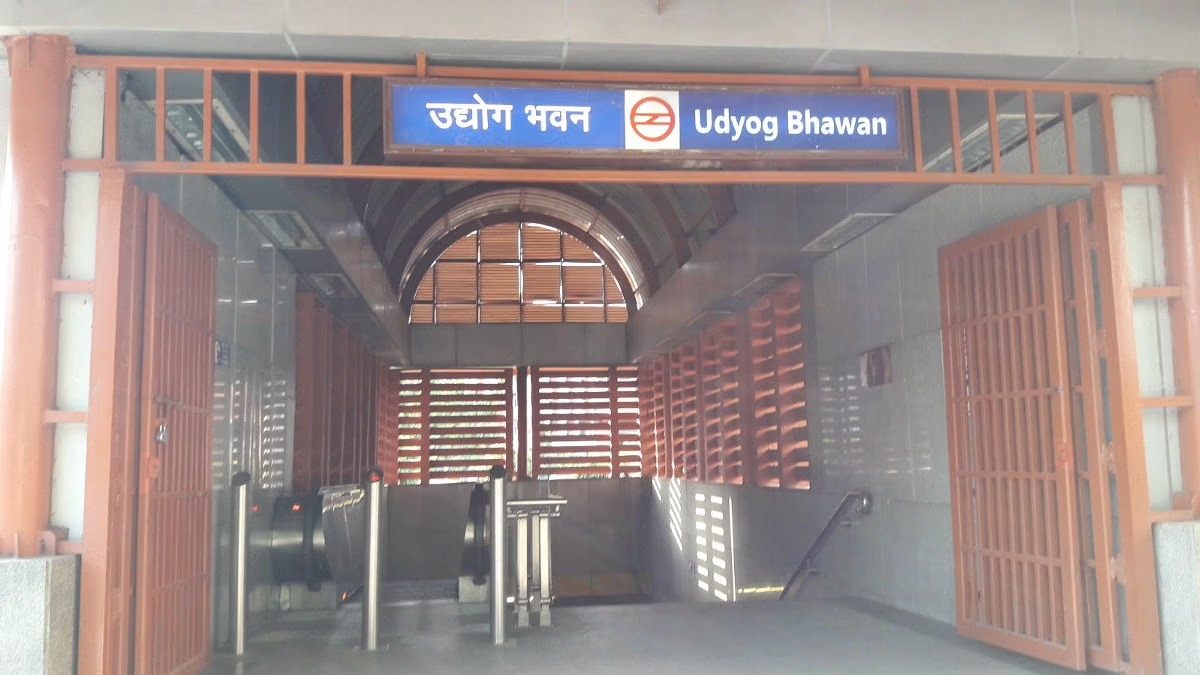
Delhi’s administrative core is undergoing another symbolic and spatial shift, with the Union Government approving the renaming of Udyog Bhawan Metro Station to Seva Teerth Bhawan Metro Station on the Yellow Line. The decision links one of the capital’s busiest transit nodes with a newly developed central government complex, reflecting how mobility infrastructure is increasingly aligned with institutional redevelopment in Lutyens’ Delhi.
The station, located along a high-footfall corridor connecting north and south Delhi, serves thousands of daily commuters, including civil servants, office staff and visitors to central ministries. Officials say the Delhi Metro station renaming is intended to create a direct identity link between the metro stop and the integrated executive complex that has recently become operational in the vicinity.
Urban planners note that transport nomenclature in capital cities often mirrors shifts in governance geography. As ministries and top administrative offices consolidate into modern office blocks designed for energy efficiency and centralised functioning, transit wayfinding becomes an extension of institutional planning. The newly named complex accommodates key executive offices, bringing multiple departments into a compact administrative district aimed at reducing inter-building travel and improving coordination.
Policy observers suggest that such integration may also reduce vehicular movement between dispersed government buildings, potentially lowering congestion and fuel consumption in central Delhi. In that sense, the Delhi Metro station renaming is not merely symbolic; it is tied to broader efforts to streamline how the state occupies urban space. The redevelopment includes newly completed government office buildings intended to replace ageing infrastructure. Real estate analysts point out that modern public buildings typically incorporate improved insulation, energy management systems and digital security architecture. Concentrating ministries within upgraded premises can enhance operational efficiency while reducing maintenance burdens associated with scattered colonial-era structures.
For commuters, however, the immediate impact will be practical. Updated signage, route maps and digital announcements across the Delhi Metro network will reflect the revised name. Transport experts emphasise that clear communication is critical to avoid confusion during the transition period, especially on the Yellow Line, which remains one of the network’s most heavily used corridors. The renaming also underscores the evolving role of metro systems in shaping civic identity.
As Delhi continues to expand transit connectivity and redevelop institutional zones, the interplay between transport infrastructure and governance architecture becomes more visible. Integrated planning between metro authorities and urban development agencies will be essential to ensure that changes in administrative geography translate into smoother public access rather than additional congestion.
In a city balancing heritage preservation, administrative reform and sustainability commitments, the recalibration of names and spaces reflects a broader narrative: governance, infrastructure and mobility are increasingly intertwined in defining how citizens experience the capital.
Delhi Metro Renames Udyog Bhawan Station