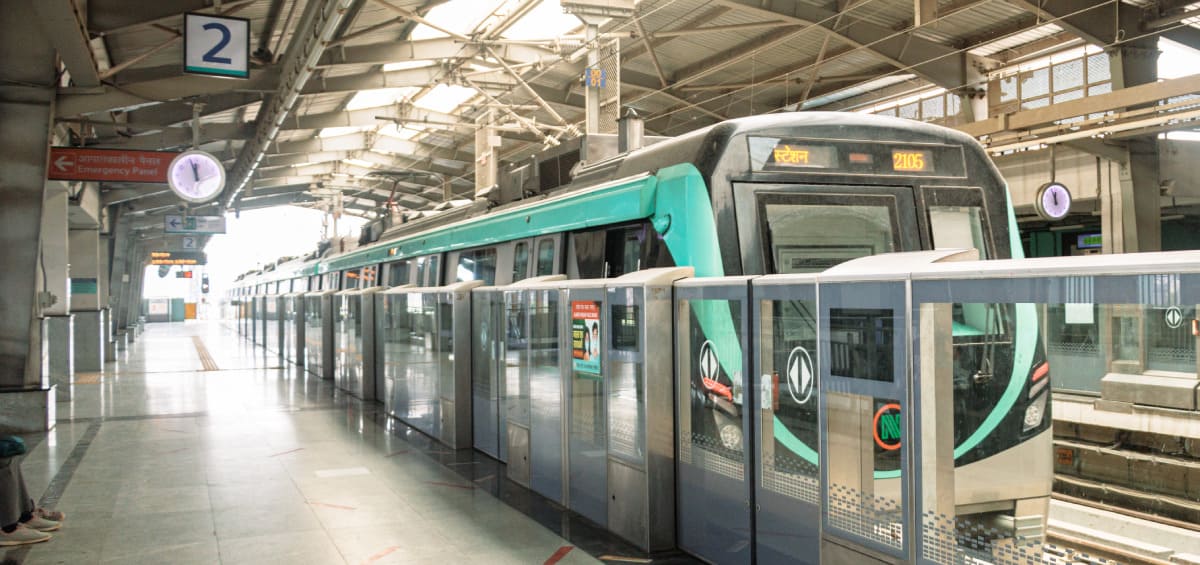
Noida’s elevated metro corridor connecting Sector 51 to Greater Noida’s Depot Station has registered a sustained rise in daily commuters, with ridership climbing more than fourfold over seven years and reaching peak averages in late 2025.
The surge underscores shifting urban mobility patterns in the National Capital Region (NCR) and highlights public transit’s growing role in reducing road congestion and enabling sustainable urban access. Operational since January 2019, the metro line now serves tens of thousands of passengers daily, with the highest average recorded in September 2025 at over 74 000 riders — a milestone partly attributed to large events attracting additional footfall.
Since a pandemic-related service interruption in 2020, daily footfall has climbed consistently, rising from just over 11 000 passengers at launch to more than 63 000 by early 2026. Urban transport experts suggest that this trajectory reflects broader shifts towards public transport as residents seek reliable, climate-friendly alternatives to private vehicles amid worsening road congestion and air pollution. For commuters, expanded metro use represents not just convenience but a meaningful change in daily travel choices. Public transport systems like the Aqua Line lower per-capita emissions by reducing reliance on private cars and buses, directly supporting efforts to make city transport networks cleaner and more resilient to climate and congestion pressures. Analysts note that as ridership grows, so too does the need for integrated multimodal links and last-mile connectivity to ensure equitable access across all neighbourhoods.
Yet, connectivity bottlenecks remain. The interchange between the Aqua Line and the larger metro network at Sector 51 and Sector 52 stations has long been a pinch point for commuters due to incomplete infrastructure. Although efforts to construct a skywalk to link the two systems have advanced, delays in its completion have limited ease of transfers, dampening the potential ridership uplift that seamless connectivity could unlock. Looking ahead, the metro corporation has proposed further extensions to new corridors — including connections to Knowledge Park V and Boraki — that could effectively widen the metro’s service area, support economic activity, and reduce travel times for workers, students, and residents alike. Some of these proposals await central government approvals, illustrating how urban transport planning remains tied to regulatory processes and capital investment flows.
As Noida’s built environment continues to expand, the Aqua Line’s growth story highlights the demand for resilient, inclusive public transport infrastructure. With climate commitments urging cities to prioritise low-carbon mobility and reduce urban pollution, sustained investments in metro corridors and connecting networks will be essential to shaping equitable growth across the region.