


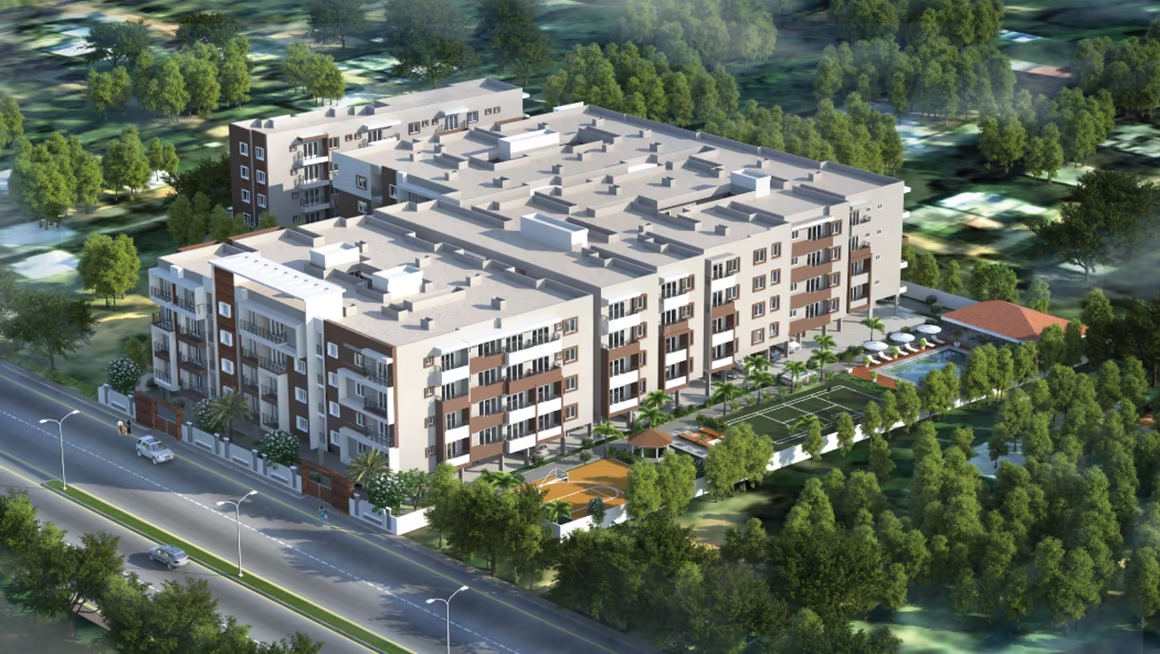
Bengaluru’s premium housing segment is drawing renewed developer attention, with a city-based construction firm announcing the creation of a dedicated brand focused exclusively on high-end residential projects. The move signals a broader shift within the city’s real estate ecosystem, where established contractors are repositioning themselves as design-led developers to capture rising demand for upscale urban living.
The newly launched vertical will concentrate on luxury housing across select micro-markets in Bengaluru, with plans to introduce around one million square feet of premium residential space within the current calendar year. Industry observers see the strategy as reflective of a maturing Bengaluru premium housing market, where buyers are increasingly prioritising brand credibility, construction quality and lifestyle infrastructure. The parent company, founded in the late 1990s, built its reputation through contract-based residential and commercial projects before gradually expanding into independent development. Over the past two decades, it has delivered several million square feet across housing and mixed-use formats, with additional inventory currently under construction. Market analysts note that Bengaluru’s premium housing growth is being fuelled by sustained expansion in the technology and startup sectors, alongside rising incomes among professionals and entrepreneurs. Corridors in north, east and south Bengaluru particularly those connected to IT parks and metro infrastructure have witnessed a steady uptick in demand for larger homes with curated amenities. Developers entering this segment are increasingly adopting phased rollouts rather than large, single-stage launches. This approach reduces financial exposure and aligns supply with absorption trends. It also allows for adjustments in product mix based on buyer response, particularly in a market where luxury pricing must remain competitive relative to other metros.
Urban planners caution, however, that premium housing growth must align with sustainable development practices. High-density construction in peripheral zones requires adequate transport links, water security planning and energy-efficient building design. Bengaluru’s long-term liveability will depend not only on the scale of investment but on the integration of climate-responsive construction and resilient urban infrastructure. The launch of a separate premium arm also highlights a structural shift within the city’s real estate industry. Builders that once operated primarily as contractors are increasingly seeking brand differentiation, lifestyle positioning and direct consumer engagement. In a competitive environment, execution capability alone is no longer sufficient; reputation, after-sales service and community design now shape purchasing decisions.
With Bengaluru premium housing continuing to attract both end-users and long-term investors, new entrants will be closely watched for pricing discipline and delivery timelines. As capital flows into the upper end of the market, the challenge will be balancing aspirational living with inclusive urban growth ensuring that expansion strengthens, rather than strains, the city’s infrastructure framework.
Also Read: Noida ultra luxury housing gains momentum
