


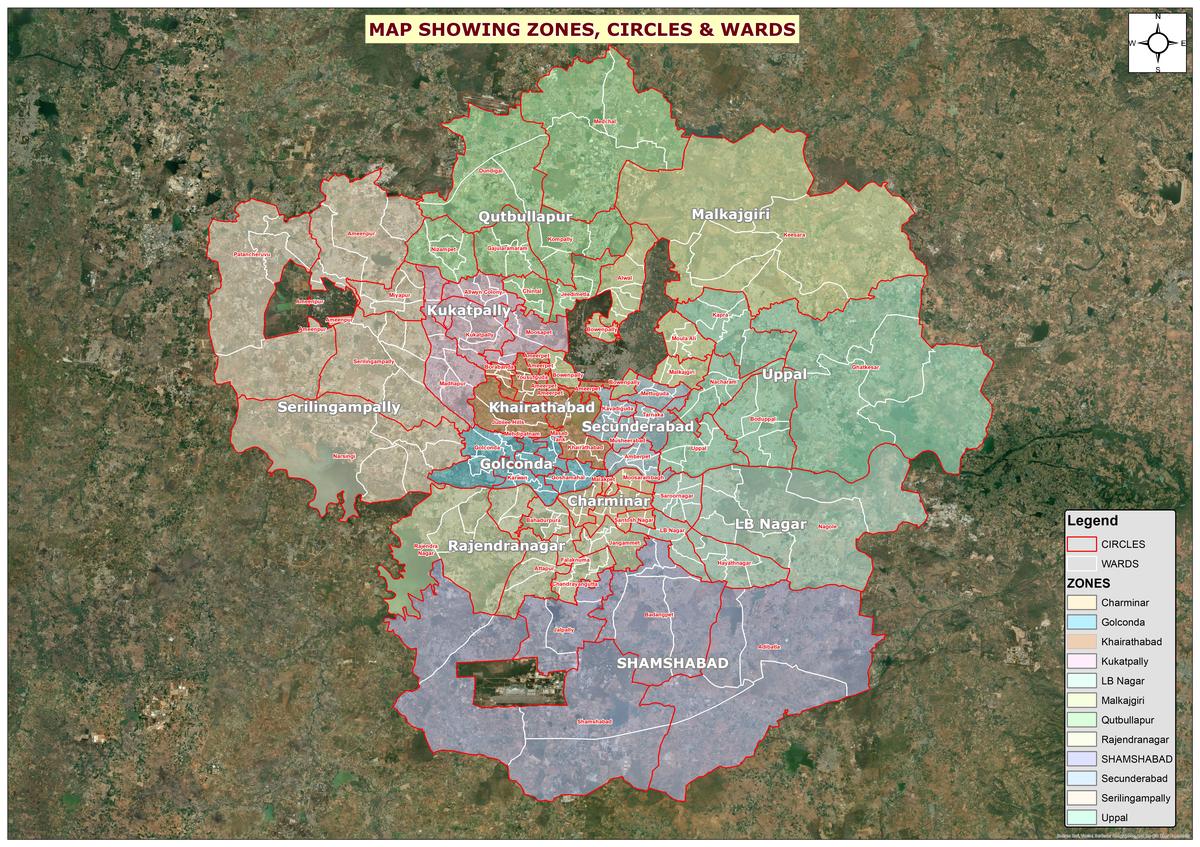
Hyderabad’s civic restructuring has moved into its implementation phase, with ₹500 crore each earmarked for the newly carved Cyberabad and Malkajgiri municipal corporations under the broader Hyderabad GHMC reorganisation plan. The financial allocation is intended to stabilise administration and fast-track essential urban services in two rapidly expanding growth corridors of the metropolitan region.
The decision was taken at the first standing committee meeting following the trifurcation of the Greater Hyderabad Municipal Corporation. Senior officials overseeing the transition indicated that the funds would cover routine operations, infrastructure maintenance and priority development works as the new civic bodies establish independent administrative systems.Urban governance experts say the Hyderabad GHMC reorganisation reflects a shift towards decentralised management in large metropolitan areas. As Hyderabad’s footprint expands beyond its historic core, differentiated governance structures are increasingly viewed as necessary to address varied urban challenges — from IT-led commercial expansion in Cyberabad to dense residential growth in Malkajgiri.
A task force led by a public policy advisory institution has been constituted to divide assets, liabilities and staff among the three corporations. The panel is reviewing existing contracts and financial commitments to ensure a structured transition. Officials expect recommendations within weeks, underscoring the urgency of preventing service disruption during the reallocation process.Administrators have been directed to treat the next six months as a critical execution window. Ongoing infrastructure programmes — including strategic road development and stormwater drainage upgrades — are to be prioritised, alongside basic service delivery such as sanitation, pothole repairs and street lighting. Planners argue that early visible improvements will determine public confidence in the restructured civic framework.
Parallel to the fiscal realignment, the Telangana High Court has reinforced enforcement action against unauthorised constructions across the city. In a recent ruling, the court upheld demolition proceedings against illegal extensions encroaching on footpaths, clarifying that payment of property tax does not legitimise unauthorised structures. The order directs city authorities to restore pedestrian spaces and file a compliance report within three months.For urban designers, the court’s stance is significant. Encroachments on footpaths often displace pedestrians onto carriageways, increasing accident risk and undermining walkability — a key metric in sustainable city planning. As Hyderabad invests in high-value corridors and real estate growth, balancing expansion with public realm protection will remain central to equitable urban development.
The twin developments — fiscal devolution under the Hyderabad GHMC reorganisation and stricter enforcement of planning norms — signal a recalibration of civic governance. The immediate test will be whether the new corporations can translate financial support and legal backing into measurable improvements in service delivery, safety and environmental resilience across the metropolitan region.
Also Read:Maharashtra Tightens Toll Rules To Improve Road Safety
Hyderabad GHMC Reorganisation Funds New Corporations
