


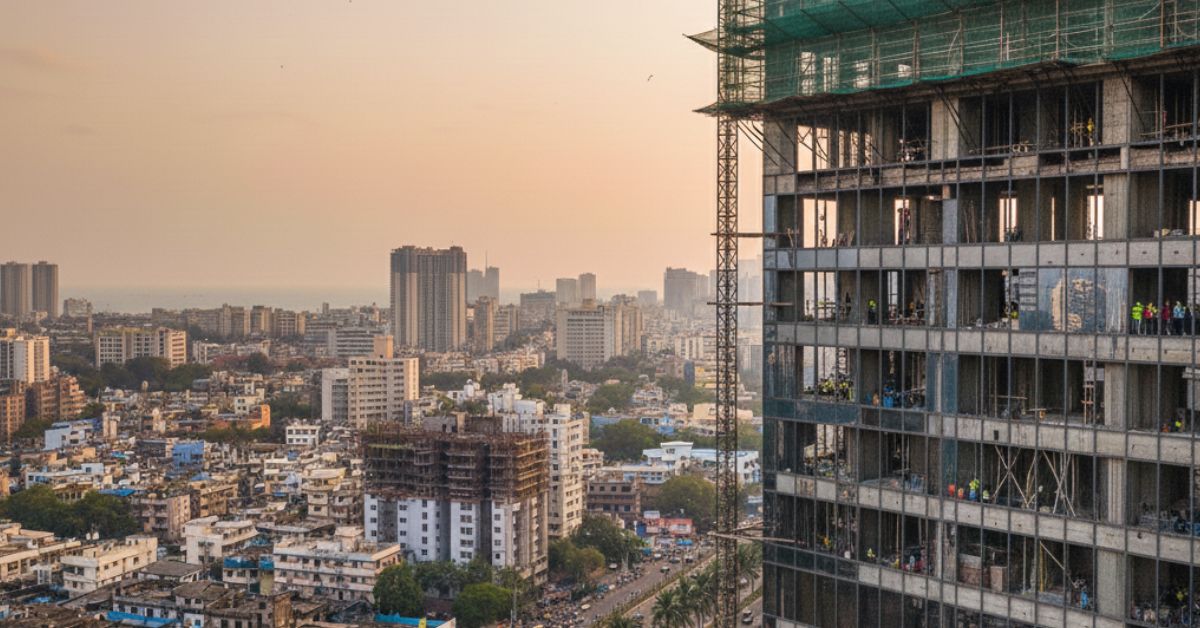
The Maharashtra government has moved a step closer to introducing a special mini-cluster redevelopment framework for Mira Road and Bhayandar, a reform that could unlock the renewal of thousands of ageing and unauthorised buildings across the twin cities. The proposal, currently under consultation, aims to make stalled redevelopment viable by lowering the minimum plot size required for cluster schemes.
Officials in the state’s Urban Development Department (UDD) confirmed that draft provisions seek to reduce the minimum cluster area from 4,000 square metres to 2,500 square metres, provided at least five buildings apply jointly and the site has access to an 18-metre-wide road. Amendments to the Unified Development Control and Promotion Regulations will be required before the policy is finalised. The reform is expected to significantly reshape housing in Mira-Bhayandar, where large swathes of residential stock date back over five decades. Many structures were built in the late 1970s and early 1980s when the area functioned under a gram panchayat, preceding the formation of the Mira-Bhayandar Municipal Corporation in 1990. Weak oversight during that transition period led to widespread unauthorised construction and limited provision of open spaces or civic amenities. Urban planners describe the mini-cluster model as a “cluster within a cluster” approach, tailored to dense neighbourhoods where fragmented land ownership and small plot sizes have historically stalled conventional redevelopment schemes. By relaxing area thresholds and offering an incentive Floor Space Index (FSI) component with maximum permissible FSI proposed up to 4 the state aims to improve financial viability while formalising previously irregular housing stock.
The stakes are high. Thousands of families continue to reside in buildings that are structurally compromised and legally ambiguous. Their unauthorised status has often prevented access to redevelopment benefits, institutional finance and formal property rights. If implemented effectively, the mini-cluster framework could regularise tenure, improve safety standards and upgrade infrastructure such as sewage lines, water supply and internal roads. However, urban experts caution that higher FSI allowances must be matched with infrastructure augmentation. Mira-Bhayandar already faces congestion, water stress and drainage bottlenecks, challenges that intensify during the monsoon. Without parallel investment in transport connectivity and climate-resilient services, denser redevelopment could strain local systems. Public consultation on the draft amendments is underway, as mandated before regulatory changes. Stakeholders say the final framework must balance safety, equity and environmental capacity. Done right, the mini-cluster model could serve as a template for other peri-urban regions grappling with informal housing and ageing stock.
For residents long caught between illegality and obsolescence, the policy represents a potential turning point one that links structural safety with formal inclusion in the city’s evolving urban fabric.
Also Read: Mumbai Worli luxury project ties global brand
Mira Bhayandar redevelopment rules set to ease
