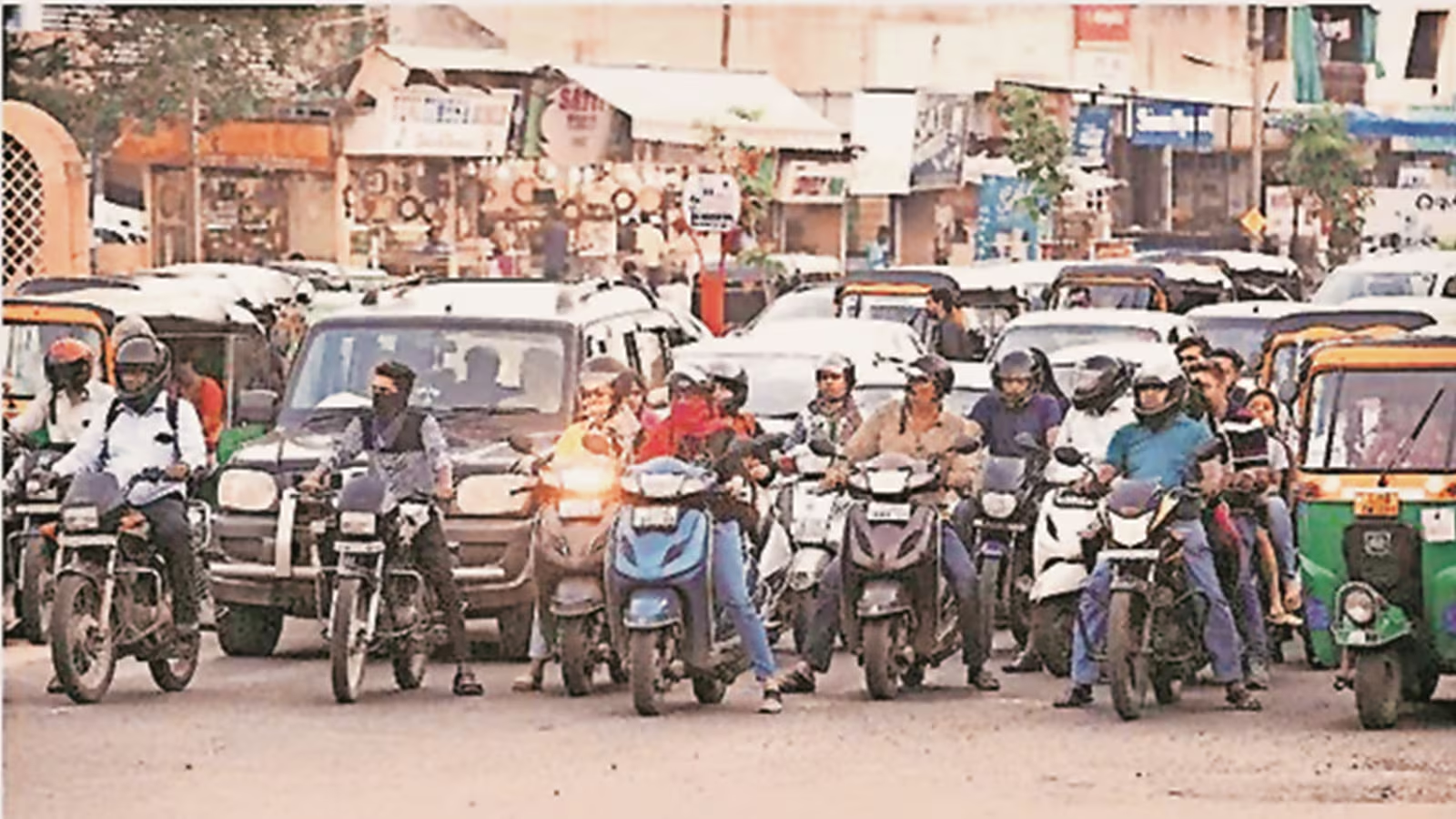
Maharashtra Launches No Helmet No Toll Road Safety Drive
The Maharashtra government has rolled out a targeted road safety initiative that links helmet compliance for two‑wheeler riders with toll plaza access, as part of a broader campaign to halve road accident fatalities by 2030. This “no helmet, no toll crossing” strategy — mandated across the state’s toll plazas — reflects an evolving regulatory approach that embeds safety enforcement into everyday mobility nodes to address persistently high deaths and injuries on urban and intercity roads.
According to data analysed by the state transport department, two‑wheeler riders and pedestrians accounted for a substantial share of road accident deaths in 2025. To confront this trend, authorities declared 2026 as the “Save Two‑Wheeler Riders and Pedestrians Year”, consolidating enforcement, infrastructure and data‑driven planning into a coordinated roadmap.Under the new directive issued on 11 February, two‑wheeler riders without helmets will be barred from using dedicated lanes at toll plazas — a departure from past practice where such vehicles entered toll points freely. Prominent “No helmet, no entry” signage is being installed, and radar‑equipped interceptor vehicles will monitor compliance on major state and national highways. Enforcement will prioritise corridors with historically high accident rates, with plans to expand coverage based on mapped data spanning the past three years.Transport officials are also requiring regional transport offices (RTOs) to track accident spots via mapping tools such as Google Maps overlays to visualise hotspots and prioritise engineering interventions. This includes pedestrian infrastructure upgrades — such as zebra crossings and foot over‑bridges — in dense urban stretches where built‑environment deficits contribute to collisions.
The strategy draws on an emerging “safe system approach” that blends enforcement with infrastructure improvements and behavioural norms, echoing global best practices in road safety. Maharashtra’s campaign also mandates enhanced camera‑monitored driving tests, stricter helmet checks on high‑risk highways and routine reporting by RTOs on compliance progress.Urban transport analysts say that novel enforcement measures like toll‑linked safety checks can alter road user behaviour because toll plazas serve as fixed, high‑visibility points of compliance — especially for commuters on inter‑urban routes. “Leveraging toll infrastructure for safety enforcement embeds behavioural nudges into routine travel patterns, which could yield more durable compliance than occasional police checkpoints,” said an independent mobility planner.However, the success of such measures depends on clarity in implementation and public engagement. Some road safety advocates caution that enforcement alone — without concurrent education campaigns and improved alternative mobility options — risks penalising riders without addressing root causes of non‑compliance, such as affordability of certified helmets or limited access to training.
Still, the state’s ambition to halve road crash deaths aligns with its broader urban resilience goals, which include safer streetscapes, data‑informed planning and institutional collaboration. Municipal corporations, public works departments and highway authorities are being brought into the fold to ensure that engineering fixes keep pace with enforcement intensity.Road safety remains a multi‑dimensional challenge in Maharashtra, where rapid motorisation, mixed traffic flows and pedestrian‑vehicle interactions shape complex risk environments. As this campaign unfolds, its blend of regulatory innovation and data focus could set a precedent for other cities seeking to embed safety into transport governance and reduce the human cost of urban mobility.