Maharashtra Hosts Global AI Agriculture Summit In Mumbai
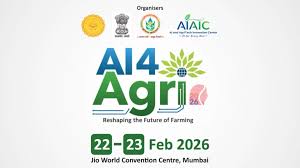
Mumbai is gearing up to host a landmark global summit on AI in agriculture and investment on 22–23 February, signalling a strategic push by the Maharashtra government to embed advanced technologies into the state’s farm sector and attract funding for climate-smart rural transformation. The two-day AI4Agri 2026 conference and investor forum at the Jio World Convention Centre is part of the state’s broader Maharashtra Agriculture-Artificial Intelligence Policy 2025–29, a framework that seeks to create an AI-enabled, data-driven agricultural ecosystem with inclusive benefits for farmers, start-ups and global partners.
Agriculture officials say the summit will bring together policymakers, agritech innovators, investors and civil society leaders to explore scalable AI solutions for farming, from real-time crop advisory systems to climate-resilient practices. With an initial ₹500 crore allocation for the first phase of policy implementation, Maharashtra intends to build digital infrastructure — including an agriculture data exchange, AI-powered traceability tools and farmer-centric advisory platforms — that can improve productivity, mitigate risk and enhance market access for rural producers.Beyond technology demonstrations, the event has a deliberate investment focus. Dedicated sessions are expected to spotlight business opportunities across the agricultural value chain, offering a platform for entrepreneurs, venture capital firms and development finance institutions to engage directly with local stakeholders. Such interactions are seen as crucial for bridging gaps between innovation and on-ground impact, particularly for small and marginal farmers who historically face barriers to capital, knowledge and infrastructure.
The summit also aligns with national and international agendas. It is designated as an official satellite event of the India-AI Impact Summit 2026, which underscores the government’s broader strategy to mainstream responsible and inclusive AI across sectors. This strategic timing is expected to draw global leaders and researchers already in India for the national summit, amplifying Maharashtra’s visibility in the global AI ecosystem.In keeping with the United Nations’ International Year of Women Farmers, the Maharashtra event includes sessions dedicated to gender-inclusive innovation, aiming to ensure that AI tools are accessible and beneficial to women producers, who constitute a significant but often underserved segment of the agricultural workforce. Planners say this focus will be critical for equitable rural development and resilient food systems.
Experts in urban affairs and rural development note that such summits, if sustained beyond annual events, could accelerate the diffusion of technologies like predictive analytics, satellite-based climate risk modelling and automated advisory services into everyday farming practice. These capabilities are especially relevant as climate change compounds traditional agricultural risks, demanding data-driven responses that can operate at scale and across diverse agroecological zones.
However, realising the promise of AI in agriculture will require careful attention to data governance, digital literacy and infrastructure gaps that still limit adoption in many parts of rural India. As Maharashtra positions itself as a hub for agri-tech investment, the onus will be on policymakers and private partners to translate summit dialogue into sustainable, ground-level outcomes that improve farmer livelihoods, bolster climate resilience and strengthen regional food systems for the future.