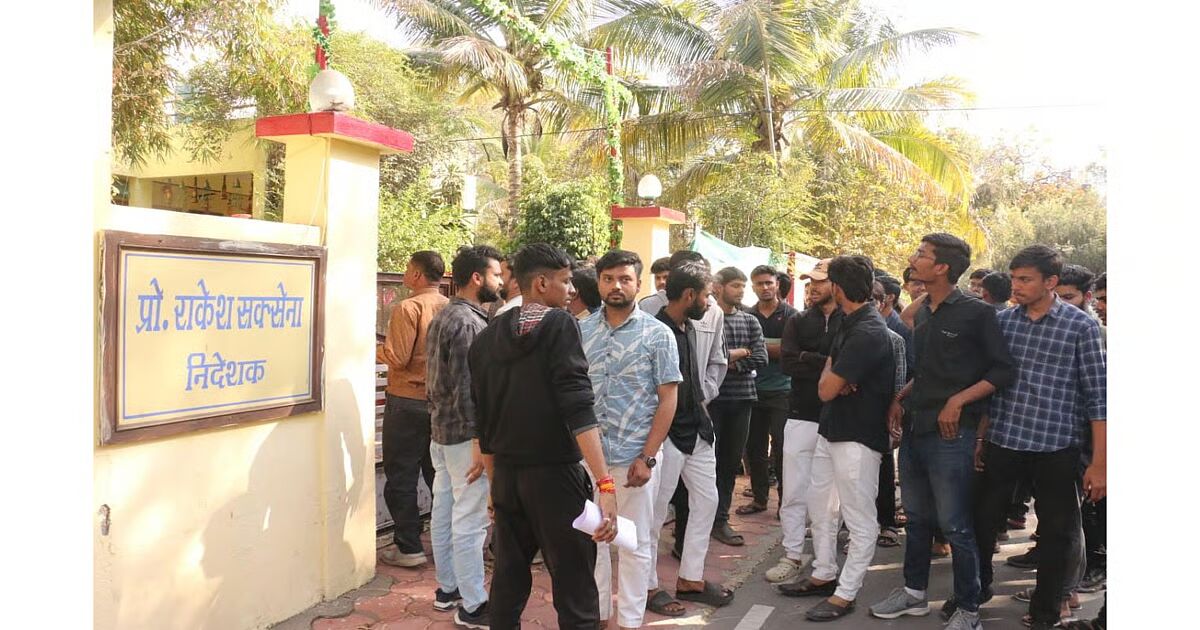
Indore witnessed a tense incident at a private university campus on Thursday when a group of protestors entered the premises to stop a pre-Valentine’s Day celebration, resulting in property damage and police intervention.
Campus leaders said the disruption occurred during a student-organised event designed to build practical skills, sparking concern among educators about campus safety and freedom of student activities. According to police officials, the disturbance unfolded in the Gandhi Nagar area, where activists from local Hindu organisations entered the Narsee Monjee Institute of Management Studies (NMIMS) campus after alleging that an “obscene” Valentine’s Day-linked programme was being organised. Officers reported that some chairs, tables and decorations were damaged as the group halted the event and tensions rose before law enforcement brought the situation under control. Deputy Commissioner of Police Krishna Lalchandani confirmed that preliminary information suggested a Valentine’s Day-related activity was underway, prompting the protestors’ arrival. CCTV and video footage from the university are now being examined as part of an ongoing investigation, with authorities indicating that legal action will follow once those responsible are identified.
University officials countered the narrative that a Valentine’s celebration was planned, stating that the disrupted activity was a “Bake & Sell” stall organised by students to enhance negotiation and commercial skills through co-curricular engagement. They described the intruders as an “unauthorised group” whose actions damaged campus infrastructure and disrupted academic life. No students or staff were reported injured, and police presence was credited with de-escalating the incident. Observers note that clashes over cultural events at educational institutions reflect broader debates in Indian cities about campus autonomy, community norms and the boundaries of protest. Higher education campuses are often expected to balance student expression with community sensibilities, but incidents that verge into property damage and disruption of sanctioned activities raise concerns about safe learning environments and the role of external actors in academic spaces.
Campus safety advocates stress that prior communication with local authorities about planned large gatherings can help mitigate misunderstandings and reduce the likelihood of escalation. In this case, police noted that the college had not filed prior notice for the event, a procedural gap that may complicate how future gatherings are managed alongside civic law enforcement. Local community leaders highlighted the need for dialogue between student bodies, educational administrators and civic stakeholders to build mutual understanding of acceptable norms while safeguarding students’ rights to engage in co-curricular activities. Without such engagement, similar flashpoints — particularly around dates that symbolise cultural change like Valentine’s Day — may recur, affecting city-wide perceptions of youth spaces and urban cultural life.
Urban governance experts suggest that ensuring the security of educational institutions requires both clear operational protocols and proactive engagement with diverse community groups. Strengthening these frameworks can support inclusive urban cultural expression and protect the integrity of campus environments against fringe disruptions.