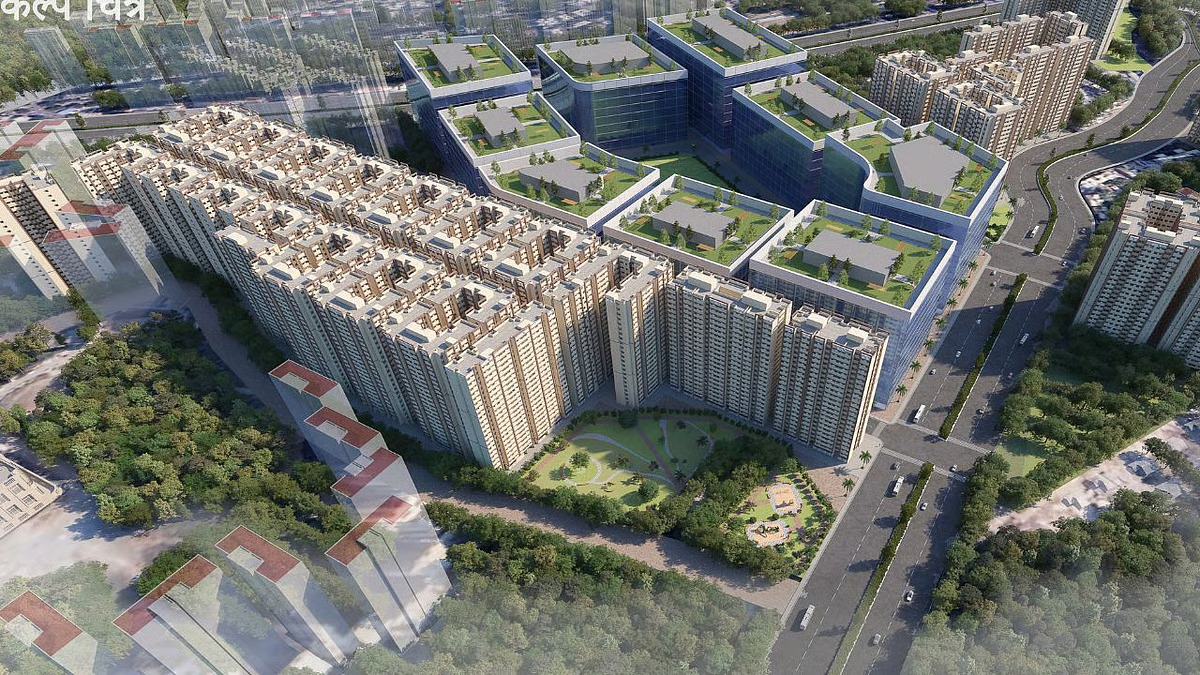
A long-awaited redevelopment initiative in eastern Mumbai has entered a decisive regulatory phase, with the Mumbai Metropolitan Region Development Authority seeking statutory environmental clearance for the Ramabai Ambedkar Nagar housing project. The move signals renewed momentum for one of the city’s largest in-situ slum redevelopment schemes, aimed at unlocking land for planned housing while improving living conditions for thousands of families.
The proposal has been submitted to the Ministry of Environment and Forests, a mandatory step before large-scale construction can begin. While the project was publicly announced last year, physical progress has remained limited due to pending approvals. Urban planners note that environmental scrutiny has become increasingly central to redevelopment efforts, particularly for high-density projects in land-constrained cities like Mumbai. Parallel to the clearance process, the Slum Rehabilitation Authority has initiated the relocation of the remaining households occupying a designated recreation ground within the project footprint. Over 200 families are being shifted to temporary accommodation, with rent support being extended in advance to minimise disruption. Officials involved in the process say the relocation was deferred earlier as the land was not immediately required, but timelines have now tightened with preparatory work set to commence.
The redevelopment spans nearly 32 hectares, making it one of the more ambitious public-sector-led housing interventions in the city. The first phase alone will cover close to seven hectares and deliver more than 5,600 rehabilitation homes. Once fully built, the project is expected to provide around 17,000 housing units across multiple residential towers, consolidating informal settlements into planned vertical neighbourhoods. Each building is designed with basement-level parking, mixed-use lower floors, and residential towers rising up to approximately 70 metres. The standardised one-bedroom units are planned to improve safety, ventilation, and access to services compared to existing informal structures. High-capacity lift provisions and internal circulation systems are intended to address concerns around density and daily mobility within tall rehabilitation buildings.
Beyond housing, the master plan integrates social infrastructure mandated under Mumbai’s development control regulations. Facilities such as childcare centres, primary healthcare spaces, community halls, youth activity zones, and libraries are proposed to support inclusive neighbourhood development. Urban development experts emphasise that such amenities are critical to preventing redevelopment sites from becoming isolated dormitory clusters. From a wider urban perspective, the project reflects Mumbai’s ongoing effort to align slum rehabilitation with climate-resilient planning. Consolidated housing reduces urban sprawl, improves access to formal services, and enables more efficient infrastructure delivery. However, specialists caution that the success of the Ramabai Ambedkar Nagar redevelopment will depend on timely approvals, transparent execution, and sustained engagement with affected communities.
As environmental appraisal moves forward and relocation continues, attention will now shift to whether the project can transition from planning to construction without further delays—setting a precedent for how large-scale urban renewal is managed in one of the world’s most densely populated cities.
MMRDA Pushes Ramabai Nagar Housing Project