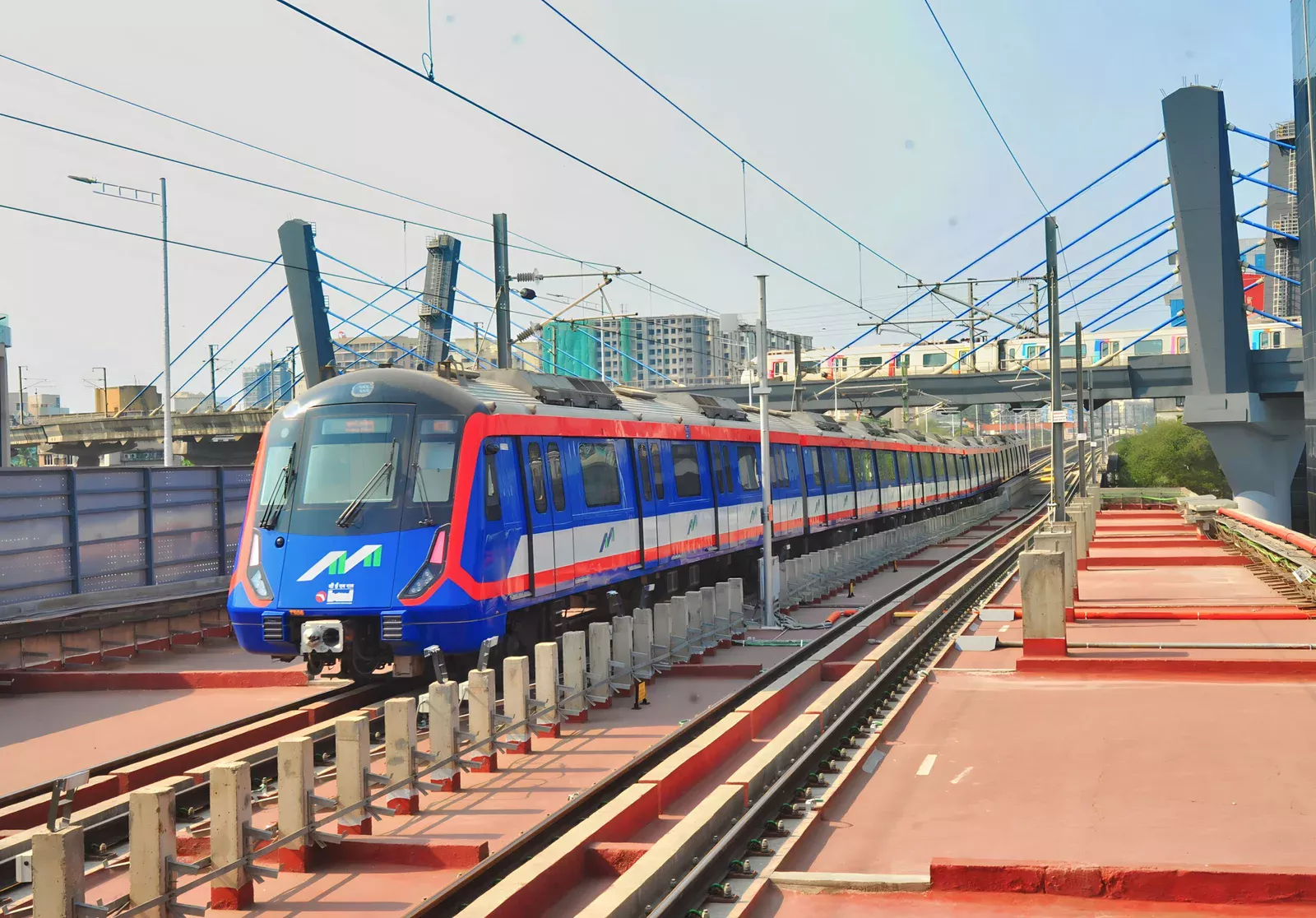
Mumbai’s eastern suburbs could see a recalibration of rapid transit planning as Mumbai Metropolitan Region Development Authority evaluates the addition of another station on a partially cleared stretch of Mumbai Metro Line 2B. The move signals a shift from symbolic project launches to a more data-driven approach focused on ridership, network integration, and long-term operational viability.
The stretch under review lies between Mandale in the city’s eastern edge and the Chembur area, where safety certification has already been granted for limited revenue operations. While the corridor has been technically cleared, transport planners within the authority acknowledge that operating a short, largely isolated segment risks underutilisation. Without strong interchange options, initial passenger volumes are expected to remain modest, undermining both fare recovery and public confidence in the line. Officials are therefore examining the feasibility of commissioning an additional stop at Chembur Naka, extending the operational section beyond its current endpoint. Urban transport experts point out that this location offers a critical interchange with the Mumbai Monorail corridor along VN Purav Marg and RC Marg, potentially transforming the stretch from a standalone segment into a functional part of the city’s multimodal network.
Such integration is central to Mumbai’s broader mobility goals. Interchanges reduce dependence on private vehicles, shorten last-mile gaps, and make public transport more inclusive for daily commuters, including women and lower-income workers who rely on predictable, affordable travel. Planners argue that even a single additional station can materially improve accessibility catchments, especially in dense neighbourhoods like Chembur where residential, commercial, and institutional land uses overlap. The reassessment also reflects changing administrative priorities. The earlier push to open a five-station section was influenced by external timelines rather than network readiness. With those pressures eased, authorities now appear more cautious, signalling that operational decisions will be aligned with passenger utility rather than headline announcements. No firm commissioning schedule has been indicated, reinforcing the message that readiness and integration will dictate timelines.
Metro Line 2B forms part of a larger east–west transit spine planned to host dozens of stations once fully completed. The corridor is strategically anchored by the Mandale car depot, a multi-level facility designed to support a high-capacity fleet and future service expansion. However, infrastructure scale alone does not guarantee success; utilisation depends on how well stations connect people to jobs, homes, and other transport modes. As Mumbai continues to invest heavily in mass transit, the debate around this additional station highlights a broader lesson for Indian cities: phased infrastructure must still function as a coherent system. For commuters, the outcome will determine whether Metro 2B launches as a symbolic start or as a genuinely useful addition to the city’s evolving, lower-carbon mobility network.
MMRDA Considers Adding New Stop To Strengthen Early Metro 2B Usage