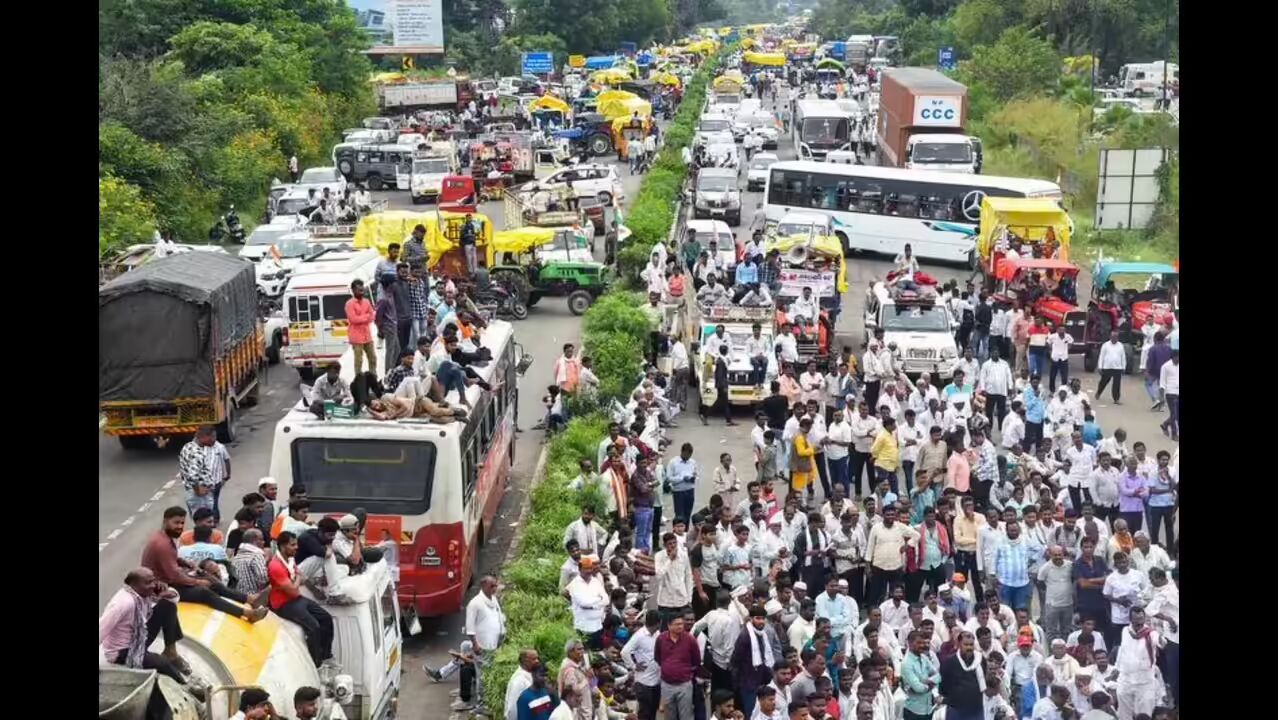
Nagpur’s key arterial Wardha Road corridor is once again grappling with severe traffic congestion during evening rush hours, highlighting persistent mobility challenges despite sizeable investments in infrastructure such as flyovers, widened carriageways and metro works along the North-South urban axis.
Commuters and local observers report that bottlenecks between Lokmat Square and Rahate Colony are routine, with slow-moving traffic setting in as early as late afternoon and stretching through peak periods. The stretch — vital for linking residential hubs, commercial districts and industrial zones on the city’s periphery — has been under pressure from overlapping transport infrastructure projects. Roadworks in several sections have narrowed lanes, creating pinch points that amplify congestion when buses and heavy vehicles attempt to navigate constricted space. Residents describe the resulting queues as a “chaotic grind”, underscoring how even incremental disruptions can have outsized effects on urban throughput. Urban mobility analysts note that bottlenecks on such trunk corridors reflect deeper planning and execution challenges. Despite flyovers and express connectivity schemes, the absence of co-ordinated traffic management measures — such as adaptive signalling, clear lane demarcation and real-time diversion protocols — can negate gains from capital investment.
In Nagpur, the recurring gridlock echoes similar issues documented on other major corridors where construction and daily commuter demand collide. Wardha Road’s congestion also carries economic implications. The route functions as a lifeline for daily commuters, intra-regional freight movement and access to employment centres. Delays on this artery translate into lost productivity, increased fuel consumption, and heightened emissions — an outcome at odds with climate-sensitive urban goals. Traffic bottlenecks likewise strain public transport reliability, eroding commuter confidence and potentially pushing travellers back to personal vehicle use, further intensifying load on constrained infrastructure. Experts highlight that corridor performance depends not solely on physical upgrades but on systemic traffic management frameworks. Adaptive signal control, enforcement against illegal parking and roadside encroachments, and improved incident response to stalled vehicles can make the difference between fluid movement and gridlock.
These measures are particularly crucial when multiple infrastructure works are underway, as temporary arrangements can inadvertently channel traffic into suboptimal patterns. Public feedback suggests that communication gaps around works and diversions exacerbate frustration, leaving commuters without reliable information on expected delays or alternative routes. Planners argue that integrated traffic information systems — feeding live data to commuters via apps or dynamic signage — could support more resilient daily mobility, particularly as Nagpur’s population and vehicle numbers continue to grow. Climate-aware urban design advocates also stress the need to embed active transport and public transit prioritisation alongside road enhancements, reducing dependence on private vehicles and easing pressure on main corridors like Wardha Road. Without such a multi-modal shift, even well-intentioned infrastructure projects can fall short of delivering smoother mobility.
As Nagpur continues its urban expansion, addressing these chronic bottlenecks will be pivotal not just for commuter convenience but for sustaining economic activity and aligning with long-term environmental and inclusivity goals.