Mumbai Metro Construction Disrupts Pedestrian Safety At Gandhinagar
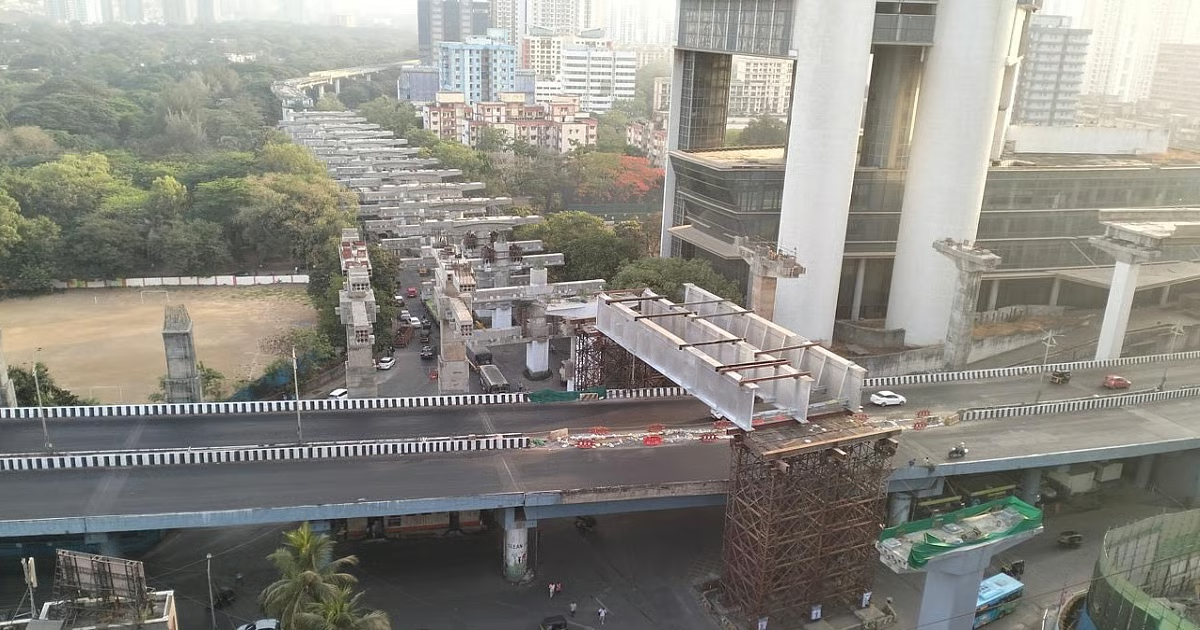
Mumbai’s rapid metro expansion — integral to its strategic transport modernisation — is colliding with ground-level pedestrian safety at Gandhinagar junction, underscoring a familiar tension between large-scale infrastructure development and everyday urban mobility. In the bustling Kanjurmarg-Vikhroli corridor, where two major metro lines intersect, residents and commuters describe footpaths turned into hazard zones of uneven terrain, exposed metalwork and inadequate lighting, raising serious concerns about safety, accessibility and inclusive public space amid infrastructure construction.
At the junction — a convergence point for Metro Line 4 (Thane-Wadala Green) and Line 6 (Lokhandwala-Vikhroli Pink) — construction activity has engulfed what were once pedestrian pathways. Footpaths and service lanes are now fragmented by concrete blocks, scattered iron rods and temporary barricades that encroach on space typically used by students, elderly residents and daily commuters. Parents walking children to nearby schools such as Kendriya Vidyalaya and St Xavier’s High School describe the route as resembling an “obstacle course”, especially after dusk when the absence of lighting compounds safety risks.Local residents and everyday users stress that while metro expansion is critical for long-term urban sustainability and reduced traffic congestion, day-to-day access for pedestrians has been sidelined. “Development is welcome, but not at the cost of our children’s safety,” said one parent, capturing community frustration over the slow pace of temporary mitigation measures from authorities. Without safe, clearly demarcated walkways or sufficient illumination, pedestrians are often forced to navigate alongside speeding traffic, raising the risk of accidents and exclusion for those with mobility challenges.
This situation echoes broader patterns seen across India’s growing cities, where evolving transit networks — metro lines, flyovers and expressways — often outpace the integration of pedestrian-centric design and temporary diversion planning. Plaza digressions, uneven surfaces and poorly maintained sidewalks have been persistent pain points in Mumbai and other metros, signalling systemic gaps in construction governance and urban walkability strategies.Urban planners emphasise that major transport infrastructure should not only address high-capacity mobility but must protect and enhance last-mile access for all residents, including women, children, seniors and people with disabilities. Temporary transit solutions and spatial buffers are required during construction phases to ensure continuity of safe pedestrian movement, particularly in school zones and commercial corridors. Inclusionary planning also means better communication with affected communities and the deployment of lighting, signage and temporary footpaths that meet basic safety standards.
Mumbai’s metro rollout has delivered major benefits — from reduced travel times to lower urban emissions — but the Gandhinagar case illustrates a critical oversight: infrastructure projects must integrate proactive pedestrian risk mitigation from the outset. As the city’s network grows, authorities such as the Mumbai Metropolitan Region Development Authority (MMRDA) and municipal departments will need stronger protocols for protecting vulnerable road users, not just vehicles, during transitional construction phases.Looking ahead, improving pedestrian infrastructure around major junctions and construction sites should be prioritised alongside metro delivery timelines. Cities that balance large-scale mobility upgrades with safe, accessible streets for everyone will set more resilient and inclusive benchmarks for urban transformation.