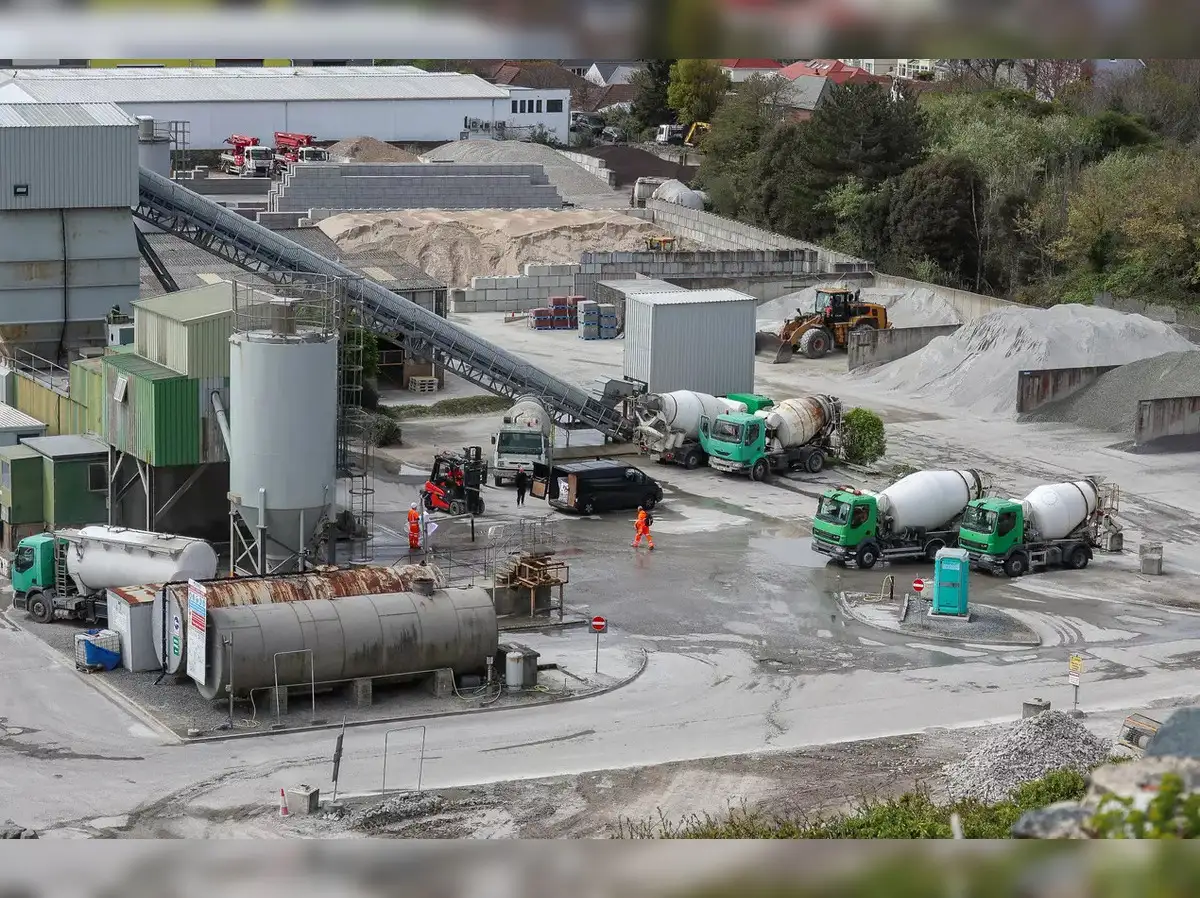
Guwahati-based Star Cement Ltd has delivered a robust third quarter performance and unveiled one of its most ambitious capacity expansion programmes, signalling confidence in rising infrastructure and housing demand across India’s East and North markets. The company now forecasts about 12–15% annual volume growth into FY27, underpinned by a near-doubling of capacity backed by a planned ₹4,800 crore investment in new cement and clinker assets over the next three to four years.
The Q3 FY26 financials underscore operational recovery and strengthening pricing power in key regions. Revenue climbed more than 20% year-on-year to roughly ₹880 crore, while operating profit almost doubled, reflecting improved margins and higher output. Net sales growth was supported by a near 16% rise in cement volumes and a significant uptick in clinker production.For a mid-tier cement player anchored in the North-East, these results come at a time when the broader Indian cement sector is expected to grow steadily — with analysts forecasting mid-single-digit expansion in industry volumes in FY27 — buoyed by housing construction and infrastructure schemes such as urban mass-rapid transit and regional highway networks.
Star Cement’s expanded capex roadmap focuses on establishing new manufacturing capacities across Rajasthan, Haryana and Bihar, alongside enhancing existing facilities in Assam and adjoining states. The strategy signals a shift towards broader geographic diversification beyond its traditional North-Eastern stronghold, as the company seeks to capture demand from emerging growth corridors.Industry experts see this move as part of a wider pattern of capacity augmentation in cement — an essential building block for urbanisation and economic growth — with several companies planning large capital outlays to improve market share and supply resilience. Crisil estimates that cement capacity additions nationwide could surge in the coming years as both greenfield and brownfield projects come online.
But expansion at this scale brings execution risks. Building and commissioning integrated clinker and grinding facilities requires navigating regulatory clearances, capital allocation and logistics complexities. Star Cement’s leadership has signalled an intent to balance growth with financial discipline, aiming to keep leverage ratios in check even while pursuing aggressive expansion.For communities and urban planners, this growth trajectory may ease some supply constraints in fast-growing markets, potentially stabilising cement price volatility that can inflate construction costs. However, the environmental footprint of expanded cement production — particularly carbon emissions — will remain a sector challenge unless paired with investments in low-carbon technologies and energy efficiency.
As Star Cement progresses with capacity roll-out, the immediate focus will be on seamless project execution and meeting volume and margin targets. Continued momentum in infrastructure activity and housing demand will be critical barometers of whether the company’s expansion strategy can translate into sustained market penetration and shareholder value creation.