


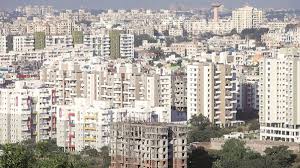
India’s residential real estate market appears to be entering a phase of moderation after several years of strong post-pandemic growth, with data suggesting a slowdown in volumes even as prices continue to rise across major cities.
Signature Global recently acknowledged that it will miss its Rs 12,700 crore pre-sales target, citing softer market conditions. The disclosure triggered concerns among investors and contributed to underperformance in the realty index, raising questions about whether the sector is showing early signs of stress. However, industry data suggests the current phase reflects consolidation rather than a crisis. According to Knight Frank, total housing sales across the top eight Indian cities declined marginally by around 1% in 2025 to approximately 348,000 units. Despite this, average residential prices rose significantly across key markets NCR by nearly 19%, Hyderabad by 13%, Bengaluru by 12%, and Mumbai and Chennai by about 7% each. Consultancy firm CBRE highlighted that premium and luxury housing segments accounted for a larger share of total sales during the year. Demand for high-end homes, particularly larger and well-appointed properties, remained resilient, supporting overall sales value even as transaction volumes softened.
Yet this premiumisation trend presents structural challenges. Anarock data shows that while overall sales value grew roughly 6%, volumes across the top seven cities dropped by about 14%, primarily due to affordability pressures and slower mid-market demand. Developers have increasingly focused on higher ticket-size launches, resulting in a shrinking supply of affordable and mid-income housing. Liases Foras estimates a 7–8% decline in real estate volumes from peak levels, attributing the moderation to structural constraints such as limited supply in certain markets and elevated pricing. In Delhi-NCR, for instance, housing supply remains significantly lower compared to the Mumbai Metropolitan Region, restricting buyer options in a key market. There are also signs of inventory build-up. Unsold inventory months have risen from around 13 to 15 months, indicating that absorption rates are slowing. Reports suggest that nearly 18,000 of 20,000 tracked projects have seen developer-led price corrections in an effort to stimulate demand. Developers have acknowledged shifting dynamics. Prestige Estates noted that pricing discipline is becoming critical, particularly for projects lacking a clear value proposition. Lodha emphasised cautious calibration of price increases, while Mahindra Lifespaces flagged early moderation in select micro-markets, especially in NCR and certain luxury segments.
Industry experts suggest that the residential sector is transitioning from a demand surge driven by pent-up post-pandemic buying to a more balanced and mature phase. While value growth remains supported by luxury demand, broader market stability will depend on realistic pricing, calibrated supply, and revival in mid-income housing demand. The coming quarters will likely determine whether this moderation stabilises into sustainable growth or evolves into deeper stress for the sector.
Also Read: Poulomi Estates Expands Beyond Telangana with Bengaluru Project
Premium Push Masks Volume Slowdown in Residential Realty
