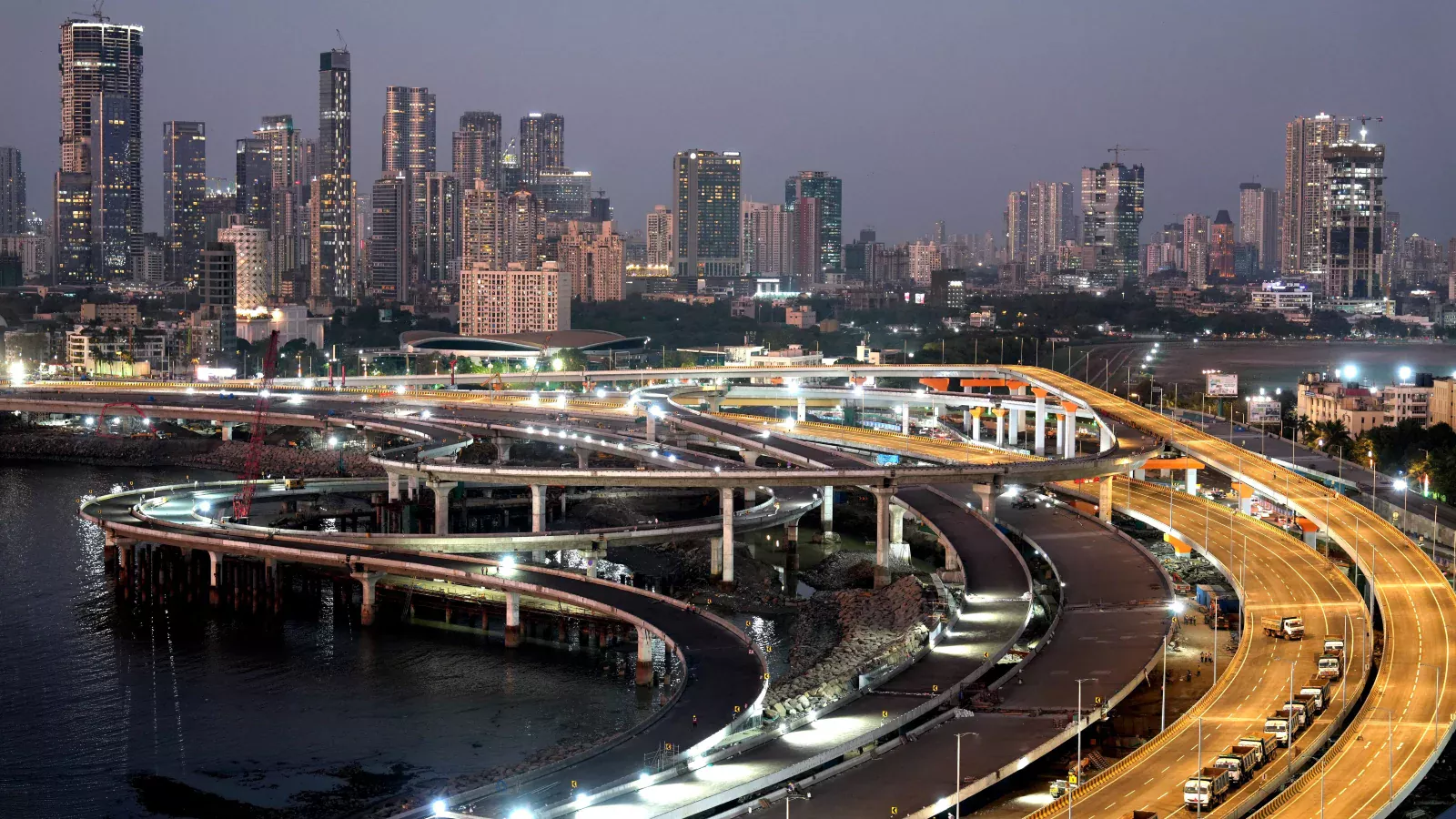
Mumbai has introduced a sound-enabled stretch along its Coastal Road corridor, becoming the first city in India to experiment with a so-called musical road a section engineered to play a recognisable tune when vehicles travel over it at a prescribed speed. The installation has been activated on the southbound carriageway between Amarsons Garden and Breach Candy, adding a sensory layer to one of the country’s most ambitious urban transport projects.
The musical road feature works through precisely spaced rumble strips embedded into the asphalt surface. When vehicles pass over these grooves at approximately 60 kilometres per hour, vibrations generated by tyre contact create audible notes inside the vehicle cabin. Engineers involved in the project say the technology depends on consistent speed; slower or faster movement distorts the melody. Globally, only a handful of such roads exist, largely as traffic-calming or tourism-oriented installations. The innovation sits within the larger Mumbai Coastal Road project a 29.2-kilometre arterial link connecting Marine Lines in south Mumbai to Dahisar in the western suburbs. With an estimated project cost of around ₹14,000 crore, the corridor is designed to decongest city roads and provide faster north–south movement.
Once fully integrated with the Bandra-Worli Sea Link, travel time between south Mumbai and the northern suburbs is expected to reduce sharply, potentially bringing commutes down to under an hour during peak efficiency. Urban mobility planners note that while the musical road element is symbolic, it reflects a broader global trend of integrating behavioural nudges into road engineering. By encouraging drivers to maintain a steady speed, such installations can potentially improve compliance with designated limits. Whether the feature materially enhances safety or simply adds novelty will likely depend on long-term monitoring data.
Transport economists argue that large infrastructure investments increasingly carry experiential components aimed at shaping public perception of civic projects. In a dense metropolis like Mumbai where infrastructure often involves trade-offs with coastal ecology and urban land use visible innovations can influence how citizens relate to public works. The Coastal Road itself remains a complex urban intervention. Beyond mobility gains, environmental experts continue to assess its long-term impact on shoreline dynamics, stormwater flow and marine ecosystems. As climate resilience becomes central to infrastructure planning, future coastal projects are likely to be judged as much on environmental safeguards as on travel time savings.
For real estate markets along the western corridor, enhanced accessibility has already begun influencing property valuations and commercial interest. Improved connectivity can unlock redevelopment potential in older neighbourhoods while reshaping commuting patterns across the metropolitan region.
The musical road may capture public attention, but its deeper significance lies in how cities experiment with technology within critical transport corridors. As Mumbai continues to expand its road, metro and coastal infrastructure, the balance between innovation, sustainability and equitable mobility will determine whether such projects deliver enduring public value beyond their headline appeal.
Mumbai Coastal Road Debuts Musical Road Feature