


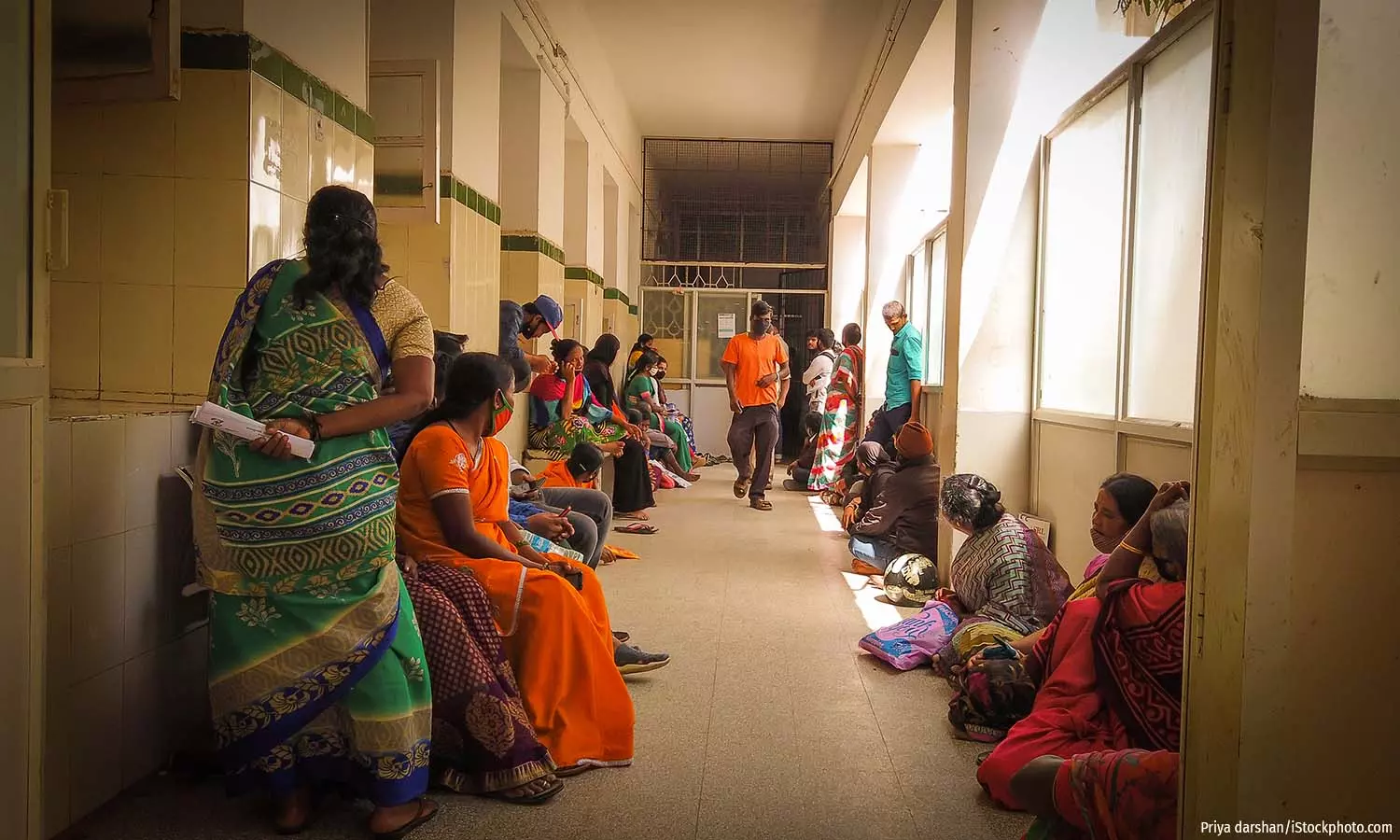
A recent government survey unveiled India’s public health infrastructure. It found that almost 80% of facilities do not meet the minimum essential standards for infrastructure, manpower, and equipment. This worrying statistic came from a self-assessment conducted under the National Health Mission (NHM). Public health facilities across states and union territories provided data on their resources and capabilities for this exercise
The NHM, a flagship scheme of the government, encompasses over two lakh public healthcare facilities, including district hospitals, sub-district hospitals, community health centres, primary health centres, and Ayushman Arogya Mandirs (formerly sub-health centres). Of these, 40,451 facilities participated in the survey by submitting key statistics through the Open Data Kit, a digital tool developed by the health ministry. Analysis of the data revealed that only 8,089 facilities, approximately 20%, met the Indian Public Health Standards (IPHS) by scoring 80% or higher. These facilities possessed the necessary infrastructure, human resources, drugs, diagnostics, and equipment to provide essential services. In stark contrast, 17,190 facilities (42%) scored less than 50%, while the remaining 15,172 facilities scored between 50% and 80%.
The results of this self-assessment have been made publicly available on the IPHS dashboard. A senior health ministry official emphasized that the real-time monitoring of these standards aims to ensure that health facilities maintain the required levels of infrastructure, equipment, and human resources. This, in turn, is expected to lead to better health outcomes and promote a healthier, more equitable society. The government has set an ambitious target to make 70,000 health institutions IPHS-compliant within the first 100 days of the new administration. While the IPHS focuses on basic services, the National Quality Assurance Standards (NQAS) provide a higher level of evaluation. NQAS assessments rate facilities on best practices, including the availability of essential medicines and equipment, waste management, infection control practices, support services, and patient rights.
For district hospitals, sub-district hospitals, community health centres, and primary health centres, NQAS assessments will continue to be conducted physically. However, for Ayushman Arogya Mandirs, which constitute the largest number of public health facilities under the NHM, a new provision for virtual assessment has been introduced. Under the NHM, the central government bears 60% of the expenditure for public health facilities, with the remaining costs covered by the states. This funding structure underscores the collaborative effort required to elevate the standards of public health infrastructure across the country.
The findings of this survey highlight the urgent need for substantial improvements in India’s public health sector to ensure that all citizens have access to adequate healthcare facilities.
“The aim of this self-assessment exercise is to identify the gaps and push the states/UTs to fill them with full support from the Centre so that quality of services provided to the public improves,” a senior health ministry official said. She added that self-assessment is the first step and the Centre also plans to carry out surprise inspections to verify the claims being made by health facilities against the benchmarks set by IPHS.
