


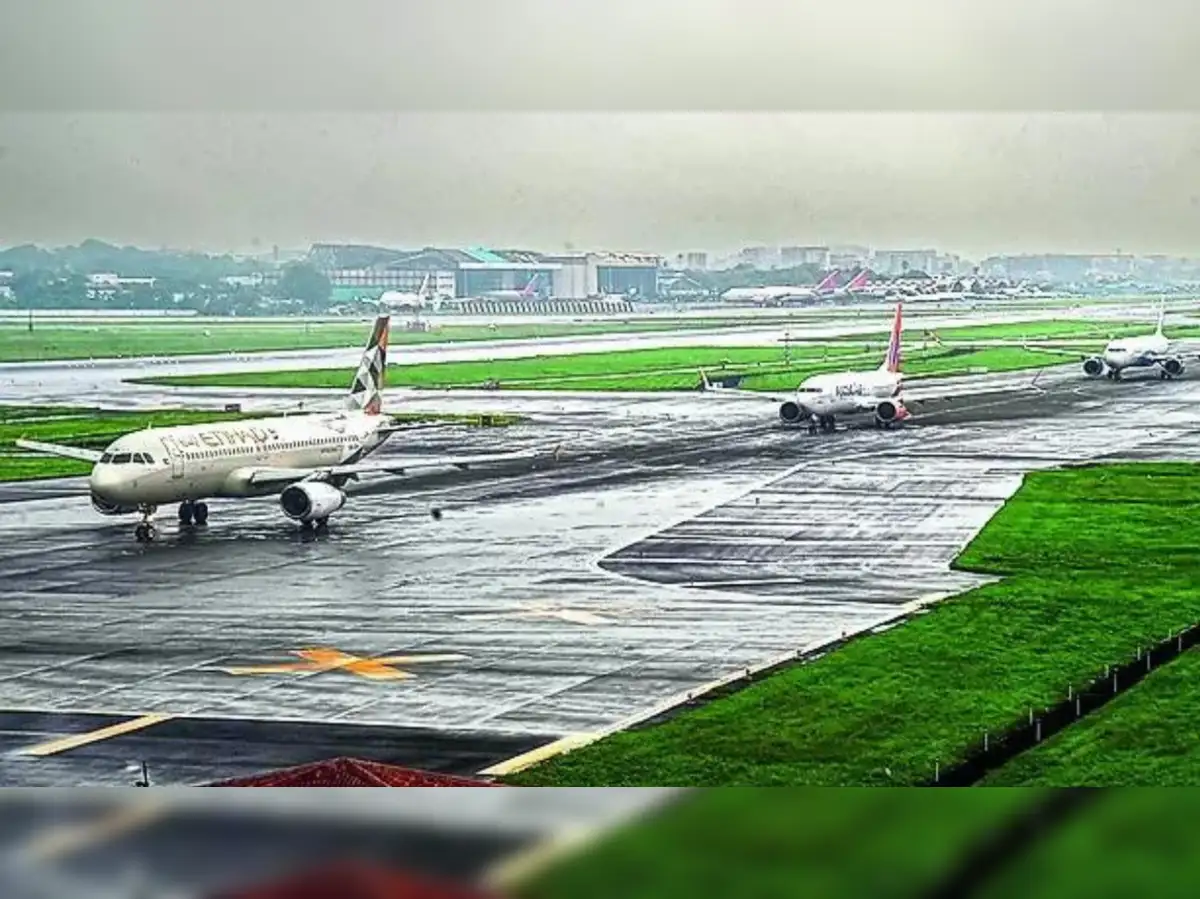
Around 80 flights at Chhatrapati Shivaji Maharaj International Airport were delayed, triggering a ripple effect of travel disruption across India’s financial capital.
Officials confirmed that the airport was forced to temporarily suspend runway operations during peak morning hours, when heavy rain and low visibility conditions created unsafe landing conditions. In response, air traffic controllers implemented a low-visibility take-off (LVTO) protocol, allowing aircraft to depart even with reduced visibility of 400 metres, instead of the standard 550 metres. Despite this contingency, passengers faced delays averaging 45 minutes, with travel schedules remaining impacted into the evening. Simultaneously, ground-level transport networks were equally overwhelmed. Local train operations across the Central, Harbour, and Western lines saw significant delays, ranging between 10 and 15 minutes. Waterlogging on key tracks, especially between Byculla and Chhatrapati Shivaji Maharaj Terminus (CSMT), forced several trains to be short-terminated at intermediate stations such as Kurla, Dadar, and Parel, before returning as special services.
Adding to commuter distress, recently inaugurated sections of Mumbai Metro Line 3 – particularly underground stations like Acharya Atre Chowk in Worli – were flooded, raising concerns about the city’s investment in future-proof urban transit infrastructure. Metro Aqua Line services were partially suspended as civic workers scrambled to contain flooding at these sites. Experts from urban planning and transport infrastructure sectors have criticised the lack of climate-resilient planning in the city. “Every year we face the same flooding, flight delays, and rail disruptions. The city’s transportation infrastructure continues to fall short of monsoon resilience standards despite receiving substantial budget allocations,” said a senior infrastructure expert.
In addition to mobility breakdowns, the city’s daily life was severely impacted. Office-goers were stranded at railway platforms and airport terminals, while low-lying residential areas battled rising water levels. Many housing societies reported internal flooding, while hospitals and BMC ward offices also witnessed water ingress. The India Meteorological Department (IMD) has issued a red alert for Mumbai, forecasting extremely heavy rainfall until early Tuesday morning. Citizens have been advised to stay indoors and avoid travel, particularly during high tide periods when drainage systems are further strained.
While municipal officials insisted that standard monsoon preparations were in place, the early onset of rains exposed clear gaps. “The civic systems were geared for a June 10 monsoon onset. The sudden rainfall surge overwhelmed the drainage infrastructure,” said a BMC official. However, residents and mobility experts pointed out that the city has faced similar early monsoon incidents in previous years, underlining the need for year-round preparedness and climate-adaptive city planning. ustainable urban transport advocates have also highlighted the vulnerability of the city’s surface transport modes to climate shocks. “There’s an urgent need to retrofit both rail and metro systems for climate resilience, and build redundancy in the city’s air traffic infrastructure,” a mobility analyst noted.
As of Tuesday morning, operations at the airport were slowly returning to normal, though some delays continued. Local trains resumed services with advisories issued for route changes and delays. Metro teams were conducting inspections and cleanup operations at affected stations. While civic agencies and the state government have reassured citizens that efforts are ongoing to restore normalcy, the incident once again raises questions about Mumbai’s long-term climate resilience, especially in transport infrastructure.
With the monsoon season just beginning, the city faces a critical test of whether years of infrastructure spending and pre-monsoon planning can withstand the growing challenge of unpredictable weather patterns and urban flooding.
Also Read : Mumbai floods as historic rains break records
