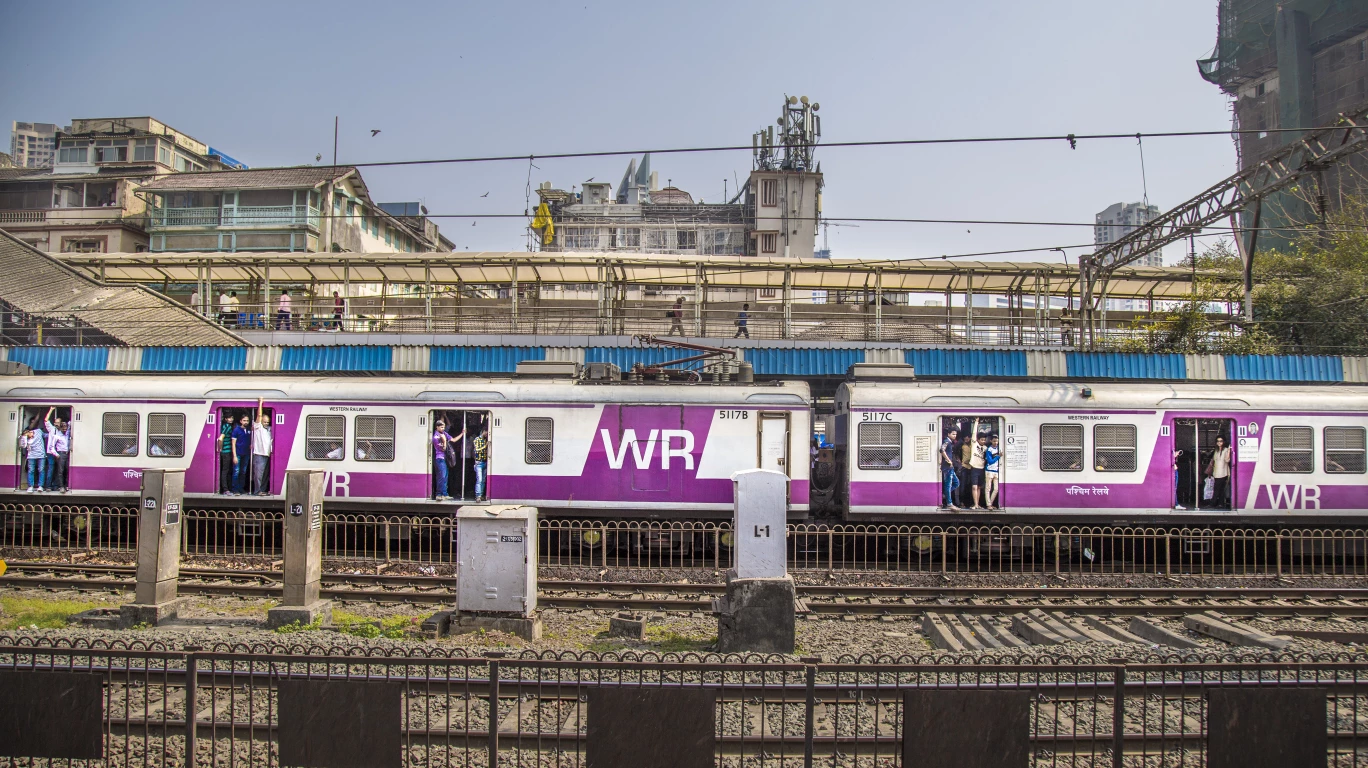
Mumbai’s suburban rail network is taking a measured step towards higher-capacity operations as Western Railway begins technical trials of 18-car local trains on the Virar–Dahanu Road section. The trials, scheduled for mid-January, are part of a broader effort to address chronic overcrowding on the city’s western corridor, particularly in fast-growing suburban and peri-urban areas beyond Virar.
Officials involved in suburban operations said the trials will be conducted over two days and will focus strictly on safety and performance parameters. Two separate 18-coach train sets are being evaluated, each fitted with different electrical and propulsion systems. Testing at controlled speeds will allow engineers to assess how the longer rakes behave under operational stress, including braking efficiency, stability, and inter-coach force management. At present, the Western line largely relies on 12-car services, with limited deployment of 15-car trains on select routes. While incremental increases have helped marginally, transport planners acknowledge that capacity has struggled to keep pace with residential expansion in Palghar district and extended suburbs, where daily commuter dependence on rail remains high. Longer trains are seen as one of the few viable options to move more passengers per trip without adding additional train paths on an already saturated network.
The current trials include mandatory emergency braking distance tests, which determine whether a fully loaded train can stop safely within prescribed limits, and coupler force assessments that examine stress transmission between coaches during sudden deceleration. Prior to testing, the rakes are being calibrated and weighted to replicate peak-hour passenger loads, ensuring results reflect real operating conditions rather than ideal scenarios. Railway officials have emphasised that the trials do not signal an immediate rollout of 18-car local services. Any future induction would depend on a series of follow-up clearances, including infrastructure compatibility checks. Platform lengths, foot overbridge capacity, passenger dispersal areas, and evacuation protocols would all need to be reviewed before regular operations could be considered. Urban mobility experts note that without these supporting upgrades, longer trains could shift congestion from inside coaches to station precincts.
From a sustainability standpoint, higher-capacity suburban trains are viewed as a low-emissions solution to rising commuter demand. By moving more people per unit of energy, railways can help limit growth in private vehicle use from outer suburbs, reducing traffic congestion and associated air pollution. Planners also link such capacity enhancements to more balanced urban development, supporting affordable housing and employment clusters along established rail corridors rather than encouraging sprawl. As Mumbai’s metropolitan footprint continues to expand northwards, the outcome of these trials will influence how effectively the suburban rail system can adapt. For millions of daily commuters, the question is not just whether longer trains are feasible, but whether capacity upgrades can be delivered in step with safer stations, better last-mile connectivity, and a more resilient urban transport network.
18 Car Local Trains Undergo Trials on Western Line